Urban growth vs green spaces: What Nairobi can learn from Lyon's green park
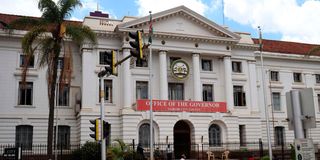
The Nairobi County head office. Members of the public in a green park called Tête d'Or in Lyon, France, have been participate in learning sessions and playing games linked to One Health summit in the city.

What you need to know:
- Lyon’s park showcases One Health concept, linking environment, animals and humans in urban planning.
- Experts warn that rapid urbanisation in Africa demands urgent investment in green, resilient city spaces.
A few metres from Lyon Marriott Hotel Cité Internationale in France is a green park called Tête d'Or, French for golden head. Here, members of the public participate in learning sessions and playing games linked to a summit on One Health taking place in the city.
Summit organisers call the learning section on One Health at the park a Discovery Village. It gives an illustration of the technical jargon that the high-level delegates from 60 countries, including Kenya, were discussing during the conference.
On one stand is a carpet size jigsaw puzzle connecting different forms of life: animal, plant and the environment. Children try to complete the jigsaw and discover how connected we are with our environment. There is a hopscotch game with illustrations of all living things as well, leading to one final answer: the need for One Health.
At a different stand, young children are groomed to be future entomologists by getting firsthand experience in using a microscope and observing how a mosquito larva looks like. They also get to see a model of a mosquito common in their area, called Aedes aegypti, also found on the Kenyan coast and known for causing Dengue Fever. The six dice game was the most involving. Any time the dice is rolled, the children respond to questions based on the number selected.
In the park, known by locals as the green lung of the city just like our Karura Forest, there are different trees and bird species. The Rhone River flows in its natural state, appearing green because of nearby trees. Besides learning at the Discovery Village, people are there for picnics and merrymaking with their families. Bees perch on bloomed cherry blossoms; wild darks swim on shallow ponds; dogs walk side by side with their owners; the grass is well lawned; and there are dedicated colour-coded dust bins in case of any waste.
Beyond the games is a lesson that Kenya can learn about green spaces and why we need to protect them not just for the people, but also for the small insects, birds and big animals living here. Globally, more than half of the world’s population (about four billion people) now lives in urban areas, and this proportion continues to grow.
In Africa alone, urbanisation is accelerating so far, with nearly half of the population (about 49 per cent) living in cities as of 2024. This rapid growth places immense pressure on urban infrastructure, natural systems, and the quality of life.
On the sidelines of the concluded One Health summit, Healthy Nation interviewed Mayor of Lyon Grégory Doucet, who termed it important for cities to consider the linkage between animal, human and environmental health in their planning. “Our policies are linked to One Health, and this started during the pandemic. We have seen significant results because our quality of air has improved. We have invested in the transformation of the city to make it safe for pedestrians and cyclists,” he says.
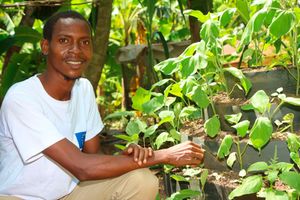
Dr Jackson Kinyanjui Koimbori, the head of Circular Economy & Climate Change at the Kenya Private Sector Alliance, told Healthy Nation that greening urban spaces is fundamental to building sustainable, livable, and resilient cities, especially in an era of rapid urbanisation. He said cities such as Nairobi continue to expand rapidly, reflecting both economic opportunity and increasing environmental strain. This growth underscores the urgent need to integrate green spaces into urban planning.
Dr Koimbori argues that one of the most critical roles of green urban spaces is in environmental regulation. “Vegetation helps to absorb air pollutants, reduce carbon emissions, and regulate urban temperatures. In densely built environments, green spaces mitigate the urban heat island effect, making cities more habitable and climate-resilient,” he explains.
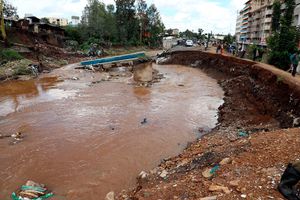
He said they have a role in urban water management. Green spaces reduce surface runoff by allowing rainwater to infiltrate into the soil rather than flowing over impermeable surfaces. This not only minimises urban flooding but also enhances groundwater recharge, helping to replenish underground water reserves that are essential for long-term water security. In rapidly growing cities where drainage systems are often overwhelmed, this function is indispensable,” he adds.
Green urban spaces also contribute significantly to public health and wellbeing. They provide areas for recreation, relaxation, and physical activity, reducing stress and improving mental health. In high-density urban settings, access to green environments is directly linked to healthier and more productive populations.
He adds a socioeconomic perspective, where green spaces enhance the livability and attractiveness of cities. For our environment, he says that such spaces support biodiversity and ecosystem services, including carbon sequestration, soil stabilisation, and water filtration.