Waiting seven years for a baby, only to lose him: The devastating toll of stillbirths in Kenya
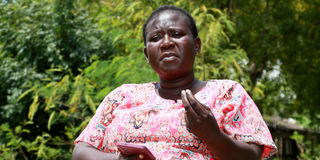
Happy Mkambe from Rabai, Kilifi County, describes her pregnancy experience at Rabai Level Four Hospital. Though she lost her child, she is optimistic that she will have another baby.

What you need to know:
- Behind the numbers are mothers like Happy Mkambe and Salama Salim, whose babies died during complicated deliveries.
- Four risk factors stand out, and doctors say many of these losses could be avoided.
Happy Mkambe married her best friend in 2017. She had known him since childhood. They wanted a home full of children. Years passed. The children did not come. They kept trying.
Her maternal family began to wonder what was wrong. Some pointed to an old belief.
"They started suspecting an old belief that when I was an infant, my mother may have gone with me to a funeral and I peed on a traditional mat. That, in our culture, usually associates a woman with barrenness, but there are ways to undo that," she says.
Happy and her husband are staunch Christians. She did not want to follow the traditional ways, but she wanted a child. She gave in to her aunties' demands and went through traditional cleansing.
She says she also had a growth that needed to be removed.
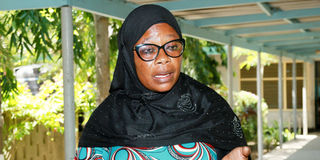
Salama Salim from Mariakani, Kilifi County describes her pregnancy experience at Rabai Level Four Hospital. She lost one of her twins.
In 2024, after seven years of waiting, she became pregnant.
"I had waited so long to be pregnant. When I finally got it, I was so happy. It was a dream come true," she tells Nation.
The pregnancy was not smooth. She says a vaginal opening needed to be corrected, but that did not happen.
She delivered at a hospital with no doctor on site. The doctor came later and found the baby in a breech position. The baby had started coming out, but not head first.
"The baby came out so tired. He did not survive," she says.
"I am so glad I have an understanding husband and we are still hopeful that we will have another child," she adds.
She sees a pattern in her family. Her mother spaced her children. Happy fears history may be repeating itself.
"My mum used to say that whoever will inherit her traits may have the same predicament," she tells us.
"I am hopeful I will have my own child one day."
Salama's story
We find Salama Salim in a corridor she knows well. It is at Mariakani Sub-County Hospital, where she often visits as a community health promoter.
About four years ago, she carried twins.
"I followed every step that I needed. I went to all antenatal care clinics, I visited gynaecologists for random checkups," she says.
Labour pains started a week before her due date. She went to hospital but was turned away. She was told to return only if the pain persisted.
She went home. A week later, she went back.
The birth was complicated. Like Happy, she had a breech delivery. Her baby came out leg first. She was taken to theatre. The first baby was dead. It was a stillbirth. The second twin survived.
Then came another shock.
"They cleaned me up, and took me to the ward. They discovered that I had high blood pressure. I did not believe that. In my mind, I knew that the pressure was caused by the loss of my child and not a condition that had always been there. They made me stay in the ward for another week," she shares.
"I still don't understand why my baby had to die and how I got the high blood pressure diagnosis. My pregnancy journey was smooth. They forced me to take the pressure drugs but I only completed my dose and I have never gone back," she adds.
No one has ever explained what happened, she says. Still, she urges people to keep going to hospital for urgent care.
What the numbers say
A stillbirth is when a baby is born with no signs of life. According to the World Health Organization, a baby who dies after 28 weeks of pregnancy, but before or during birth, is classified as a stillbirth.
There are nearly two million stillbirths globally every year; one every 16 seconds. Over 40 per cent of all stillbirths occur during labour, a loss that could be avoided with improved quality and respectful care during childbirth including routine monitoring and timely access to emergency obstetric care when required.
A study published in the Lancet in August found that Kenya recorded about 29.2 stillbirths per 1,000 births.
The study was also done in Gambia and Mozambique. It found that stillbirths remain "unacceptably high." It is part of a project called PRECISE.
The PRECISE Network analysed birth outcomes from 5,772 women aged 16–49 years enrolled across seven health facilities in Kenya, Mozambique, and The Gambia between 2019 and 2022. The study found an overall stillbirth rate of 29.2 per 1,000 births, around three in every 100 pregnancies, although rates varied across countries.
Dr Angela Koech, an obstetrician and gynaecologist who was part of the study, says it was done in three places because African people differ genetically, socially and culturally.
The team wanted to know how big the problem is and which risk factors matter most. Risk factors are the things that make a woman more likely to have a bad pregnancy outcome. Not every woman gets a stillbirth.
Understanding them helps researchers plan ways to prevent the avoidable cases.
"If a mother comes with a baby and there's no heartbeat, there's little you can do at that stage, but if you understood which type of women get it, you would be able to change their care in a way that can make it less likely for them to have the adverse outcome," she explains.
Four risk factors stood out. They were high blood pressure in pregnancy, a previous stillbirth, bleeding before birth in that pregnancy, and babies who were not growing well. Dr Koech says this does not mean these are the only things that matter. They are the strongest links found among the women studied.
"None of these are entirely new," she says.
The study also linked caesarean delivery to stillbirths. Dr Koech says that link must be read with care. She used smoking as an example.
"What is true is that people who smoke are more likely to get cancer, not the other way around," she says.
"In the same way, when you have a baby who's not doing well, or you have a complication in pregnancy, many of those complications are managed by a cesarean section and some of them may end up as still births," she adds.
She advises women to attend antenatal clinics. Those visits can spot complications early. But they should be more than a box-ticking exercise, she says.
They should look closely at the mother's health and her baby's.
A system that must change
Dr Priscilla Kashero, a paediatrician and the medical superintendent at Mariakani Sub-County Hospital, says the health system must change if Kenya is to meet the goals of the Ministry of Health plan Every Woman, Every Newborn Everywhere.
At her hospital, she says, maternal deaths and stillbirths are both high.
"I look at the numbers on the wall every day and it reminds me that we need to work extra hard. And if you look at our fresh and macerated stillbirths, you can see we lose around, on average, 6 to 12 babies every month," she says.
"Those are potential cooks, potential policemen, children who will grow to be people in society that we have lost," she adds.
She says stillbirth leaves deep psychological and mental scars on a mother. She worries that preventable social factors drive many of the cases.
"Women are still the primary caregivers in my community. So, you'd find a mother who has seven children and the husband is the one who controls the family.
A woman will tell you that she could not come early for ANC because of her husband," she says.
"You'd see a mother who has had four previous surgeries and she comes to the clinic and you tell her that they cannot give birth vaginally and that they need to be booked for an operation. She will tell you that she needs to go back home and talk to her husband, and that if he agrees then she would be back," she adds.
She says hospitals must not retraumatise a mother who has lost her baby by placing her in the same ward as mothers with their children. These women also need counselling. Her hospital is trying to offer it.
"You can imagine the torture these women go through. But we always offer counselling. We always offer the support that we can. We have religious leaders
attached to the facility that also talk to them," she says.