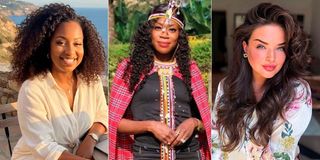
From left: Dhakeria Little, Quan Lanae Green and Olga Musilovich.

If there is one thing Olga Musilovich, 33, did not expect to be impressed by in Kenya, it was the country’s healthcare. Born and raised in Russia, she had previously lived in the United States, Qatar and the Netherlands before relocating to Kenya. When she tore her Achilles tendon and needed surgery, she had been in the country for less than a year and was apprehensive about navigating an unfamiliar healthcare system. Some friends even suggested she return to Europe for treatment.
“From my experience in Europe, unless you have very good connections, getting a doctor’s appointment can take weeks. And often, even after all that, you won’t get the proper care you need,” she says. “But here, everything was so fast. I went to the hospital on a Wednesday, and within the same day, I managed to see the doctor, get an MRI scan and schedule surgery. The following Monday, they did the surgery. For the next few days, my surgeon was texting me every day to see how I was doing. Now I have a really great physiotherapist helping me recover. And it’s not like I had any connections with these doctors. They were all strangers.”
Olga’s first visit to Kenya was to see a friend who had relocated with her husband.
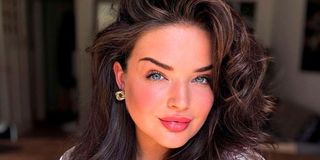
Olga Musilovich, Russian-born woman who relocated to Nairobi, Kenya in November 2025.
“She’d been inviting me over and over, but I really debated coming,” she says. “We hardly ever get the chance to learn about African countries, even in school, so we know very little. When I finally decided to visit, I didn’t even tell my mother because I knew she would be fearful.”
On arrival, she found a country quite different from what she had imagined. Kenya was greener than expected, English was widely spoken, and the malls and supermarkets made settling in seem less daunting. Most strikingly, she found it easy to make friends.
“If you know one person, they will typically introduce you to five others, and then those five will introduce you to more, and suddenly you have a whole community,” she says.
After a second visit, she returned to Amsterdam, where she had lived for six years, only to realise she was already thinking of Nairobi as home.
“Kenya offered me something different from the minute I stepped here,” she says.
“All my life, there’s never been a moment when I wasn’t striving towards something. First, it was playing tennis professionally, which I did from the age of six. Then I went to the US when I was 16, and it became about studying, and later work.
"But in Kenya, there was this feeling of freedom and relaxation where I didn't have to worry or prove myself to anyone. Nobody was even asking me what I did for work. Those who befriended me did so simply because they liked me as a person, not because of a title.”
Convinced that Kenya offered the slower pace of life she wanted, she began saving for the move. Nine months and €8,000 (about Sh1.14 million) later, she landed in Nairobi.
However, the realities of living here soon kicked in.
“I thought the money I had saved was a lot, but I didn’t know how expensive living in Nairobi would be!” she exclaimed.
Switching between Swahili and English
Her first home, a European-style apartment along Riverside Drive, offered familiarity but cost more than her intended monthly rent of €500 (Sh70,000). Apartments within that budget were farther from the city centre and did not offer the accommodation she was used to.
She also had to familiarise herself with M-Pesa, having expected to pay by card, and was surprised by occasional electricity outages.
Today, she lives in Westlands and works in the hospitality industry, drawing on her hotel management experience.
The cost of certain goods remains a surprise. Wine, salmon, skincare products and perfumes are more expensive than she is accustomed to, while some items are difficult to find.
“We have a community of Europeans and Russian speakers, and if somebody is travelling, we ask them to bring things for us. Sometimes half of their luggage is filled with things people have requested,” she says.
She has also had to adjust to Nairobi's approach to safety and punctuality. She generally uses Uber and visits places such as Karura Forest when she wants to walk.
“Sometimes people can be an hour or two late, and they’d just be like, ‘Oh well.’ It’s like the feeling of time just disappears here,” she says.
Other aspects of everyday life have been more amusing, including the frequent switching between Swahili and English, matatus and the dexterity of boda boda riders.
“Kenyans are hardworking. They’re hustlers. You can get a delivery by boda boda even at 2am. They never say no to an opportunity. This isn’t really something that happens in Europe. There, when the clock strikes 5 o’clock, we’re done for the day.”
Despite the adjustments, Olga says her experiences with Kenyans have largely been positive. She is now considering buying property and dreams of opening a restaurant with a garden.
Starting a family is also part of her plans. She believes domestic support would be more affordable in Kenya than in Europe, making it easier to balance motherhood and work.
“I still want to live my own life and continue working after having children,” she says. “I don’t want to be a stay-at-home mum simply because we can’t afford to get some help.”
Asked where she sees herself in five or 10 years, she struggles to imagine another country where she would rather live.
“My inner Russian soul is happy here,” she says.
Over-priced roasted maize
For Quan Lanae Green, one of her earliest lessons about everyday life in Kenya came over a cob of roasted maize. A vendor sold it to her for Sh200, only for her to discover later that it typically cost Sh20.
The incident became a viral social media moment, but did not sour her impression of the country.
“The vendor and I reconciled, and the attention helped bring more business his way,” she says. “But it also helped me understand how business is conducted here. In the United States, where I am originally from, we're accustomed to fairly standardised pricing. Here, negotiation is much more common. Sometimes the price you're initially quoted isn't necessarily the price you should pay.”
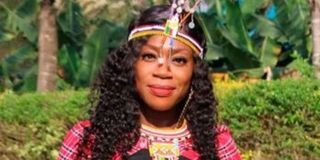
Quan Lanae Green, an American apostle, international minister, entrepreneur, and founder of Kingdom Wealth Ministries, relocated to Kenya this year.
By the time Quan arrived in Nairobi in June 2026, she was already an established entrepreneur. While Kenya offered opportunities to expand her business interests, investments and professional networks, she says her decision to relocate was ultimately driven by a greater sense of purpose.
“I believe God sent me here,” says Quan, an apostle, international minister, author and founder of Kingdom Wealth Ministries. “My work has taken me to different parts of the world, where I have been involved in ministry, leadership development and humanitarian initiatives. Nairobi stood out because it is one of Africa’s most influential cities, with a growing entrepreneurial ecosystem, a vibrant Christian community and connections to the rest of East Africa. I felt convicted that God was calling me to establish a base here.”
Today, the family lives in Lavington. Quan says the move has opened opportunities across ministry, leadership, media and business. She has connected with people in different sectors, ministered at churches and participated in conferences, while becoming involved in leadership and community development initiatives.
Settling in has nevertheless involved navigating housing and maintenance issues, occasional internet problems and finding dependable service providers.
“Nairobi has some very beautiful residential neighbourhoods, quality private facilities and modern amenities. However, the quality of services can vary significantly depending on your location and provider,” she says. “Overall, you can find many of the conveniences of a major international city here; you just need to understand how things operate.”
She particularly appreciates Kenyans' creativity, resilience and entrepreneurial spirit, as well as the kindness and hospitality she has encountered.
Although she has no fixed timeline for her stay, Quan's ambitions extend beyond her immediate work.
“I’m exploring opportunities in real estate, infrastructure and development as well. Beyond visiting communities and encouraging people, my vision is to help build things that will continue benefiting others long after I’m gone,” she says. “This vision extends beyond Kenya to other African nations and the wider world, but I believe Kenya will remain a significant base for that work.”
She hopes more people living abroad will see Africa not just as a destination to visit or receive from, but as somewhere to invest, build, collaborate and contribute to lasting transformation.
“I came to Kenya because I believed God was sending me here. Everything I’ve experienced since arriving has only strengthened my conviction that there is purpose in my being here,” she says. “I’m grateful for the way Kenya has welcomed me, and I’m looking forward to continuing to build, serve and contribute to this beautiful nation.”
Fewer school drop-offs
For Dhakeria Little, one unexpected pleasure of moving to Nairobi was finding hairstylists who understood her family's hair. She and her four children all wear locs, and finding someone who could maintain them had often been a challenge in places they had lived. In Nairobi, she was impressed by how many stylists offered the service and how accessible it was.
Even better, all five could visit a salon together.
“That is not something we’ve been able to do anywhere else,” says the American creator behind Little Big Adventures.
The family has visited 14 countries and lived in three: the United States, Italy and South Korea. Dhakeria describes their experience as a migration journey shaped by the family's military life.
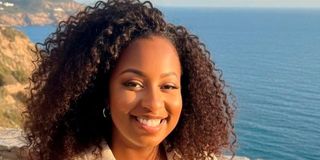
Dhakeria Little, scholar, author, and creator of Big Little Adventures, moved to Kenya with her husband and four children in June 2026.
“We’re a military family, and we move around quite a bit,” she says. “Whenever we are presented with overseas opportunities, we sit down as a family, imagine what life might look like in that country and discuss the advantages and disadvantages. Then we build from each member’s curiosity. When Kenya came up, everyone was excited because we had never lived on the African continent. Personally, this one was dear to my heart because of its significance to our history as Black Americans.”
Although she knew little about Kenya beyond its location and some aspects of its food, she was eager to experience it.
“You hear stories about different places, but I like to think of them as other people’s experiences. I never allow what people say, especially when it’s hearsay, to hold me back from experiencing a place I’m curious about. I can only know what it’s really like when I touch grass in that place and see it for myself,” she says.
The Littles' relocation arrangements differed from those of families moving independently. Their military and diplomatic work provided a secure source of income, while their savings were set aside for personal expenses and experiences.
They arrived in Nairobi in June 2026 and have settled in well. The children are all enrolled in one school, a convenience Dhakeria particularly appreciates since she doesn’t have to do multiple drop-offs anymore.
Beyond everyday adjustments, she says the experience has broadened her outlook, especially through exposure to Kenya's creative and artistic spaces.
A visit to the Nairobi Film Festival introduced her to stories that deepened her appreciation of the country's history. One film explored the history of the Kamĩrĩĩthũ community theatre in Limuru, established by villagers in 1976. Its 1977 production of Ngaahika Ndeenda (I Will Marry When I Want), by Ngũgĩ wa Thiong'o and Ngũgĩ wa Mĩriĩ, was shut down by the government. Decades later, the original actors are reclaiming that silenced history.
“That is the resilience and resolve of a powerful people determined to leave a powerful legacy, and it truly inspires me,” she says. “It's a big part of why I say the arts is where I feel Kenya most.”
She has also been inspired by the country's innovation and entrepreneurial spirit, which she says has strengthened her confidence in her own ambitions as a scholar, author and writer.
“Seeing how innovative and entrepreneurial people are here really boosts my own confidence in the things I'm doing,” she says.
Not everything has been easy. Driving on the left, having always driven on the right, has been a particular adjustment. She has also been amused by how often people mistake her for a Kenyan.
“It happens all the time. Everywhere I go, they address me in Swahili first, so I'm learning the language, but I think it's a compliment,” she says. “It has definitely made adapting more enjoyable because, outside my hometown and select places in the US, I've never lived anywhere where the majority looks like me.”
She has also been surprised by how comfortable she is living in a house without central air conditioning or heating.
“I’ve never experienced that before, but the weather here is superb, so I don't even think about it,” she says.
For Dhakeria, the hardest part of moving abroad is leaving loved ones behind, particularly when she wants them to share in everything she is experiencing. She believes it is important to let each country leave its mark on the family before trying to communicate that experience to others.
The Littles have no fixed timeline for their stay, but Kenya has already made an impression. Dhakeria says it is somewhere they could imagine settling permanently.
Above all, she hopes the experience gives her four children a deeper cultural perspective and connection to their heritage.
“I hope they find their own connections here and that it makes them feel whole in a different way. I want them to have their own personal journey from Kenya,” she says.
Follow our WhatsApp channel for breaking news updates and more stories like this.