What every Kenyan needs to know about SHA emergency benefits
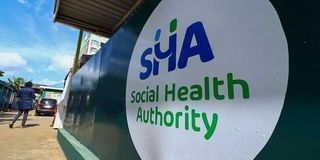
Social Health Authority signage at Mutuini Hospital in Dagoretti South Sub-County, Nairobi, on August 27, 2025.

What you need to know:
- The SHA system promises emergency care access, but gaps in funding and delivery persist.
- From ambulance response to hospital care, SHA outlines benefits but leaves patients exposed to extra costs.
For decades, a medical emergency in Kenya followed a grimly predictable script—frantic searches for cash deposits, hurried M-Pesa balance checks at triage desks, and the haunting fear that a life might be lost while waiting for a payment to clear.
With the transition from the National Hospital Insurance Fund to the Social Health Authority (SHA), the government promised a new dawn where no Kenyan is turned away at their most vulnerable moment. But a critical question remains: when sirens are wailing, does the SHA card actually work?
According to the Ministry of Health Tariffs and Benefits Package, the Emergency, Critical, and Chronic Illness Fund provides a structured roadmap for care, beginning with the race to the ward.
The journey starts with ambulance evacuation, a framework designed to bridge the gap between an accident scene and a hospital bed. Under SHA, any Kenyan can access emergency transport through a centralised National Ambulance Call Centre. The cover includes transport from the incident site to the nearest accident and emergency centre, as well as transfers between hospitals for specialised care.
The financial model is fee-for-service. For those within a metropolitan area (a 25km radius), the cost is fixed at Sh4,500. Beyond that, the tariff shifts to Sh75 per kilometre. While services are outsourced to a consortium of providers to ensure regional coverage, access remains uneven. In rural areas, where the nearest facility may be hours away, families often rely on private transport—costs not reimbursed by SHA.
Once a patient arrives at a level 2 to level 6 hospital, the SHA accident and emergency package kicks in for resuscitation and stabilisation. The scope is broad, covering cardiac and pulmonary arrest, major trauma (including severe burns, head injuries, and multiple fractures), shock states (haemorrhagic, septic, and dehydration), unconsciousness, confusion, and severe respiratory distress. It also covers seizures, chest pain, acute coronary syndrome, pulmonary embolism, stroke, antivenom, and rabies treatment.
The authority has set strict maximum reimbursement tariffs. For example, cardiac and pulmonary arrest is allocated Sh5,015 for investigations and Sh97,900 for management. Major trauma cases can receive up to Sh13,614 for diagnostics and Sh79,549 for treatment.
For critical conditions, financial ceilings aim to cushion patients from immediate costs. Shock-related conditions are allocated Sh7,637 for investigations and Sh67,272 for management. Cases involving altered consciousness are capped at Sh12,656 for tests and Sh8,000 for treatment, while severe respiratory distress attracts Sh6,315 for investigations and Sh8,000 for care.
Neurological and cardiac emergencies are similarly structured. Seizure management provides Sh12,156 for diagnostics and Sh8,950 for treatment, while acute chest pain is covered up to Sh11,233 for investigations and Sh41,400 for care. Stroke carries one of the highest allocations—Sh11,033 for diagnostics and up to Sh95,200 for management.
Localised emergencies
For localised emergencies such as animal or reptile attacks, SHA covers anti-snake venom up to Sh6,600 and anti-rabies treatment up to Sh3,800. Crucially, this emergency cover lasts for a maximum of 24 hours and is focused solely on stabilisation. After this window, patients must transition to the Social Health Insurance Fund, which requires active registration and up-to-date contributions.
Despite these provisions, free care is often limited. The biggest risk to patients is the tariff gap. SHA pays hospitals a fixed amount, meaning that if a facility’s charges exceed the set caps—such as the Sh95,200 limit for stroke—the patient must pay the difference.
Systemic challenges also persist. Public hospitals, while mandated to honour SHA, often face shortages of essential supplies. This frequently forces families to purchase items such as syringes, medicines, or implants from private chemists using cash.
Private hospitals, on the other hand, have been inconsistent, often citing delays in government reimbursements. Some reportedly demand upfront deposits due to system hitches with the SHA portal, effectively locking out patients unable to pay.
For unregistered patients, the situation remains precarious. Under the Constitution and the Social Health Insurance Act, every person is entitled to emergency treatment, and hospitals must stabilise patients regardless of SHA status. However, after initial care, patients are required to register and clear any outstanding premiums before accessing continued treatment or discharge.
While SHA strengthens the safety net, its effectiveness depends on timely government reimbursements and hospitals prioritising care over payment. For now, it represents a significant step towards universal healthcare—but one still being tested in real emergency settings.
To overhaul emergency response, Health Cabinet Secretary Aden Duale announced on April 2, 2026, that the government is preparing a nationwide ambulance dispatch system for rollout by June. The system will feature a central command hub to coordinate the nearest available ambulance for emergencies at any time.
The initiative is part of broader reforms aimed at strengthening Kenya’s healthcare system and removing financial barriers to life-saving care. By linking ambulances to a unified command centre, authorities hope to reduce response times and ensure patients are taken to facilities equipped to handle their needs.