When a mother's eye catches what doctors miss: a battle against childhood eye cancer
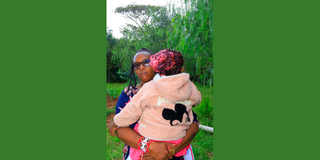
Pauline Tante with her child at her home in Kimuka, Kajiado County. Her daughter is suffering from retinoblastoma.

What you need to know:
- Pauline noticed her four-month-old daughter's eye glowing at night, leading to a retinoblastoma diagnosis that required eye removal and chemotherapy.
- Doctors say early detection offers 100 per cent survival rates, but late diagnosis of this rare childhood eye cancer means no cure.
The first sign came in the stillness of night, when the world was wrapped in darkness and only a mother's watchful eye remained alert.
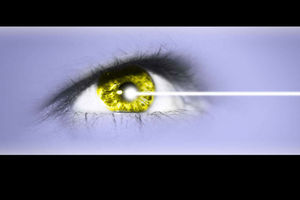
Pauline was adjusting her four-month-old daughter Stacy's blanket when she noticed it—a faint, unnatural shimmer in the baby's right eye, like a cat's eye reflecting light that wasn't there. Night after night, the mysterious glow returned.
"The lights were off when I noticed that her right eye was glowing," says Pauline.
This seemingly insignificant observation would become the first hint of a battle her baby would soon face: a fight against retinoblastoma, a rare and aggressive childhood eye cancer.
During daylight hours, the glow disappeared entirely. Pauline tried to convince herself it was nothing—perhaps fatigue playing tricks on her mind. Even as she joked about her daughter having "stars in her eyes," Pauline couldn't shake her underlying worry.
When she took Stacy to a Nairobi hospital for routine vaccinations, she shared her concerns with a paediatrician.
"The paediatrician observed Stacy and said she did not see anything strange. She said there was nothing to worry about. That reassured me and kept me going," Pauline recalls.
The relief was fleeting. A few weeks later, during a different hospital visit, a nurse spotted the same anomaly.
"Is there something wrong with that eye?" the nurse asked, reigniting Pauline's fears.
The awful truth soon became clear when a family member performed a simple test, covering Stacy's left eye. The baby couldn't see with her right eye at all.
Terrified
At one year and three months old, Stacy was taken to Lions Hospital, where doctors confirmed the diagnosis: retinoblastoma.
"They handed me a letter and instructed me to take it to Kenyatta National Hospital (KNH), 'because that is the only place that can cure your child's condition,'" Pauline remembers.
Curiosity and fear compelled her to open the letter on her way to KNH.
"Pauline Googled the term and broke down. It said 'eye cancer.' I was absolutely sad. As a result, I was terrified to travel to Kenyatta Hospital. Still, I had to leave. Because I am unable to witness my child's pain."
At KNH, doctors revealed that both eyes were affected, but the right eye was at Stage B and had to be removed immediately.
The eye removal was just the beginning. Stacy was fitted with a custom-made prosthetic eye. Then came chemotherapy.
"Stacy endured six harsh chemotherapy drugs, weakening her tiny body," Pauline recounts.
One night brought a crisis that nearly ended everything: Stacy's platelets dropped to just eight—far below the normal range of 150-450.
"The doctor said it was a miracle she was alive. She was very weak and could not even sit down or breastfeed," Pauline says.
Also read: Is that a trick of the light or cancer?
In that darkest hour, an unexpected angel appeared. A complete stranger, moved by a WhatsApp plea for help, donated platelets at the last minute, saving Stacy's life.
In Kisii, Naomi Bosibori faced a similar ordeal. When she first took her child to a clinic, they were prescribed eye drops for a week, but there was no improvement.
"The child was still in pain, however, which prompted her to take them to Kisii Eye Hospital for a proper examination," Naomi explains.
At Kisii Eye Hospital, doctors delivered the same devastating diagnosis: retinoblastoma.
"I was restless and exhausted; I couldn't even stand up, and I sat for about thirty minutes trying to process what was wrong. I couldn't feel anything, and I did not understand what was happening. But I gathered my strength and left the hospital. That is when I started planning to go to Kenyatta," she recalls.
"When we got there, the child was given six sessions of chemotherapy."
Naomi expressed frustration with the Social Health Authority (SHA), stating that system outages often resulted in admissions being delayed by up to two days.
"The government should also help a lot with drugs so that hospitals don't run out of drugs because this disease comes with many challenges," she urges.
Dr Njambi Ombaba, a paediatric ophthalmologist, explains that retinoblastoma has a genetic foundation.
"The only identified genetic risk factor is a mutation in the retinoblastoma gene, which normally functions as a tumour suppressor," she notes. "So if you have a mutation, you lose control of cell proliferation or growth, and that leads to abnormal cell proliferation, which leads to cancer."
Early detection is crucial. "The early signs of retinoblastoma include a white reflex (leukocoria) or squinting and, in advanced cases, swelling of the eye."
Call for change
Treatment options depend entirely on timing. "In the early stages, we usually use laser or cryotherapy and in advanced cases, we may need to use additional radiotherapy. In the early stages, we have a 100 per cent cure rate, 100 per cent survival. But once you have a late presentation with spread, especially outside the eye, we don't have a cure."
Ombaba emphasises the need for greater awareness, noting that misconceptions, such as beliefs in witchcraft, continue to pose significant challenges to diagnosis, treatment, and acceptance.
"Support is available for retinoblastoma patients through initiatives like Hope for Cancer Care. Children who are unable to access treatment can get support, funding to apply premiums for the National Insurance Scheme to pay for the treatment and sometimes provide treatment or drugs when they are not available in the hospitals," she explains.