When the appendix turns cancerous: The quiet rise of a rare disease
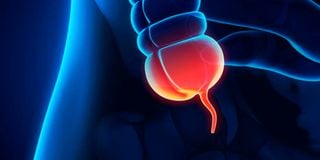
The location of the appendix.

What you need to know:
- Many people with appendix cancer have no symptoms in the early stages, and the disease is often diagnosed only after it has begun to spread.
- When symptoms appear, they often mimic appendicitis and can include increased abdominal girth, abdominal or pelvic masses, discomfort, and hernias containing mucin.
In 1522, an Italian surgeon and anatomist published a short, inexpensive book that contained the first known description of the appendix. Jacopo Berengario da Carpi, born in 1466 near Bologna, Italy, was the son of a barber-surgeon. He earned his medical degree in 1489 and was lecturing in surgery in Bologna three years later. He claimed to have dissected several hundred bodies and was among the first anatomists to illustrate his books based on what he had actually seen.
Berengario first published a large book in 1521, which has been credited with the discovery. At 527 large pages, it was expensive and did not sell well. A year later, he published a much shorter work, Isagogae Breves ("A Short Introduction"), of just 63 small pages. It was a hit and was reprinted and translated many times. Some papers still credit the 1521 book with the discovery, but a 2022 review in the World Journal of Surgery notes that the description appears in the 1522 book.
There, in a passage on the lower abdomen, Berengario describes a pouch-like structure that forms the first, most proximal part of the large intestine, located in the lower right side of the abdomen (the caecum), and notes what he calls an additamentum, a sort of addition. It was hollow, narrower than a little finger, and about three inches long. The reviewers say this is probably the first observation of the vermiform appendix.
Berengario did not call it an appendix, nor did he see it as a separate organ. He treated it as part of the caecum and puzzled over its function. In the same passage, he says the intestine is often found rendered inoperative, because it performs none of the services he had just described.
The naming came later. In 1543, Andreas Vesalius, in his celebrated anatomy, gave the first illustration of the appendix and likened it to a worm, "vermis in modo convolutus", or curled in the manner of a worm. His contemporary Eustachius is credited as the first to use the word "vermiformis" for the structure. Hence "vermiform appendix", which is still its formal name.
Also read: Why we should avoid appendectomies
Five centuries on, the reviewers note, there is still no clear answer to the question that occupied Berengario: what the appendix is for. However, experts note that its cells can mutate and grow out of control, forming a tumour. Appendix cancer is so rare that it is usually discovered by accident. Doctors typically find the tumour during surgery for appendicitis, or on an imaging test done for an unrelated condition.
There are several types. According to US cancer registry data cited by the National Institutes of Health, the carcinoid, or neuroendocrine, type is the most common at 66 per cent of cases, followed by cystadenocarcinoma at 20 per cent and adenocarcinoma at 10 per cent.
The US National Cancer Institute puts the rate at one to two cases per million people, and appendix tumours account for about 0.4 per cent of gastrointestinal tumours. One study estimates they appear in 0.08 per cent to 0.1 per cent of removed appendixes, while NIH's Genetic and Rare Diseases
Information Center says about one per cent of appendectomies find one. Rates appear to be rising. The GI Cancers Alliance says an increase has been confirmed in the United States, Canada, and the United Kingdom, with neuroendocrine tumours rising fastest in patients under 50. Researchers have not established why.
The National Cancer Institute of Kenya (NCI-K) says appendix cancer is most commonly diagnosed in adults between 40 and 60, although it can occur at any age. The US National Organization for Rare Disorders gives an average age at diagnosis of 50 to 55.
NCI-K lists several risk factors. People with a family history of certain cancers, or with inherited syndromes such as Lynch syndrome and familial adenomatous polyposis, may face a higher risk since both have been linked to gastrointestinal cancers, including appendix cancer. Chronic inflammatory conditions of the digestive system may raise the risk of some gastrointestinal cancers. Because some appendix cancers arise from neuroendocrine cells, factors associated with neuroendocrine tumours may also influence risk. Some types are reported more often in women, while others occur equally in both sexes. Smoking has been associated with several gastrointestinal cancers and may contribute to certain appendix tumours.
There is currently no known way to prevent appendix cancer completely, NCI-K says. It advises a healthy lifestyle, avoiding tobacco, seeking prompt medical attention for persistent abdominal symptoms, and discussing family cancer history with a healthcare provider. These steps, it says, may help reduce overall cancer risk and support early detection.
According to Dr Catherine Nyongesa, an oncologist at Kenyatta National Hospital (KNH), appendix cancer begins in the appendix, a small pouch attached to the first part of the large intestine.
"The appendix is not useless. It contains immune tissue and may help store beneficial gut bacteria. Still, most people live normal lives without it. Like other parts of the body, the appendix can develop cancer. Most of the time, appendix cancer is found by accident. A person may go for surgery thinking they have appendicitis, and the doctor finds cancer. Or it may show up on a CT scan done for another reason," says Dr Nyongesa.
"It is not the same as colon cancer. Many people think appendix cancer and colon cancer are the same, but they are not. Colon cancer often spreads to the liver and lungs. Some appendix cancers spread as a jelly-like fluid inside the belly. This is called pseudomyxoma peritonei. Not all appendix cancers cause this. The two cancers behave differently and are treated differently," she adds.
Many people with appendix cancer have no symptoms in the early stages, and the disease is often diagnosed only after it has begun to spread. When symptoms appear, they often mimic appendicitis and can include increased abdominal girth, abdominal or pelvic masses, discomfort, and hernias containing mucin.
Appendix cancer, notes Dr Nyongesa, manifests in several types, including neuroendocrine tumours, previously called carcinoid tumours, which often grow slowly. The other type, called mucinous tumours, produce mucus. These can cause the jelly-like fluid in the belly. Other types include colonic-type adenocarcinoma, goblet cell adenocarcinoma, and the more aggressive signet-ring cell cancer. The exact tumour type matters, as it determines treatment and outlook.
"Appendix cancer is rare. Published estimates vary depending on the country and which tumour types are counted. A single global figure should not be presented as exact. In Kenya, we do not have reliable numbers. In my practice, I see it infrequently, though I have seen more cases than I did ten years ago. This may be because more people are getting CT scans and doctors are more aware. But my observation alone cannot confirm a national increase," says Dr Nyongesa.
"For most patients, the cause is unknown. It would be misleading to claim that smoking or inflammatory bowel disease directly causes appendix cancer.
Research into causes and possible inherited risk is ongoing. What people misunderstand most is thinking that removing the appendix always cures it. For small, low-grade tumours, surgery may cure. But if the cancer has spread, surgery alone is not enough. People also think that because it is rare, it is not serious. It is rare, but it can be life-threatening if found late," adds Dr Nyongesa.
She notes that treatment depends on the tumour type, its grade, whether it has spread, and the patient's overall health. For early disease, surgery is usually the main treatment.
"Sometimes we remove only the appendix. Other patients need removal of part of the colon and nearby lymph nodes. For advanced disease, some patients may benefit from a major operation called cytoreductive surgery. This procedure removes all visible tumour. It may be combined with hyperthermic intraperitoneal chemotherapy (HIPEC). During HIPEC, heated chemotherapy fluid is circulated within the abdomen to target remaining microscopic cancer cells," Dr Nyongesa explains.
HIPEC is an established specialist treatment for selected peritoneal cancers. It is not a universal standard of care. Its role depends on the primary cancer, the extent of peritoneal disease, whether complete removal of visible tumour is possible, and the treating centre's experience. Some patients also need systemic chemotherapy, medicines that travel through the bloodstream. Its usefulness varies by tumour type and grade.
Dr Nyongesa notes that while some patients can be cured, others may achieve prolonged disease control. However, the best outlook is for patients with low-grade cancer that is detected early and completely removed.
"The worst outlook is for patients with signet-ring cell cancer or for those whose cancer has spread widely and cannot be completely removed. Follow-up remains important after treatment," she says.
For Kenyan families, planning care means understanding costs and access to care.
The SHA cancer package, she says, covers cancer consultations, chemotherapy, radiotherapy, and scans such as CT, MRI, and PET. Surgery is covered under a separate package. However, the annual limit can be reached quickly, especially for advanced cancer.
Coverage for a complex procedure such as cytoreductive surgery with HIPEC should be confirmed in advance. Before treatment begins, patients should ask their hospital's SHA desk to confirm which parts of the proposed plan are authorised, the applicable limits, and any expected out-of-pocket payment.
Dr Nyongesa, however, notes that while common chemotherapy drugs are available in big public hospitals, HIPEC is available in only a few centres in Kenya.
Patients considering referral for HIPEC should confirm that the receiving centre currently offers the procedure and has an experienced team. Travel, accommodation, recovery, and follow-up arrangements should form part of that discussion.
She also states that Kenya does have cancer registries, including the National Cancer Registry coordinated by the National Cancer Institute of Kenya. Better reporting of rare cancers would help establish the burden of appendix cancer, the stage at diagnosis, and access to treatment.
"Appendix cancer is rare, but it is real. Persistent abdominal pain, increasing abdominal swelling, unexplained weight loss, or changes in bowel habits deserve medical assessment. These symptoms often have causes other than cancer, but they should not be ignored," says Dr Nyongesa.
"Patients deserve an accurate diagnosis, timely specialist review, and treatment matched to their particular tumour," she adds.
On the cost of care, the SHA raised its annual cancer cover from Sh550,000 to Sh800,000 in May. The change was made through Legal Notice No. 78, signed on April 30, 2026, and published in the Kenya Gazette on May 8. CT scans are covered at Sh6,900, MRI scans at Sh11,000, and chemotherapy administration at Sh5,500 a session, and each type of scan is limited to one per policy year. SHA says the package covers diagnosis, chemotherapy, radiotherapy, surgical interventions, and palliative care at contracted facilities.
NCI-K is implementing the National Cancer Control Strategy for 2023 to 2027. Its chief executive, Dr Elias Melly, says Kenya records roughly 125 new cancer diagnoses and about 80 cancer deaths every day.