WHO global report: Cancer cases set to double by 2050 amid deepening treatment inequities
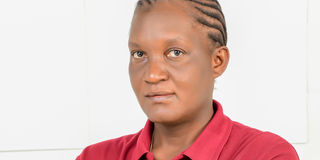
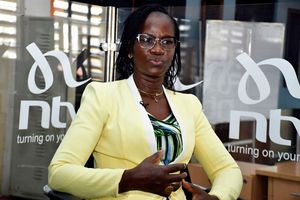
Tecklah Wamalwa, a breast cancer warrior.

What you need to know:
- For Teclar Wamalwa, a simple lump in her breast spiraled into a two-year battle for survival.
- Her story is the reality for thousands of Kenyan women, where late diagnosis and prohibitive costs turn treatable cancers into fatal ones.
On the morning of August 8, 2023, Tecklah Wamalwa stepped into her bathroom for a shower and found something that would alter her reality: a lump in her left breast. It was round, firm, and easily movable under the skin. Hoping it was nothing, she ignored it for two months.
When she finally sought care at her local facility, she was given anti-inflammatory medication to reduce swelling. The drugs did not work. She was later referred to Uasin Gishu District Hospital, where scans suggested a fibroadenoma, a common, non-cancerous solid breast lump frequently found in women under 35. Because these lumps are smooth and often painless, they are easy to dismiss. For Tecklah, this initial diagnostic ambiguity delayed true oncological care by months.
By the time she was referred to Moi Teaching and Referral Hospital in Eldoret for a biopsy, the diagnosis was definitive: cancer. What followed was a gruelling gauntlet of treatment. On May 6, 2023, surgeons removed the tumour. Because it was deeply embedded, Tecklah underwent 15 sessions of chemotherapy followed by radiotherapy. Yet, a year later, on June 6, 2024, the cancer returned, forcing doctors to perform a total mastectomy of her left breast.
Tecklah remains in treatment, and the uncertainty persists to this day. She has no family history of the disease as her relatives have only battled diabetes and hypertension. Now, she is trying to save money for a PET scan to ensure the cancer has not returned.
Her story mirrors how breast cancer unfolds for many Kenyan women: detected late, treated later, and survived by too few. Eighty per cent of women diagnosed with breast cancer in Kenya are unlikely to survive beyond five years. Sixty-eight per cent of cases are identified at advanced stages, when treatment options have already narrowed significantly. Rural patients often travel over 200 kilometres to access cancer care. The gap between a patient's initial diagnosis and their first day of treatment averages 18 to 24 months, a delay that, in oncology, functions as a deferred death sentence.
Now, a landmark global cancer report released by the World Health Organization (WHO) places Kenya's breast cancer crisis within a devastating international pattern. The report, titled the ‘WHO Global Status Report on Cancer 2026’, reveals a stark disparity: in high-income countries, women diagnosed with breast cancer have an 85 per cent chance of surviving past five years. In sub-Saharan Africa, that figure drops to just 39 per cent.
The reasons, the report notes, are twofold: late diagnosis, meaning patients are diagnosed once the cancer is already advanced, and prohibitive out-of-pocket expenditure for cancer treatment, which forces some patients to abandon care altogether.
Data from the Kenya Network of Cancer Organisations (KENCO) shows that the direct cost of comprehensive cancer treatment easily exceeds Sh3.8 million. Standard chemotherapy costs Sh23,000 per session for eight sessions (Sh268,000), blood work costs Sh4,500 per cycle for eight cycles (Sh36,000), a CT scan costs Sh20,000, and a PET scan costs Sh53,400. Targeted therapy costs are staggering: Herceptin costs Sh33,800 per cycle for 18 cycles (Sh608,400), while Kadcyla costs Sh180,000 per cycle for 14 cycles (Sh2.32 million). Radiotherapy costs Sh3,600 per session for 30 sessions (Sh108,000), and surgery costs around Sh120,000.
According to the report, Kenya and its neighbours in sub-Saharan Africa fall short in early detection programmes delivered through primary care, programmes that have transformed breast cancer survival in high-income countries. These interventions are not implemented at scale in most low- and middle-income countries due to inadequate infrastructure, insufficient workforce capacity, and a lack of sustained financing. Only 28 per cent of countries globally include a minimum cancer management package in their universal health coverage benefit packages.
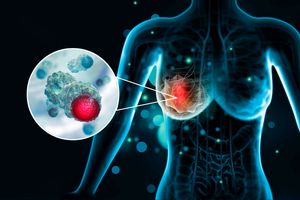
The report, drawing on GLOBOCAN 2024 data, documented 20.6 million new cancer cases worldwide in 2024. Among women, breast cancer had the highest incidence globally, with 2.4 million new cases, more than any other cancer in either sex. It was also the leading cause of cancer-related deaths among women, responsible for 700,000 deaths in 2024.
"Cancer is a deeply personal disease that touches nearly all of us. But whether a person survives cancer should never depend on where they were born or what they earn. The inequities documented in this report are not inevitable; they are the consequence of choices, and they can be reversed through stronger and unified action," said WHO Director-General Dr Tedros Adhanom Ghebreyesus.
"Most people will be affected by cancer at some point in their lives, either through their own diagnosis or that of a close family member. Beyond its health impact, cancer remains one of the most financially and socially devastating challenges a household can face. WHO's first-ever survey of people affected by cancer found that at least 45 per cent experience financial hardship, more than half report mental health challenges, and nearly all carers report strain, including unpaid services and social isolation," added Dr Tedros.
The WHO's Global Breast Cancer Initiative recommends that governments strengthen breast cancer services through early detection, timely diagnosis, and comprehensive management to reduce breast cancer deaths by 2.5 per cent per year and save 2.5 million lives by 2040.
Dr Elias Melly, the chief executive officer of the National Cancer Institute of Kenya, noted that many modern therapies remain out of reach, that cancer care is individualised, and that some treatments are simply too expensive.
"While such treatments are widely used in high-income countries, access in developing nations is a different story. In other countries, these newer therapies are already used as first-line treatment. But because of cost, countries like ours often access them 15 to 17 years later," he said.
He noted that the burden of cancer is rising but investment is not keeping up, with funding particularly limited for institutions responsible for coordinating the national response.
"Screening for breast, cervical, colorectal, and prostate cancers could significantly reduce the burden. Together, those four cancers account for almost 60 per cent of all cancers in Kenya. The most effective and least costly approach is prevention and early detection. If we detect cancer early, outcomes are much better, and lives are saved," he added.