Breast cancer remains the deadliest, WHO report shows
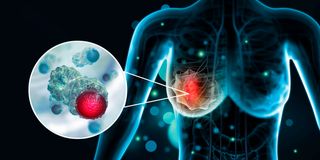
Breast cancer remains the most common cancer in Kenya.

What you need to know:
- Nearly half of the 5,822 Kenyans diagnosed with breast cancer each year die from the disease.
- Part of the reason for high death rates in countries like Kenya is that more than half of women with breast cancer are diagnosed at stage three or four.
Breast cancer remains the most common cancer in Kenya and the leading cause of cancer deaths, according to a new global report.
Cancers of the cervix and oesophagus rank second and third, respectively.
Nearly half of the 5,822 Kenyans diagnosed with breast cancer each year die from the disease, with an estimated 2,882 deaths annually, according to World Health Organization (WHO) data released yesterday.
The Global Report on Cancer, published by International Agency for Research on Cancer (IARC), shows that cancer remains a heavy burden in sub-Saharan Africa, including Kenya, despite progress made globally in prevention and treatment.
Dr Isabelle Soerjomataram, the deputy branch head of cancer surveillance at IARC, said at a press briefing that while one in four people in Europe or North America are expected to develop cancer, only one in 12 is expected to die from it.
However, in sub-Saharan Africa, the picture is different. The risk of getting a cancer diagnosis is half that of higher-income countries, but the risk of dying is the same.
“Survival still depends far too much on where people live and their economic circumstances,” said Dr Soerjomataram.
Part of the reason for high death rates in countries like Kenya is that more than half of women with breast cancer are diagnosed at stage three or four, the most advanced stages, compared to only about three in 10 in countries like the US.
There is some encouraging news. The report finds that many cancers can now be prevented, with four in 10 new cases linked to risk factors that can be reduced or avoided, including tobacco use, infections, alcohol consumption and excess body weight.
“We know that it is highly preventable. We can choose to co-create together the conditions that make prevention possible that leads to a world with less suffering from cancer. That is also why the call for action is to choose prevention, to choose for evidence, and to choose better outcomes for us all and for our future generation,” she said.
Globally, tobacco use has dropped by 27 per cent since 2010. Andre Ilbawi, of WHO’s Cancer Control team, said, saving millions of lives from tobacco-related cancers.
Kenya’s Ministry of Health is also now backing the Tobacco Control (Amendment) Bill, 2024, aimed at reducing non-communicable diseases such as cancer.
Cervical cancer, which is caused by the human papillomavirus (HPV), remains a major health burden in Kenya despite mass screening and HPV vaccination programmes that have dramatically reduced cases in many high-income countries. Last month, a study published in The Lancet showed that in the UK, prevention methods such as the HPV vaccine had resulted in zero cervical cancer deaths between 2020 and 2024. The report further shows the opposite is true in Africa, where cases continue to be recorded even where prevention methods are available.
In Kenya, an estimated 4,294 women are diagnosed with cancer of the cervix every year, and 2,606 die of the disease. This means more than six in 10 Kenyan women diagnosed with cervical cancer die from the disease each year, according to the WHO estimates. In East Africa, cervical cancer leads in total economic loss, pushing patients and their families further into poverty.
No cancer drugs
Essential cancer medicines remain far out of reach for most patients. In some settings, nine in every 10 patients abandon treatment halfway because it is too expensive. Availability of the top 20 priority cancer medicines ranges from just nine to 54 per cent in low- and lower-middle-income countries, compared with 68 to 94 per cent in high-income countries.
Benda Kithaka, a health strategist and cancer advocate in Kenya, told Nation that cancer outcomes are not determined only by what happens inside hospitals, they are also shaped by what happens in homes, churches, schools, workplaces and communities long before a patient reaches hospital.
“The reasons for delays in diagnosis and bad outcomes are interconnected. It could be limited access to screening services, shortages of diagnostic and treatment capacity, financial barriers, stigma, misinformation, and low health literacy, all of which play a role,” she said.
“The most overlooked factor is community engagement to build trust. People do not seek care simply because services exist; they seek care when they trust those services, understand their value, and feel they will be treated with dignity,” she added.
Early screening
Ms Kithaka said many treatment facilities are concentrated in urban centres, forcing many Kenyans to travel long distances for care. She said it is time for governments to invest heavily in community engagement, education and health literacy, since some cancers, such as cervical cancer, can be prevented through vaccination, as well as early screening.
She added that while the report is important, it only captures cancer cases that make it to health facilities.
“What about the cancers that are not reported in hospitals, and those where the cause of death is reported as another illness because of late diagnosis?” she said
Follow our WhatsApp channel for breaking news updates and more stories like this.