Why early detection of diabetes could save your sight
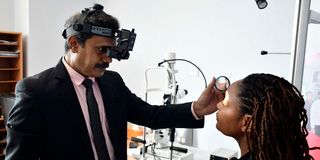
Eye and U Kenya Director and Consultant Ophthalmologist Dr. Kaushik Solanki examines a patient at the clinic in Westlands, Nairobi, on November 9, 2024.

What you need to know:
- For many Kenyans and Africans, unique genetic factors, combined with lifestyle changes, necessitate heightened awareness and early intervention to prevent avoidable vision loss.
- High blood sugar, if uncontrolled, can damage organs and systems over time, leading to complications like heart disease, nerve damage, kidney failure, and vision loss.
Diabetes is a chronic condition where the body cannot effectively regulate blood sugar (glucose) levels. This happens either because the pancreas doesn’t produce enough insulin (Type 1 diabetes) or because cells become resistant to insulin's effects (Type 2 diabetes).
High blood sugar, if uncontrolled, can damage organs and systems over time, leading to complications like heart disease, nerve damage, kidney failure, and vision loss.
For many Kenyans and Africans, unique genetic factors, combined with lifestyle changes, necessitate heightened awareness and early intervention to prevent avoidable vision loss.
On Thursday, November 14, being the World Diabetes Day, the significance of routine eye examinations for individuals living with diabetes cannot be understated, experts say.
Dr Kaushik Solanki, a cataract, refractive, and corneal surgeon with 14 years of experience and co-founder of Eye & U Kenya — an eye hospital, underscores this need, especially given the silent progression of diabetic retinopathy.
Diabetic retinopathy is a leading cause of vision loss among adults and often goes unnoticed until it reaches advanced stages. Early, non-symptomatic stages can only be detected through regular eye exams, an approach he emphasises as critical for halting or slowing the disease before it leads to permanent damage.
"Anyone diagnosed with diabetes should prioritise consistent eye check-ups," he advises, explaining that the disease manifests initially in the retina, offering crucial insights into broader blood vessel health.
He also explains the importance of lifestyle factors such as regular exercise, a balanced diet, and vigilant blood sugar management to prevent the onset and advancement of diabetes-related eye diseases.
How does diabetes contribute to early cataract development and the onset of diabetic retinopathy, and what steps can patients take to prevent these vision complications?
Everybody develops cataracts, it's an aging thing. But diabetics develop cataracts early as their sugar levels go up and down. There is more fluid coming into the lens of the eye and which can be responsible for developing a cataract. This (cataract) is a reversible and treatable condition.
The most disastrous complication of diabetes in the eye is known as diabetic retinopathy, which is considered to be the number one leading cause of irreversible blindness even in developed countries. Diabetic retinopathy is developed because of uncontrolled diabetes and other comorbidities like hypertension and higher lipid levels.
Could you explain how diabetic retinopathy develops and why it can go unnoticed for so long?
The diabetic retinopathy has three different stages. The first stage is known as background diabetic retinopathy, second stage is known as non-proliferative diabetic retinopathy and the third stage is known as proliferative diabetic retinopathy. In the first and second stage, as far as the patient is concerned, it is a very non-symptomatic stage and the patient will not have any trouble with his or her vision.
The only way you can capture the disease during this first stage by doing is through frequent routine eye check-up. In the first stage, you can arrest the disease or you can slow down the disease and prolong the patient's vision.
In the third stage, the patient will be having some issues with the vision. This can be due to a long-standing diabetes patient's blood vessel leaking blood or fats, which is known as the proliferative diabetic retinopathy, and which can lead to oedema in the central retina, leading to loss of vision. This is a late stage and the patient cannot regain the full vision.
The most important thing you need to understand is that anybody who has been diagnosed with diabetes should have a regular eye check-up.
What are some early warnings that patients should look out for in case of diabetic eye diseases?
Once you have been diagnosed with diabetes, you need to start taking your treatment and also visit an eye specialist. Early changes in your blood vessels can be detected by your ophthalmologist.
But the first thing we need to understand is: the problem is diabetes. If you control your diabetes or if you can prevent diabetes then the other complication will not develop.
Anybody who is 40 years of age should get a blood sugar check every year. It can give insight into whether you have or are developing diabetes as the early stages of diabetes does not necessarily have symptoms.
Are there any lifestyle or dietary changes that can help prevent or slow the progression of diabetic eye diseases?
Nowadays, our lifestyle has changed. Unlike our ancestors who mostly did strenuous work out in the fields, most jobs nowadays are done while we are sitting. Our lifestyle has become very sedentary. Our food has changed – we are eating more fried food, more frozen food, more processed food, which are high in calories and are some of the precursors of developing diabetes. So, lifestyle and food play a very critical role. We should walk at least 45 minutes a day to consume a few calories. We need to watch our food.
How often should people with diabetes get their eyes checked, and at what point should these screenings begin?
Everyone over the age of 40 should have their blood glucose levels checked every year. If you have a family history of diabetes, such as your parents or grandparents or maternal or paternal aunts or uncles having diabetes, then you are more likely to develop the disease. Then you need to be more careful and should start having your blood sugar checked every year from the age of 35.
What are some of the treatment mechanisms and how close are we to more effective, less invasive treatments for diabetic eye diseases? What advancements have been made in treating diabetic retinopathy or other diabetes-related eye conditions?
Routine infections because of high blood sugar level can be controlled by using regular antibiotics or whatever is advised by your eye surgeon or eye specialist. The cataract is a treatable condition. A patient can do a walk-in, walk-out, day care, eye surgery without any injection, without any patch.
At Eye & U for instance, we don't give local anaesthesia, we just put anaesthetic eye drops in the patient's eye, which numbs the surface of the eye and then we do the surgery. The surgery hardly takes 10 to 15 minutes and the patient goes home without any patch.
When the patient is having first stage diabetic retinopathy, the patient just needs a frequent eye check-up and the eye surgeon should be treating the patient in collaboration with the diabetologist and guiding them. If the patient is able to manage the sugar and lipid levels well, then the disease will not progress further. If it goes into second stage non-proliferative diabetic retinopathy, at that time the retinal lasers will come in. Then it goes into the third stage where the patient will start developing proliferation and leaking of blood and fluid and fats in the retina.
If it is in the third stage, a diabetic patient develops swelling in the retina, which is called macular oedema. The macula is the central part of the retina, which is the most important part of the retina. When a patient develops macular oedema, the patient requires anti-vegetative injection (also known as an anti-vascular endothelial growth factor (anti-VEGF) injection). This is administered directly inside the posterior chamber of the eye.
There are also retinal lasers. If it becomes a very proliferative diabetic retinopathy or non-resolving vitreous haemorrhages, then the surgery part will come in, which is called vitrectomies. These can be done and the patient is discharged on the same day.
There is a correlation between diabetes and eye problem… How closely does blood sugar control affect the progression of diabetic eye diseases?
Cholesterol and blood pressure are comorbidities. When there is high blood sugar, high cholesterol level and high blood pressure, they create more complications in the eye and in the body.
In terms of management, routine check-up is the surest way. Get your body, blood sugars, cholesterol level, blood pressure checked and eyes checked.
What unique challenges or misconceptions about diabetic eye disease do you see in East Africa, and how can the public better understand its connection to eye health and corneal issues?
It is important to live an active life – at least 45 minutes of exercise every day. Eat healthy food, avoid high sugar level drinks and get your body, your blood sugars and eyes checked regularly.
Also, corneal blindness is very common in this part of the world. The black part of the eye is covered with a glasslike tissue that is known as the cornea.
I've been practising in India for 26 years and come to Nairobi for a week every month. The number of corneal patients I see in India in a year is almost the same as the number I see in Kenya in a week.
Genetically, the corneas in this part of the world are a little thinner in the African race.
Secondly, allergies are very common in this part of the world. When a person has an allergy, the main symptom is that they rub their eye a lot. Vigorous rubbing of the eye leads to chemical changes in the tear field, which leads to further thinning of the cornea.
There is also a disease called keratoconus, which is very common in this part of the world. Every time I come here, I end up doing at least 7 to 8 corneal transplants for this corneal blindness.
Given the focus on diabetes awareness, how can eye health professionals better collaborate with primary care providers to ensure diabetes patients are receiving regular eye screenings? Are there any upcoming initiatives or campaigns planned to help the public access eye health services, such as screenings, at your hospital or others?
As one of the leading hospitals in the eye sector, we would like to take an initiative and we are offering a free eye screening at our facility, Eye & U, between November 18 and November 24. Patients need to make an appointment for the screening.