Education stakeholders are pushing for clearer rules on tertiary education financing, including timely disbursement of funds and the scrapping of interest charged on student loans.
The Muslim Education Council wants interest charges removed from the Tertiary Education Placement and Funding Bill, 2026, currently before the National Assembly Education Committee, arguing that this would accelerate loan repayments.
The council wants Clauses 45(d), which provides for interest on loans, and 49(i), which deals with timelines for repayment, deleted from the Bill.
“Let the loanee repay the loan as taken and if there is an administrative charge that is known, that one is discussable,” Said Abdalla, a member of the council, told the committee during a public participation session chaired by Mandera South MP Abdul Haro.
Mandera South MP Haro Abdul Ebrahim.
Photo credit: Francis Nderitu | Nation Media Group
Currently, undergraduate and TVET loans attract interest of four percent per annum on the outstanding balance, in addition to a Sh1,000 annual ledger fee.
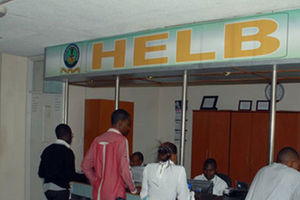
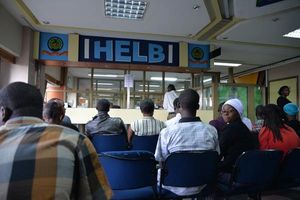
The majority of those who apply for loans through the Higher Education Loans Board (HELB) come from low-income households and rely on the financial support to cover tuition, accommodation, and upkeep.
The Kenya Union of Post-Primary Education Teachers (Kuppet) also raised concerns over the sustainability of the proposed funding system, saying the fund does not have a secure, ring-fenced source of revenue.
Kuppet Secretary-General Akello Misori said this exposes the fund to unpredictable annual allocations, potentially leaving continuing students without funding to complete their programmes.
“As such, there is no guarantee that continuing students will be funded to completion of their programme,” Mr Misori, who appeared before the MPs during public participation on the Bill in Nairobi, said.
Kenya Union of Post Primary Education Teachers (Kuppet) Secretary-General Akello Misori.
Photo credit: Sila Kiplagat | Nation Media Group
The Elimu Bora Working Group (EBWG) wants MPs to ensure the government provides full financial support to university and tertiary education students, covering tuition, accommodation, meals, learning materials, transport and other prescribed costs.
The lobby has also proposed that the Tertiary Education Placement and Funding Bill provide financial support through grants, scholarships and loans, depending on the need and nature of the cost.
EBWG, hosted at the Kenya Human Rights Commission, has proposed several amendments to the Bill.
“Full funding means providing resources to meet the approved tuition, institutional, academic, accommodation, learning, transport, health, practical training, research, and other essential costs needed by the student in pursuing an approved programme of study for the full duration of the study programme,” EBWG representative Mohamed Farah said.
“Every Kenyan student or trainee admitted to an accredited public tertiary institution shall be entitled to full financial support sufficient to meet the approved cost of tuition, accommodation, meals, learning materials, transport and other prescribed costs (legibility of costs being determined by the Authority,” he said.
Mr Farah said the guiding principles for implementation of the Bill shall ensure universal access to tertiary education, and equal access to government funding.
He said the Bill should be amended in clause 4 to ensure an enforceable mechanism for guaranteeing the students universal support.
EBWG also proposed changes to clause 29 of the Bill to ensure that the government also provides grants and scholarship in addition to the loans.
“The purpose of the Fund shall be to provide full government funding to eligible students and trainees in the form of grants, scholarships, or loans according to the need and nature of the cost,” Boaz Waruku, Policy and Strategy Advisor, Elimu Bora Working Group, said.
From left: Elimu Bora Working Group members David Karani, Boaz Waruku, Deputy Executive Director of Kenya Human Rights Commission Cornelius Oduor and Maxwell Magawi address journalists in Nairobi on February 11, 2024.
Photo credit: Billy Ogada | Nation Media Group
In its submission before the committee, Mau Mau Children Post-Colonial Elites (MMV Associates CLG) recommended that the six education reform Bills be refined to ensure that education remains accessible, affordable, equitable, transparent, competency-based, employment-oriented and responsive to the changing needs of society.
“The organisation particularly calls upon Parliament and the government to ensure that implementation does not create additional barriers for children and young people from poor, marginalised, rural and historically disadvantaged communities,” Emmah Kasis, the chief executive officer, said.
“Education should be treated as a national investment and a constitutional right, rather than merely an individual economic commodity,” she added.
MMV Associates CLG said it supports the objective of improving tertiary education funding, placement and student financing.
“We recommend a transparent and equitable placement of students into universities, colleges and technical institutions. Funding mechanisms that take into account the actual financial circumstances of individual students and their families,” Ms Kasis said.
“We call for special protection for students from vulnerable and disadvantaged households. We propose greater support for students pursuing technical, vocational, scientific, agricultural, technological and other skills required by Kenya's economy.”