Why Kenya has competitive advantage in bioeconomy
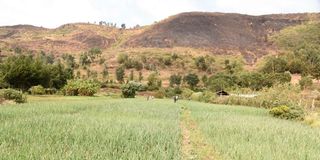
Agricultural activities at the foot of Aberdare ranges in Nyandarua County, a water catchment and source of Ewaso Ngiro river.

What you need to know:
- Bioeconomy involves the use of scientific knowledge to add social and economic value to biological resources in an environmentally sustainable way.
Regions such as Africa, which have significantly lower carbon emissions than the rest of the world, could have a competitive advantage in developing sustainable bioeconomies.
Bioeconomy involves the use of scientific knowledge to add social and economic value to biological resources in an environmentally sustainable way.
As an African country, Kenya has abundant renewable biological resources, including crops, forests, fish, animals, and microorganisms, to which value can be added in a sustainable way, producing novel food, safer medicine, environmentally friendly materials, products, and textiles; and bioenergy.
Making a bioeconomy business case
A business case for a bioeconomy in Africa can be made along the dimensions of economic stability, biodiversity richness, emerging biotechnology capacity, agricultural potential, and forward-looking bioeconomy policies. Each of these dimensions is explained below.
Economic stability
Most countries in Africa now have the fundamentals for economic growth.
The African Development Bank Report 2024 projects growth of at least 4.0 per cent per year in the medium term.
However, growth must increase to at least seven percent per year and be consistently maintained if Africa is to realise its ambition of achieving upper-middle-income status in the medium and long term. Scholars and policymakers believe that diversifying sources of growth would enable the continent to achieve higher growth rates.
Bioeconomy arguably offers additional opportunities for economic diversification and growth, and enables countries to fully benefit from the African Continental Free Trade Agreement, which was signed on March 21, 2018, in Kigali, Rwanda.
Biodiversity richness
Africa is endowed with rich biodiversity, including plants, animals, insects, and microorganisms that offer a strong foundation for developing a bioeconomy. This biodiversity also encompasses important indigenous or traditional knowledge, which provides leads for scientific discovery and validation.
Biotechnology capacity
Related to the discussion is the advent of modern biotechnology, that is, the use of recombinant DNA (rDNA) in pharmaceutical, crop, and livestock production. Experimental trials of genetically modified crops with resistance to particular diseases have been successfully conducted in most African countries, including Burkina Faso, Ghana, Kenya, Nigeria, South Africa, and Uganda. All of these trials demonstrated success and high efficacy in pest and disease control as well as tolerance to drought conditions.
Agricultural potential
Agriculture provides the main feedstock for bioeconomy. Africa has 60 per cent of the world’s arable land, which if sustainably used can provide the much-needed biomass for bioeconomy.
Countries are eager to increase the share of manufacturing through value addition and agro-processing. In a modern industrialised economy, manufacturing should contribute more than 20 per cent of Gross Domestic Product, according to a 2023 World Bank report. This represents an opportunity to advance bioeconomy in Africa given that growth in manufacturing is likely to be bio-based, taking advantage of the agricultural produce and feedstock.
Forward-looking bioeconomy policy
South Africa became the first African country in 2013 to develop a dedicated bioeconomy strategy, while the East African Community is the first regional economic bloc to do so.
Conclusion
There is a growing recognition that the development of a bioeconomy in Africa will increase the economic and social value of regionally traded, biologically-based goods and services. Consequently, countries with a vibrant bioeconomy would arguably be the ones to fully participate in and benefit from the African Continental Free Trade Agreement. Given its distributive nature, a bioeconomy will incentivise micro-, small-, and medium size enterprises and the informal sector, which together make up a large part of the African economy.
Dr Ecuru is the head, BioInnovate Africa; while Dr Osano is the director, Stockholm Environment Institute, Africa Centre