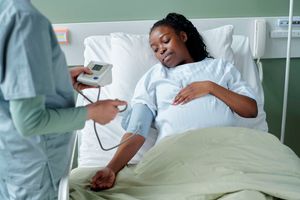
Why pregnant women need to recognise the warning signs of preeclampsia
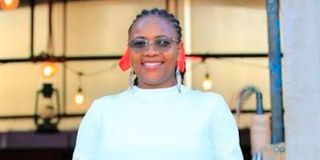
Ruth Wangari, who lost two babies only to discover that she had preeclampsia during her third pregnancy.

What you need to know:
- Ruth Wangari lost two babies after pregnancy complications linked to high blood pressure, raising questions about whether timely diagnosis, proper counselling and emergency care could have saved their lives.
- Preeclampsia remains a major cause of maternal deaths in Kenya, yet many expectant mothers do not know its warning signs or understand the dangers of untreated hypertension.
She lost two babies before learning about preeclampsia in pregnancy
Ruth Wangari lost her first pregnancy at seven months. She was devastated, and she never got an answer that could explain what caused the loss.
She conceived again, and this time, her journey was smooth. She checked all the boxes that a mother should during pregnancy. From the onset of her pregnancy, she attended antenatal care clinics (ANC) and followed all recommendations.
Her situation changed at 38 weeks. She had gone for one of the ANC visits when she was told that her blood pressure had gone up and was immediately put on hypertensive medication. That scared her. The memory of her first loss came back, and she did not want to take any chances.
“I already started to panic because I knew how fast things can change. The doctor insisted that I should go home yet my pressure was high. That did not sit well with me,” she tells the Nation.
She begrudgingly left the hospital but came back because the pressure was not going down. This time, she was admitted. She was put on medication, induced and had such prolonged labour. It was at night and there was no specialist doctor at the hospital that she went to. Those attending to me were communicating with the doctor via WhatsApp.
“That was a red flag. By morning, I had dilated at four centimetres, but I had abnormal bleeding that was dismissed by the attending nurse,” she says.
When the doctors came to the facility by morning, they booked her for a caesarean section delivery.
“As they were booking me in, they have to do some tests. One of the nurses alerted me that the hospital might not be able to handle her situation because he had bled a lot. She pricked me to let the amniotic fluid flow, I used to think that the water breaks on its own,” she says.
At that point, her organs had also started failing. Ruth’s family had already made arrangements to get an ambulance because the hospital had requested for a transfer. That took them about two hours to get.
When they were just about to leave for another hospital, a doctor came to assess her inside the ambulance. She had dilated about eight centimeters and was told she could not be transferred in that state.
“I had to push because the baby was already coming. It was a traumatic experience, it gives me shivers to this day,” she says.
Her baby didn't cry. They took the baby from her and stitched her while in the ambulance. “I kept bleeding and suffered anaemia. I was also told that due to the heavy bleeding, my kidneys were affected,” she says.
Even though she was diagnosed and told that she had high blood pressure, no doctor actually told her about preeclampsia and its danger.
According to the World Health Organisation (WHO), preeclampsia is a high blood pressure disorder that typically develops 20 weeks into pregnancy. It can present serious risks to both the mother and the baby. She only learnt about it when she conceived again.
“In my first successful pregnancy, I was fully aware of the danger signs. I walked through the journey with a gynaecologist who recommended high blood pressure medicine,” she says.
Ruth says that creating awareness is the first step towards preventing pre-eclampsia. “Not many women understand this condition, the government needs to put emphasis on antenatal clinic visits. Some women shy away from attending the clinics because they are expensive. If it can be subsidised that could encourage more women to attend the antenatal clinics,” she says.
Looking back, Ruth believes that her second baby could have been saved had the doctors taken her pregnancy history seriously. No one ever explained to her what went wrong with the first pregnancy. She was only told that her babies died, and that she had high blood pressure, but no one told her what to do.
“I thought it's just normal because I had already lost the pregnancy now therefore I don't know at what point. So I thought to myself it's because I have a non-living baby so I thought that's the one that caused it,” she says.
“They didn't explain to me that when you have this condition, then this is what you are supposed to do. If I was, at least, made to understand what was wrong, I'd be cautious with my next one, but now I lost two babies.”
WHO estimates
Globally, the WHO estimates that hypertensive disorders like preeclampsia lead to about 16 per cent of maternal deaths globally. The WHO also explains that risk factors include; first time pregnancies, multiple pregnancies, obesity or a family history of having preeclampsia.
Some of the symptoms to look out for includes; persistent high blood pressure, severe headaches, blurred vision, upper abdominal pain, nausea and vomiting after the first trimester and swelling in the hands and face.
If this condition is left untreated, the WHO shows that it can result in other complications such as seizures, hemolysis, elevated liver enzymes, low platelet count syndrome, kidney and liver damage, preterm birth, maternal and foetal death.
In the latest data by the Ministry of Health’s Every Women Every New Born Everywhere, hypertensive disorders are the second leading cause of maternal deaths in the country. This month alone, Kenya has lost 11 mothers to complications related to hypertension.
Joyce Ng’anga, Senior Policy Advisor at Waci Health says that starting ANC early can help in saving these mothers because they can understand the dangers of not attending ANC.
“We should encourage facility delivery because if such things happen at home, the outcome is even worse. We want the government to ensure newer medicines are available to the people that need them,” she says.
“The swelling, and feeling dizzy during pregnancy is sometimes not seen as a danger sign, this is why women should know danger signs so that they can come for timely interventions.”