Why SHA won’t pay for overseas treatment
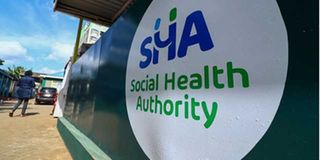
Social Health Authority (SHA) signage at Mutuini Hospital in Dagoretti South Sub-County, Nairobi, on August 27, 2025.

The Social Health Authority (SHA) will no longer foot the bill for overseas medical treatment unless the procedure is proven to be unavailable in Kenya, Health Cabinet Secretary Aden Duale has announced, citing widespread abuse of the scheme by cartels and unregulated foreign hospitals.
The Ministry of Health has moved to dismantle a network of cartels exploiting Kenya’s overseas medical referral scheme, maintaining the suspension of SHA-funded foreign treatments as it tightens controls on foreign medical referrals.
This means Kenyans seeking government-funded treatment abroad will have to wait longer, as the Ministry of Health enforces strict new vetting processes to block fraudulent referrals under SHA to plug corruption loopholes and prioritise local healthcare capacity.
The government has tightened controls on overseas medical referrals under the Social Health Authority (SHA), suspending the program until new regulations are implemented to curb misuse and ensure only vetted foreign hospitals and treatments are approved.
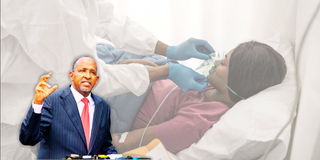
The Social Health Authority (SHA) has temporarily suspended funding for overseas medical treatments to curb widespread abuse by cartels and agents who exploit the system for financial gain.
CS Duale said on Wednesday that only vetted, contract-bound hospitals will be eligible for SHA payments abroad.
The Health CS said the government has launched a major cleanup of the SHA overseas treatment scheme, targeting loopholes that have allowed cartels and unscrupulous agents to exploit vulnerable patients, while ignoring the proper referral procedures.
Speaking in Eldoret City, Uasin Gishu County, during the launch of the Digital Health Transformation and TaifaCare Caravan, CS Duale maintained that the temporary suspension of the Social Health Authority (SHA) overseas medical package will remain in place until key policy reforms are fully implemented.
He emphasised that patients seeking SHA support for treatment abroad will have to wait as the ministry upgrades its systems and tightens oversight.
“In the next week, I will gazette the treatments that are not available in our country. The days of going overseas for treatment just because a doctor has referred you will no longer be there,” the CS said.
He said a comprehensive stakeholder review is ongoing to identify treatments that are not available locally, and only those will be eligible for overseas referrals under the SHA.
The CS made it clear that overseas hospitals eligible for referral must be registered with the SHA and hold valid contracts with the scheme in order to receive payments.
“The hospitals you are being referred to in India and elsewhere must first have a contract with SHA. We have had incidents where referral systems have not been genuine. There are people who get commissions for referring patients to foreign countries for treatment and that is what we want to stop,” he said.
Mr Duale expressed concern that some cartels have exploited the system by referring patients abroad for conditions that can be treated locally, purely for financial gain.
To address this, the government has engaged an independent benefit and advisory body based at the University of Nairobi to vet foreign hospitals and establish which ones meet the criteria for SHA accreditation.
Under the upcoming regulations, the SHA will only cover overseas treatments not available in Kenya. Mr Duale noted that many procedures often sought abroad, including PET scans, advanced imaging, kidney transplants, open-heart surgeries, and treatments for joint and spinal injuries, are already available within the country.
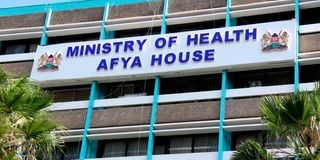
The Afya House which hosts the Ministry of Health in Nairobi.
In January this year, the Health Ministry announced plans to fast-track the review of the overseas benefits package following persistent complaints from Kenyans.
CS Duale also addressed the issue of employment for health workers under the Universal Health Coverage (UHC) program, stating that the government has now put in place proper structures to employ all UHC health workers under terms approved by the Salaries and Remuneration Commission (SRC).
“All UHC workers are going to be employed under SRC rates, on permanent and pensionable terms. Tomorrow, I have a meeting with the Council of Governors, and we are working on modalities to transition them. The story of UHC workers, interns, and CBAs is now a closed chapter during my tenure as CS,” he said.
He emphasised that the era of health worker demonstrations has come to an end with these reforms.
On the rollout of the Digital Health System, CS Duale praised the new platform as a “turning point” for Kenya’s healthcare sector, in line with the constitutional right to health for all.
“SHA and TaifaCare are a transformational step in building a health system that works for every Kenyan. From today, wananchi in Uasin Gishu and across the country can register, contribute, and access services with dignity without fear of being locked out due to cost or bureaucracy,” he said.
He noted that with the digital platform, Kenyans can now access healthcare services easily and transparently.
“With TaifaCare, health is now in your hands. Through USSD (*147#), the app, and community registration desks, we have made access simple, transparent, and inclusive,” he stated.
During the Uasin Gishu launch, Mr Duale was accompanied by Principal Secretary at the Ministry of Health Services Ms Mary Muthoni, Uasin Gishu Governor Jonathan Chelilim Bii, and other officials from both national and county governments.