Why tech is Africa’s strategy for a sustainable climate future
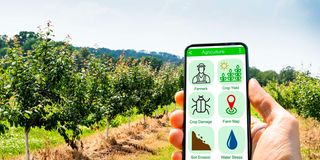
An agricultural app. Digital tools empower farmers with accurate drought and flood forecasts, and mobile platforms delivering essential weather updates and market information directly to users.

What you need to know:
- Technology encompasses renewable energy systems that replace polluting diesel generators, digital tools that empower farmers with accurate drought and flood forecasts, and mobile platforms delivering essential weather updates and market information directly to users.
As climate change reshapes Africa's landscapes and livelihoods, innovation is emerging to confront these challenges head-on. The continent faces a unique dual imperative: to develop sustainable systems that avoid the carbon-heavy mistakes of industrialised nations, while simultaneously adapting to climate impacts already disrupting economies and ecosystems. The backbone for both goals is strategic technology deployment, not as distant, futuristic experiments, but as practical, scalable solutions designed specifically for local contexts.
In Africa, technology encompasses renewable energy systems that replace polluting diesel generators, digital tools that empower farmers with accurate drought and flood forecasts, and mobile platforms delivering essential weather updates and market information directly to users.
Focusing on accessible, affordable, and tailored solutions allows Africa to leverage technology, cutting emissions and enhancing resilience. Technology has become a vital bridge that combines sustainable growth with environmental care, helping Africans to steer their climate destiny.
The continent's shift to renewable energy is much more than installing solar panels. Advanced smart grid technologies optimise electricity distribution by integrating decentralised power sources like rooftop solar and small wind farms, minimising energy waste. Machine learning algorithms analyse consumption patterns to predict energy demand, allowing utilities to balance supply dynamically, crucial in regions where unstable grids have long hindered development.
Recent innovations across Africa include BENAA's IoT-powered wastewater system in Egypt, which turns waste into safe water for farmers and rural households, boosting resilience to drought and providing sustainable irrigation solutions.
In Kenya, M-KOPA's solar home systems use mobile money for affordable access to clean energy across rural areas. Safaricom's DigiFarm app integrates IoT and meteorological data to provide farmers with timely weather forecasts and agricultural advice, enhancing climate resilience.
Innovations such as liquid metal batteries and gravity-based systems are transforming energy storage, once a significant hurdle. They offer greater durability and affordability than conventional lithium-ion batteries, especially in harsh climates. Meanwhile, blockchain-enabled peer-to-peer energy trading platforms let households with solar panels sell excess power directly to neighbours, bypassing unreliable central grids and expanding access.
Electric mobility in Africa is evolving beyond merely swapping combustion engines for electric ones. Smart charging networks powered by artificial intelligence adjust electricity rates based on renewable energy availability, maximising green power use. In East Africa, where motorcycles are a dominant transport mode, electric motorcycles equipped with swappable battery systems cut charging times and extend travel range, making clean mobility more practical and affordable.
Adaptation technologies in Africa are moving from reactive responses to predictive resilience. Fueled by AI and satellite data, hyperlocal weather models provide farmers with highly accurate forecasts tailored to their specific plots, reducing crop losses from sudden droughts or floods. Soil sensors and drones deliver real-time data on moisture and nutrient levels, enabling precision irrigation that conserves water while boosting yields.
Internet of Things (IoT) devices monitor groundwater levels in water-scarce areas to ensure sustainable use. At the same time, AI-powered solar desalination systems make brackish water viable for farming on a small scale. Early warning systems have become more sophisticated, combining seismic data, river sensors, and community feedback to predict disasters with greater accuracy and lead time.
Technology enables circular economies where little waste ends up in landfills. AI-powered sorting robots are deployed in recycling centres to efficiently separate materials, while chemical recycling breaks plastics down into reusable raw materials. The mounting e-waste crisis is addressed through automated disassembly systems that safely recover rare metals. In biotechnology, engineered microbes convert organic waste into biodegradable plastics or protein-rich animal feed. In construction, 3D printing using recycled materials is creating affordable, climate-resilient housing with a minimal carbon footprint.
AI-driven microgrid controllers maximise renewable energy use, while predictive maintenance algorithms prevent failures in critical infrastructure. Natural language processing tools democratise climate information, delivering real-time advisories to farmers in local languages via basic mobile phones. Space technology is now accessible through nanosatellites developed by African startups that monitor deforestation, track illegal fishing, and assess drought impacts at a fraction of traditional costs. African research institutions are pioneering low-cost carbon capture methods using local minerals, offering scalable alternatives to industrial carbon sequestration.
Crucially, the most effective solutions blend cutting-edge technology with indigenous knowledge. Hybrid forecasting systems combine satellite data with traditional weather indicators, while agroecology apps integrate centuries-old farming wisdom into AI-driven advice, ensuring relevance and acceptance.
However, technology alone cannot drive change without supportive ecosystems. Africa's green startups require patient capital, tailored regulatory frameworks, and collaboration between governments and tech hubs. Equitably designed carbon markets could unlock funding for homegrown innovations, while public-private partnerships must prioritise solutions that fit local needs rather than imported fixes.
Universities and vocational schools are becoming hubs for climate tech talent, developing low-cost wind turbines, solar-powered cold storage, and drought-resistant crops. The next challenge is ensuring these innovations reach the communities that need them most through inclusive business models and grassroots partnerships.