Women and adolescents at risk as essential medicines vanish in northern Kenya
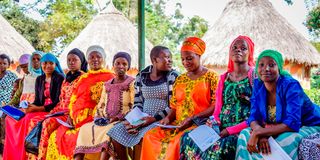
The findings show sharp declines in access to family planning products, maternal health medicines, HIV/Aids treatments, and STI drugs across Isiolo, Marsabit, and Mandera counties between 2022 and 2025.

What you need to know:
- An estimated 456,000 women annually relied on USAid-funded maternal and newborn health services alone.
- When the funding collapsed in early 2025, Kenya's public sector was left without an immediate replacement.
Vulnerable communities, especially women and adolescents, risk losing access to potentially life-saving health services as the availability of essential sexual and reproductive health medicines collapses across three northern Kenyan counties, new research has found.
The findings, released by the Solutions for Supporting Healthy Adolescents and Rights Protection (SHARP) Project and funded by the European Union, show sharp declines in access to family planning products, maternal health medicines, HIV/Aids treatments, and STI drugs across Isiolo, Marsabit, and Mandera counties between 2022 and 2025.
The research was conducted by Health Action International and its in-country partner, the Access to Medicines Platform Kenya, which assessed the availability, affordability, and frequency of stockouts for 50 commodities.
The findings showed that public facilities experienced stockouts lasting up to seven months, a situation largely attributed to the dismantling of the United States Agency for International Development (USAid).
"The worsening situation between 2022 and 2025 appears linked to the shockwaves caused by the dismantling of USAid, which has left a vacuum in the supply chain and budget for commodities that the public sector in Kenya has been unable to fill," read the report.
During the same period, USAid committed approximately $2.5 billion (Sh32 billion) in foreign assistance to Kenya, with 80 per cent allocated to health-related programmes.
That support underpinned commodity procurement, health workforce costs, and reproductive health services across the country.
An estimated 456,000 women annually relied on USAid-funded maternal and newborn health services alone. When the funding collapsed in early 2025, Kenya's public sector was left without an immediate replacement.
Meanwhile, county health authorities reported stockouts across HIV products, tuberculosis and Prevention of Mother-to-Child Transmission of HIV drugs, nutrition supplements, laboratory test kits, and contraceptives.
The declines are most acute in the public sector, which serves the poorest and most remote communities. In Isiolo, the availability of male condoms and select oral contraceptives in public facilities fell from over 80 per cent in 2022 to 38.5 per cent in 2025. Magnesium sulphate, used to manage eclampsia and pre-eclampsia, dropped from 35.7 per cent to 15.4 per cent. Stockouts of benzathine benzylpenicillin and ceftriaxone, both critical for STI treatment, lasted up to 218 days in some facilities.
In Mandera, the public sector recorded a near-total absence of HIV/Aids commodities by 2025. Availability of PrEP, a preventive HIV medicine, stood at just 5.7 per cent —a marginal increase from 3.7 per cent in 2022 — while most other commodities surveyed were entirely unavailable. In Marsabit, oxytocin, the primary medicine for preventing postpartum hemorrhage, was available in only 14.3 per cent of public facilities, down from 51.9 per cent three years earlier.
Meanwhile, a parallel study conducted in Zambia, using the same methodology across public, private, and faith-based facilities, found a more mixed picture. Zambia recorded modest gains in maternal health commodity availability and fewer stockouts overall, with more products meeting the World Health Organization's (WHO) recommended threshold of 80 per cent availability. Access to STI treatments remained disrupted, however, and HIV/Aids commodity availability was well below the WHO target across most products surveyed.
Researchers attribute Zambia's comparatively cushioned position to a 30 per cent increase in domestic financing for medicines and medical supplies, which has partially offset the reduction in external support. The SHARP Project urges an urgent need for sustainable domestic health financing, while cautioning that without continued donor support in the interim, the gap is unlikely to close before further harm is done.