Young Kenyans turn to AI to grow food and fight climate change
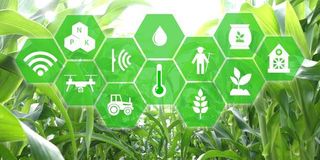
AI in agriculture. PHOTO/Shutterstock

What you need to know:
- Grace is part of a new generation of farmers that's transforming agriculture through artificial intelligence—not just to boost profits, but to survive increasingly unpredictable climate patterns.
- Climate change is one of the primary catalysts pushing young farmers toward AI solutions
Grace Wanjiku,24, pulls out her smartphone in the early morning light, snaps a photo of a diseased tomato leaf on her small farm in Kiambu County, and within seconds receives an AI-powered diagnosis that could save her entire crop.
Grace is part of a new generation of farmers that's transforming agriculture through artificial intelligence—not just to boost profits, but to survive increasingly unpredictable climate patterns.
"Before, I would lose entire crops to diseases I couldn't identify," says Grace, scrolling through the AI recommendations on her phone. "Now I can act immediately. Technology is not the future for young farmers—it's our survival tool today."
Kenya's agricultural sector faces a critical transition moment.
Young farmers are adopting a distinct approach to agriculture and tend to prefer shorter season, high-value farm enterprises such as horticulture, poultry, bee-keeping and rabbit rearing. Most importantly, 90 per cent of farmers aged 18 to 35 in Kenya have high levels of engagement with information and communication technology, according to Mercy Corps AgriFin Accelerate research.
AI tools revolutionising daily farming
One of the most widely adopted AI platforms among young farmers is the PlantVillage Nuru App, which allows more than 10,000 independent farmers in Kenya to diagnose crop diseases directly in the field, even offline.
Beyond disease diagnosis, farmers are embracing the Virtual Agronomist (VA), an AI tool that communicates through WhatsApp to provide tailored nutrient plans and agronomic advice. Farmers like Amy Selim from Kericho have benefited from such technology, optimising their fertiliser use and potentially saving costs while enhancing productivity.
The VA tool comes in the form of a mobile number, which is saved in a smartphone and used as a WhatsApp contact. The farmer can then make a WhatsApp call to explain the problem at hand and have a conversation with the virtual tool, just the same way he/she would chat with a human agronomist. The farmer can also type a slash sign ‘/’ in the message section for the app to prompt different services to choose from. They range from soil health, plant disease diagnosis and even means of weed control. The other way is for the farmer to take a photo and send it through the WhatsApp platform for AI diagnosis.
The climate connection driving adoption
Climate change is one of the primary catalysts pushing young farmers toward AI solutions. In 2023, approximately 4.4 million Kenyans experienced severe food insecurity, reflecting the sector's difficulties with financing, quality inputs, and crucial information such as weather forecasts and market prices.
For water-scarce regions, Microsoft's AI for Good Lab is partnering with local institutions to analyse the recent expansion of croplands and irrigation patterns in Central Kenya to optimise water management.
A recent study led by Senthil Nathan of Vanavarayar Institute of Agriculture in India, focusing on AI in Agriculture describes it as the best technical option to deal with the expanding population and the changing climate of the world.
“Artificial intelligence in agriculture will contribute to resolving practical issues by reducing time commitment and virtually eliminating labour-intensive tasks,” reads part of the study
Young entrepreneurs building solutions
The AI agricultural revolution isn't just about adoption—young Kenyans are creating the solutions themselves. At 27, Mutuma Muriuki founded Eco Bristo Limited, developing AI-enhanced tools like solar-powered insect traps that reduce reliance on pesticides and biochar, a type of organic fertiliser that improves soil fertility while capturing carbon dioxide.
Fred Munene, founder of Farm with Fred, incorporates cutting-edge technology such as drones for crop monitoring, AI-powered irrigation systems, and solar-powered mechanisation tools into his farming practices while mentoring other young farmers.
Tech companies targeting youth
Major telecommunications companies are taking note of this demographic shift. Safaricom and Opportunity International recently launched FarmerAI, an innovative AI chatbot that provides smallholder farmers with real-time, relevant farming best practices. The pilot programme targets 800-1,000 farmers throughout major regions of Kenya and combines generative AI with localised agricultural insights, delivering vital information on topics like weather patterns, fertiliser application, pest management, and market prices.
Young farmers are also adopting sophisticated monitoring systems like FarmShield, an AI-powered platform that can be installed on an open field or inside a greenhouse with sensors to monitor soil moisture, soil temperature, air humidity, air temperature, light intensity, water flow meter to monitor irrigation, NPK nutrient sensor. The system comes with solar panels and battery storage, making it accessible even in remote areas.
Financial inclusion through digital platforms
Digital financial services are crucial for young farmers' AI adoption. For instance, the DigiFarm platform provides input vouchers generated on a farmer's phone, redeemed at DigiFarm outlets and paid using M-Pesa, in-kind loans to purchase inputs, backed by a credit score. This integration of AI advice with accessible financing is particularly appealing to tech-savvy youth.
Kenya's commitment to AI in agriculture received official backing with the launch of its National AI Strategy 2025-2030. The strategy positions Kenya as a regional leader in AI research and development, innovation and commercialisation for socioeconomic development, with agriculture identified as a priority sector.
AI advancements have reportedly led to yield increases of up to 40 per cent among participating farmers. According to the International Food Policy Research Institute, data-driven agriculture techniques could increase farm productivity by up to 67 per cent by 2050 while reducing agricultural and food losses.
Young farmers are also using AI for market access. AI platforms in Tanzania connect farmers directly with buyers, eliminating middlemen and ensuring fair pricing, a model being replicated across Kenya.
Despite the enthusiasm, significant barriers remain. The high cost of AI technology and lack of digital skills among most farmers mean these technologies are still inaccessible to the majority of small-scale farmers.
To address this, policy priorities include expanding digital infrastructure, including affordable internet and subsidised data plans in rural areas, while launching farmer training programs to demonstrate low-cost AI tools.