Before the rollout of the malaria vaccine in the country in 2019, data from Jaramogi Oginga Odinga Teaching and Referral Hospital (JOOTRH) indicates that they would admit about five children a day in need of blood transfusion.
But three years after the introduction of the malaria vaccine, the severe cases have gone down. Several months can pass before a case is admitted to the hospital for blood transfusion.
“We still see malaria cases but a majority are non-severe cases. This is because with malaria vaccine, most of the children are protected even though not fully. Chances of them getting severe manifestation are minimal,” Dr Walter Otieno, Principal Investigator of the malaria vaccine, told Healthy Nation at his office in JOOTRH.
“The vaccine could prevent around four in 10 cases of malaria and three in 10 severe cases, with the number of children needing blood transfusions falling by a third,” Dr Otieno said.
JOOTRH’s case is not isolated. The situation mirrors that of many hospitals in the country. However, it is particularly grave in western Kenya, a high-risk malaria region.
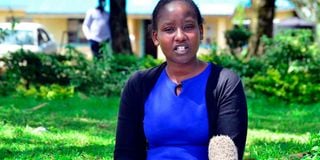
Healthy Nation spoke to Ms Noreen Kiminy, who has in the past been a frequent visitor to most hospitals in Homa Bay County. Before her son got the malaria jab, he had been infected many times and at some point a blood transfusion was recommended.
The son, Ellian, despite sleeping in a treated mosquito net, would still get infected. He was diagnosed with malaria when he was five months old.
At six months, he was the patient zero to be given the malaria vaccine at Got Agulu Sub-County Hospital in Ndhiwa, Homa Bay on September 13, 2019. “Initially, I was a bit hesitant to accept that my child would be the first in the country to be given the vaccine. I was also unsure about the vaccine’s safety. “I remember asking myself; ‘what if the vaccine is not safe?” .
She added: “Thinking of the trips I made to many hospitals even in the middle of the night when my son had high fever, frequent admissions and even blood transfusion, I was not ready to continue with the same journey. He got vaccinated.”
From the time he got vaccinated, he has not suffered any episode of malaria. But he still sleeps under a treated mosquito net.
Using the world’s first vaccine to combat a disease that kills 800 children globally daily and a leading killer of children under the age five in Kenya, Ellian became the first child in the country to receive the jab. Ellian has since completed his four jabs. Just like Ellian’s mum, Dr Otieno tells Healthy Nation that the vaccine has spared many parents the agony of having to spend admission days in hospitals and the anxiety of losing their young ones.
Malaria has been one of the biggest scourges on humanity for millennia and it mostly kills babies and infants. Kenya has made tremendous progress in the fight against malaria; with a number of government-led initiatives being developed over the years.
With President Uhuru Kenyatta being at the helm of the African Leaders Malaria Alliance (Alma), more goals have been set in the fight against the deadly disease.
Over the years, millions of insecticide-treated bed nets have been distributed and homes fumigated. Drugs and cheap testing techniques have been made available.
In 2000, Supanet, a treated mosquito net, was launched in Kilifi. It was a new form of intervention as existing nets were not treated.
In April 2001, there was a rebrand as Supanet introduced a retreatment kit dubbed Power Tab. The tablet would be dissolved in water before the net was dipped in. Soon after though, long-lasting insecticide-treated nets were developed.
Kenya began distributing treated nets in malaria-endemic regions in partnership with the WHO to test their effectiveness.
In 2007, based on the promising results from Kenya, the WHO issued global guidance on the use of treated mosquito nets.
“Impressive results in Kenya, achieved by means of the new WHO-recommended strategy, show that free mass distribution of long-lasting insecticidal nets is a powerful way to quickly and dramatically increase coverage, particularly among the poorest people,” the WHO said.
In July 2021, 15.7 million insecticide-treated mosquito nets were distributed in 27 high malaria burden counties.
However, the threat still persists.
Malaria still remains the second biggest cause of reported deaths after respiratory infections, with nearly 70 per cent of the country’s 46 million people at grave risk.
Every year, the country reports nearly 3.5 million new clinical cases and 10,700 deaths.
With the introduction of the vaccine called RTS,S developed by the pharmaceutical giant GSK and proven effective six years ago, malaria cases fell nationally from a prevalence of eight per cent in 2015 to 5.6 per cent in 2020.
In the lake regions, the prevalence has since dropped from 27 per cent in 2015 to 19 per cent in 2020 and from eight per cent to 4.5 per cent currently at the Coast — almost 50 per cent reduction, according to the Malaria Indicator Survey 2020.
The data from the survey shows that malaria cases reduced from 113 per 1,000 people to 86 cases per 1,000 people. Data from Ndhiwa Sub-county, which was one of the piloting hospitals, show that malaria cases in Homa Bay have reduced from 62 per cent in 2018 to 39 per cent last year.
Health Chief Administrative Secretary Rashid Aman said despite Africa missing its 2020 target of reducing malaria and mortality by 40 per cent, Kenya had started making commendable progress. “We also seem not to be on track in the continent to eliminate malaria by 2030, but efforts by the malaria control programme in Kenya are beginning to bear fruits,” he said.
“The proportion of patients with malaria seeking outpatient services reduced from 30 per cent to 19 per cent while the inpatient admissions decreased from 20 per cent to 15 per cent,” says the report.
The vaccine, integrated with other interventions, has reduced the number of severe cases of malaria for under-five children and blood transfusions in most hospitals in the county. According to the WHO, the vaccine has the potential to save tens of thousands of lives. However, it is limited to the poorest parts of the world since it is not clear if it will be feasible to use.
Malaria prevalence in lake regions dropped from 27 per cent in 2015 to 19 per cent in 2020, according to the Malaria Indicator Survey 2020. In Kenya, the vaccine is given to babies in four doses: the first one at six months, the second dose at seven months, the third at nine months and the last dose is given at 24 months. The clinical trials were conducted in eight malaria-endemic areas: Homa Bay, Kisumu, Migori, Siaya, Busia, Bungoma, Vihiga, and Kakamega.
From the findings, the vaccine decreased malaria cases by 39 per cent and severe cases by 29 per cent. Though it can only be effective if the children receive all four doses, this can be challenging for many families who live in rural areas and are far from health facilities.
The researchers from the trials found that in children who got the four doses of the vaccine, it prevented about 40 per cent of all malaria cases. With the piloting of the vaccine having been carried out in three countries, Ghana, Malawi and Kenya, WHO will then assess the safety and effectiveness of the vaccination. The three countries, according to WHO, were chosen because despite running large programmes and interventions to tackle malaria, including the use of bed nets, they still had a high number of malaria cases.
Explaining other importance of malaria vaccine using the data from the trials, Dr Otieno, who is also a lecturer at Maseno School of Medicine Department of Paediatrics and Child Health, told Healthy Nation that many children who got the vaccine were also protected from getting severe anaemia. Severe anaemia is one of the leading killers of children below five years.
“If a child gets severe anaemia and they are not transfused, the likelihood of the child dying is high. In this region, I attend to many children with severe anaemia of haemoglobin of 0.8 grammes, which is much lower than the normal 15.6 grammes per decilitre,” he said
“Out of the 10 children with anaemia that I saw, four of them are protected, this is a sign that more anaemia cases are averted by the vaccine.”
In Siaya, a malaria endemic region, about 6,000 malaria cases were averted. In Kombewa, Kisumu, over 3,000 cases were averted.
“This was great because it means that if the vaccine can reduce the number of malaria cases and severe anaemia coupled with good malarial drugs, then we are nearing elimination period,” said Dr Willis Akhwale, senior advisor, the African Leaders Malaria Alliance.
“If we are reducing the burden of malaria in children, then it means that we are releasing pressure on the health care system. Yes, we are nearing the end of malaria in the country and soon we will be talking about malaria elimination.”
Dr Otieno said even though RTS,S is the first generation of an approved malaria vaccine, a lot still needs to be done to ensure that a second and a third-generation vaccine is approved. “If we can get a vaccine that would give us a 90 per cent coverage, then we will be okay, but so far, this is still a remarkable success and paves the way for the development of more potent vaccines,” he said.
The Healthy Nation learnt that the vaccine is yet to be deployed in other parts of the country - it is only available in malaria endemic regions. “Once the vaccine is deployed nationally, we have a robust distribution of insecticides treated nets and make the malarial drugs available, then we will reduce malaria cases. We are not far away from being declared a malaria-free country,” Dr Otieno said.
Dr Rose Jalang’o, National Vaccines and Immunisation Programme, Ministry of Health, said the ministry is ensuring that Kenyans have access to all malaria prevention tools. “As we celebrate the WHO recommendation of a malaria vaccine, our work is far from over. We must remain dedicated to ensuring that our communities and children continue to have access to the malaria vaccine as part of a full package of recommended malaria interventions, including insecticide-treated bed nets—for a healthier and more productive nation. “I also hope that our experiences in Kenya will inspire other countries to follow suit.”