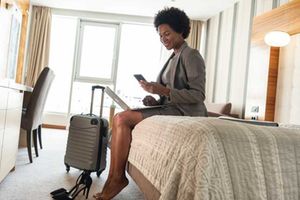
Wash the dishes after meals, strip the bed before leaving, and take out the rubbish: where does being a considerate Airbnb guest end and becoming an unpaid cleaner begin?
For Kenyans booking accommodation through Airbnb, the boundary is becoming clearer, thanks to a policy issued on October 20 that will apply to reservations booked on or after November 20.
Airbnb, which has been in Kenya for more than a decade, is among the most preferred ways for travellers to find accommodation in the country. Short-term rental analytics firm Airbtics recorded 6,535 active listings in Nairobi alone in its August 2026 market summary.
Titled “Reasonable House Rules and Requests”, the policy limits what hosts can ask guests to do during their stay and before checkout.
“Hosts are generally not allowed to ask guests to complete tasks that require significant effort or time, or would typically be performed by a cleaner, including stripping the bed, taking trash offsite, or washing and putting away dishes,” it says.
Airbnb, which has been in Kenya for more than a decade, is among the most preferred ways for travellers to find accommodation in the country.
Photo credit: Pool
It also bars hosts from “restricting access to any feature that is advertised as part of the listing”. For instance, if the listing says an air conditioner is available, the guest should not be unduly limited from using it.
Further, the policy notes that any fees for an advertised part of the listing “must be included in the price shown to guests at the time of booking”. For instance, if a swimming pool requires entry fees, it should be indicated prior to the booking.
Alongside the policy, Airbnb published guidance titled “Important Changes to House Rules”, explaining which checkout tasks hosts can request.
On dishes, the guidance said: “Guests shouldn’t be asked to wash and put away dishes, but you can ask them to put used dishes in the sink”.
Regarding laundry, Airbnb noted: “Guests shouldn’t be asked to remove sheets from the bed or start a load of laundry, but you can ask them to gather used towels.”
“Guests shouldn’t be asked to take garbage off-site, but you can ask them to separate their trash and recycling into designated indoor bins,” it said.
Hosts must also select seven standard house rules covering the maximum number of overnight guests, quiet hours, events, pets, smoking, commercial photography and locking up at checkout.
Beyond these, hosts can add “reasonable requests, all in one place”.
The October 20 changes have prompted objections from hosts, with many voicing their concerns on social media.
“Our properties are not hotels!” Missouri-based Daris Davis, who runs the David Real Estate Advisors firm, posted on Facebook on October 23. “Apparently, I can no longer ask my guests to complete certain checkout tasks because those are now considered chores that should be handled by cleaning staff.”
“These are our personal homes and vacation homes, and we take pride in providing a clean, comfortable place for people to stay. If you want to make the rules for our properties, then by all means, start purchasing and maintaining your own properties!” she said.
Purity Kathambi Mbaabu, an Airbnb host, consultant and property lawyer, told Nation Lifestyle that the rules reinforce a long-standing complaint among hosts: that Airbnb favours guests at their expense.
“For a very long time, many hosts – including myself – have complained to Airbnb that it appears they favour the guests [at] the expense of hosts. And this is why you're seeing the uproar,” Ms Kathambi said.
However, she said that when the price of a stay covers cleaning, hosts should not expect guests to do that work.
“I don’t think that is proper if [hosts] are asking [guests] to pay a cleaning fee and then on top of that, they’re asking them to do the chores. It’s not sustainable,” she said.
Airbnb, which has been in Kenya for more than a decade, is among the most preferred ways for travellers to find accommodation in the country.
Photo credit: Shutterstock
She also argued that hosts in other parts of the world face higher cleaning costs, which can explain their objections.
She estimated that cleaning a Nairobi one-bedroom apartment costs between Sh500 and Sh700, adding that she prefers to cover cleaning through the nightly rate rather than impose a separate charge.
Airbnb’s cleaning-fee guidance, issued in March 2026, allows hosts to include housekeeping costs in the nightly rate or charge a separate cleaning fee, with the option of a lower fee for short stays. The company cautions, however, that a separate fee raises guests’ expectations of cleanliness.
“Our research shows that if your listing has a cleaning fee, guests will hold it to a higher standard of cleanliness, and that can lead to more scrutiny when they review their stay,” Airbnb said in a post. “Adding a cleaning fee raises the total price of a stay. The fee is visible to guests as a separate charge at checkout. A high cleaning fee may make them reconsider booking with you.”
Airbnb had already advised against unreasonable checkout tasks, including laundry, vacuuming and stripping beds, in November 2022. The latest policy makes those boundaries more explicit and sets out action against hosts who breach them.
The changes also aim to make house rules clearer before guests book. The BBC reported on October 21 that the update seeks to prevent surprises for guests.
“House rules help guests understand what hosts expect, but we’ve heard from our community that they can be confusing, onerous and hard to manage,” Airbnb told the BBC. “So, we’ve redesigned [the rules] to make them easier to discover and clearer to set, alongside a new policy that keeps requests reasonable, with no surprises.”
Said Ms Kathambi: “On the bit of transparency, that is okay. Harmonising the rules is good.”
The update stipulates that hosts cannot introduce new demands after guests have settled in, whether through messages, signs inside the home or in-person instructions. It adds that house rules will be more prominent in listings, reservation reminders and the guest’s “Trips” tab.
Guests still have responsibilities, however. Airbnb’s “Ground Rules for Guests” say a property should not be left needing deep or excessive cleaning.
The rules state: “If guests cause damage that’s beyond normal wear and tear, we expect them to work with [hosts] to find a reasonable solution. We also expect them to reimburse [the host’s] expenses if they’re responsible for damage, missing items, or unexpected cleaning costs.”
Ms Kathambi recalled a guest causing cigarette burns on a carpet at one of her properties. She said neither the guest nor Airbnb reimbursed her, and that gathering receipts proved difficult when she tried to claim Airbnb compensation.
In smaller disputes, she said, guests have often agreed to reimburse damage directly through M-Pesa.
Airbnb’s host damage protection, part of AirCover for hosts, offers reimbursement of up to $3 million (Sh389.4 million), subject to conditions. It can cover certain additional cleaning costs, such as stain or smoke-odour removal, but excludes routine checkout work, including laundry, dishes and rubbish removal.
Some hosts are threatening booking blackouts or higher cleaning fees in response to the changes. Several petitions on Change.org call on Airbnb to reverse some of its October 20 directives.