Beyond Sponsorship: Nation Media Foundation bets on Kenya’s creative economy with Marketing X Live
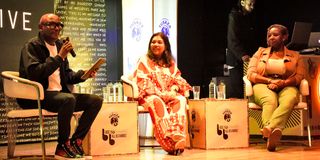
From left; Global Strategic Growth Leader Ian Kirumba, Executive Creative Director at The Partnership Africa Publicis Megha Dutta and Regional Marketing and Director at East African Breweries Limited Ann Joy Michira in a panel discussion during the marketing X live event held on September 2, 2026 at K1 Klub House in Nairobi.

At Cannes Lions International Festival of Creativity this year, Kenya was not simply present. It was winning.
For Mbithi Masya, a Kenyan film director and one of the first Black Africans to sit on the Cannes Lions Film Craft Jury, the experience offered something more valuable than recognition. It was a reminder that Kenyan creativity can hold its own on the world stage.
“I was honoured to be on the Cannes Lions Film Craft Jury, which I believe was the first for someone from our region,” Masya says.


What struck him most was not how far Kenya had to go to catch up with the rest of the world, but how little separated Kenyan creatives from some of the industry’s biggest names.
“You sometimes think the world has so much talent, so much experience, so much more than what you have, and then you get there and realise you’re the same. The talent is not different. The resources may be different, budgets and such, but the creativity is the same.”
That message was among those Masya brought back to Nairobi, where he joined other industry players at Marketing X Live, an event bringing together brands, agencies, creatives and media players to interrogate the future of creativity and marketing.
For Nation Media Foundation, which partnered with Marketing X Live as a media sponsor, the event offered more than visibility.
It put the Foundation in a room with the people shaping Kenya’s creative economy — decision-makers, advertisers, agencies and creatives — while giving it a front-row view of where the industry is headed.
For Monica Ndungu, Nation Media Group’s Chief Corporate Affairs, Marketing and Partnerships Officer, who also oversees the Nation Media Foundation, the partnership is part of a deliberate effort to understand the ecosystem from within.
“Marketing X and the Nation Media Group and the Foundation are aligned partners,” she says.
For Nation Media Group, Ndungu says, such spaces provide an opportunity to meet clients, advertisers and agencies directly, understand their needs and, ultimately, better understand the audiences they are trying to reach.
“We also get to understand the kind of work they’re doing, their needs, and how we can serve them better.”
For the Foundation, the ambition is broader.
“One of our key objectives is how we can be a catalyst for the creative economy, because we have been in the creative economy for over 66 years,” Ndungu says.
Marketing X Live, therefore, becomes part of Nation’s attempt to move beyond being a media platform and position itself as an ecosystem enabler — one that understands the people, ideas and businesses driving the creative economy and can help create connections between them. That ecosystem is becoming increasingly interconnected.
Marketing X Live convenor Caroline Kendi says the platform was created partly to break down the silos.
“We have creative agencies, brands, brand managers, media partners. And we are all trying to solve for the same customer,” says Carolyne Kendi, a brand builder, author and CEO of CK Marketing Coaching. “Most of the time you’ll find we’re all operating in different silos.”
Marketing X seeks to bring those players together to learn, collaborate and find solutions that create value across the industry.
Its mission is to provoke, inspire and enable: challenge people to rethink their work, showcase examples of what is possible, and ensure participants leave with something they can do differently.
This year’s gathering came as Kenya celebrated significant international creative wins.
At Cannes Lions, a Kenyan agency won the Grand Prix for Sustainable Development Goals for “Paid Sick Leave for Cows”, a campaign developed for dairy company Too Good.
The idea addressed a simple but costly problem. Cows treated with antibiotics must undergo a withdrawal period during which their milk cannot be sold. For dairy farmers, however, not selling milk means losing income.
Too Good’s solution was to compensate farmers during that period — effectively creating paid sick leave for cows.
For Megha Dutta, Executive Creative Director at The Partnership Africa Publicis, which worked on the campaign, its success demonstrated how dramatically the definition of creativity is changing.
“A Grand Prix is not a joke,” she says. “There are thousands upon thousands of entries at Cannes and one Grand Prix in that category. So it is the best of the best of the best in the world.”
The campaign also challenged traditional notions of advertising. There was no conventional television commercial, billboard or social media campaign. Instead, creativity was applied to a business problem.
“It has taught us that Cannes can be won on things which are not ad films and billboards and radio spots, but any touchpoint where the consumer comes in touch with the brand,” Megha says.
That shift reflects a wider change in how brands engage consumers.
Masya argues that creatives and brands should not view their relationship simply as companies paying creatives to sell products. Brands, entertainment and culture increasingly occupy the same space in people’s lives.
“We think of them as separate, but when you think about your life, it’s one,” he says.
“That’s why creatives and creators work so well with brands, because we’re just defining Kenyan life through all these things.”
For him, creativity creates the emotional bridge between a product and the person consuming it.
Blurred line
The challenge is that culture and communication are changing rapidly. Social media and creator platforms have blurred the line between advertising and entertainment, while audiences are becoming more resistant to conventional advertising.
Masya points to creators such as Crazy Kennar, whose branded content can feel sufficiently natural that audiences recognise it as advertising without being put off by it.
“You don’t know it’s an ad, and then you know it’s an ad, and you don’t care it’s an ad, because you saw it.”
For Kendi, this is why creativity is no longer simply an advertising concern. It is a business driver.
“Customers are busy living their lives,” she says. “Just because you have this offer or you have this great product doesn’t mean that people will choose you.”
Brands must understand what people care about and find creative ways of becoming part of their lives.
That requires more than reach.
“The creative work is built to serve a certain customer who then translates into a sustainable business,” Monica says. “Nation Media Group needs to intimately understand that customer, because then, in how we use our platforms and how we work and collaborate with brands and agencies and clients, we are able to come from a place of understanding rather than just making assumptions that what they are looking for is reach.”
For the Foundation, that understanding can help shape how it supports the wider creative economy.
“What’s important for us, is to be a catalyst into how creativity is viewed and built into sustainable businesses, not just for young people, but for cross-sectors,” Monica says.
Being present at Marketing X Live gives Nation access to the conversations defining that future — and puts it alongside the people making decisions about where creativity, marketing, culture and business are headed.
The opportunity is to turn that proximity into impact.
The creative economy no longer operates in neat categories. Brands need creatives. Creatives need platforms. Media needs to understand audiences. Audiences shape culture, while culture shapes brands.
Everyone, ultimately, is trying to reach the same customer.
For Kendi, Kenya’s recent international successes show that the country has every reason to be more ambitious.
“We are participating, we are levelling up, we are playing, we are winning at the global stage,” she says.
The next challenge is to make those wins contagious.
“If others have done it, then they also can do it,” Ndungu says.
For Masya, the lesson from Cannes is simple: Kenyan creatives need to trust themselves.
“I’ve learnt to be confident and trust my own belief,” he says. “Experience has taught me that I actually know what I’m doing. I know what I’m saying.”
For Nation Media Foundation, being present where those ideas, partnerships and decisions are taking shape could be an equally important part of helping Kenya’s creative economy find its next level.