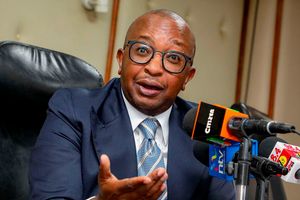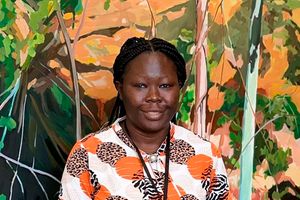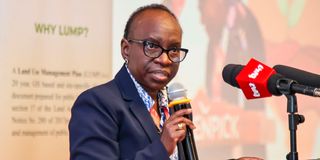
Auditor-General Nancy Gathungu.

A report by Auditor-General Nancy Gathungu has laid bare the systematic grabbing of multibillion-shilling public land meant to provide a sanctuary for some of the country’s most vulnerable children, even as the government grapples with a surge in the number of street children.
The parcels of land spread across the country were originally gazetted for children’s remand homes, rehabilitation centres and rescue homes.
Instead, they have been taken over by individuals and entities including foreign contractors undertaking capital projects in the country.
With vital safety nets for vulnerable children being replaced by private developments, the State now faces the self-inflicted challenge of how to deal with the growing number of destitute children on the streets and in dumpsites.
Ms Gathungu’s revelations, contained in her report on the audited accounts of the State Department for Social Protection and Senior Citizen Affairs for the financial year 2024/25, paint a grim picture of institutions meant to protect vulnerable children, whose land is being taken away by the monied.
According to the audit, some parcels have been allocated to foreign companies undertaking capital projects in the country, with no indication that they are paying rates.
The audit singles out the Getathuru national reception, Wamumu rehabilitation school, Othaya rehabilitation school and Murang’a children’s remand home, whose land has been grabbed or is at risk of encroachment.
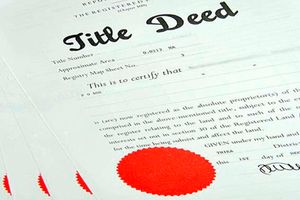
Other than the encroachment, some parcels of land lacked ownership documents and were therefore at greater risk of grabbing.
For instance, the 17-hectare Getathuru national reception, assessment and classification centre in Nairobi’s Westlands had its five hectares allocated to a Chinese construction company to set up their building site as they built the Redhill-Waiyaki way by-pass.
“The company built a double permanent perimeter wall on the property as a residence and a yard for machinery,” says the audit.
However, the audit reveals that no lease agreement was provided to the auditors at the time of the audit, “making it impossible to determine the terms under which they are using the property, with no evidence of receipt of revenue from the company by the State Department.”
“It was not explained why the construction company continues to use the property more than three years after the bypass was completed,” the audit adds.
The Wamumu rehabilitation school occupies about 75 hectares of land, out of which about 40 acres were irregularly allocated to Kenya Medical Research Institute (Kemri), Kirinyaga, for the construction of a Sh15 billion research facility.
About 26 hectares are in the process of being allocated to a private group.
This is notwithstanding that no approval documents justifying the allocations were provided to the auditors.
There was also no correspondence among the rehabilitation centre, the directorate of children services, the county government of Kirinyaga, the National Land Commission (NLC), and the PS for Social Protection regarding the allocation of the land, “an indication of the irregular transfer of the parcels of land.”
It is not the first time the Auditor-General has flagged the irregular allocation of the Wamumu land.
Ms Gathungu first flagged the questionable allocation in the 2022/23 financial year audit report on the accounts of the State Department.
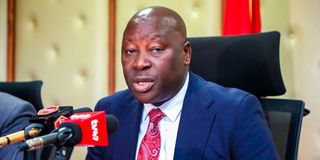
Social Protection and Senior Citizen Affairs PS Joseph Motari address journalists during a past event at NSSF building, Nairobi .
At some point, Social Protection and Senior Citizen Affairs Principal Secretary Joseph Motari revealed that the 100-acre land intended for the children’s facility had been irregularly acquired by Kemri.
The PS noted that the land was transferred towards the Kemri project about five years ago, but has since been flagged as an irregularity by the Auditor-General and that his State Department was not involved in the allocation.
“No document indicates that the land was handed to Kemri by the State Department. In any case, records indicate that the County Government of Kirinyaga took upon itself the prerogative to hand over part of the land to Kemri,” PS Motari previously told MPs.
The Wamumu rehabilitation school was established in 1950 and gazetted as a children’s institution providing rehabilitation programmes for children in conflict with the law.
The land that the institution sits on was reserved by the colonial government and maintained by the subsequent governments for children's rehabilitation services.
According to the PS, there were efforts to have the land allocated to Kemri, but the directorate objected to the hiving off, "as seen in the letter from the Director to the Cabinet Minister, then expressing objection.”
“The management of Wamumu was not involved in the transactions that led to the transfer of the 100 acres of the Wamumu land to Kemri management,” the PS notes, adding, “the management of Wamumu rehabilitation school has made efforts to secure title deeds for its two remaining parcels.”
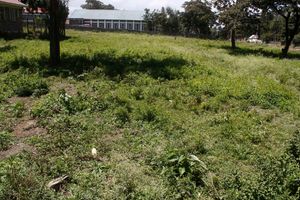
The Othaya rehabilitation school has about 10 hectares of land, which has not been fenced and lacks ownership documents, exposing it to speculators.
It is the same case for the Murang’a children’s home that occupies one hectare, has no fence, and "had been encroached by private developers who had put up permanent buildings,” with recovery signs zero.
The Thika rescue centre occupies about 10 hectares, but had not been fully fenced by the time of the audit.
“The State Department had not taken measures to safeguard the public land from encroachment,” the audit says.
This means that the effectiveness of control systems put in place by the State Department for assets and preventive mechanisms to eliminate theft, security threats, losses, wastage and misuse of assets as per the law could not be confirmed.
Regulation 139 (1) of the Public Finance Management (National Government) regulations of 2015 outlines the specific responsibilities of an accounting officer in the management of assets within a national government entity.
Follow our WhatsApp channel for breaking news updates and more stories like this.