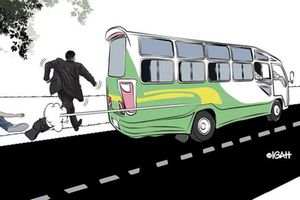
I am a law student at one of the major universities in the country. I witnessed an accident on one of the footbridges in Mlolongo. The result was a hawker being knocked down, bleeding, and with likely broken limbs. Other hawkers’ wares were also destroyed. As a student of law, this left me wondering what action is appropriate in this scenario.
Every law has broad purposes, but most statutes are crafted to set practical norms and standards in specific sectors of life, while also preventing foreseeable harm. Justice Felix Frankfurter, who served on the US Supreme Court from 1939 to 1962, often described law as a fabric woven from human relationships. Footbridges illustrate this idea well. They exist to ease movement and protect pedestrians from the dangers of highways, expressways, and other roads designed for fast-moving vehicles. Their purpose is safety, separation, and predictability.
When a boda boda rider enters a pedestrian footbridge and causes an accident, the act itself is a form of legal defiance. It is unlawful for a motorcycle to be on a footbridge. These structures are protected pedestrian spaces meant exclusively for walking. They lack road signs, street lighting, and the design features required for motor traffic.
Under the Traffic Act (Cap 403), motorcycles are not permitted to use pedestrian-only infrastructure. A rider who enters such a space breaches the duty of care expected of all road users. This unlawful entry becomes the foundation for both criminal liability and civil responsibility.
Once an accident occurs where it should never happen, the location becomes a crime scene. A first responder—especially a police officer—must secure the area to prevent further harm and ensure the injured hawker receives immediate medical attention. To support any future legal action, the responder must document the nature of the injuries, the condition of the footbridge, and the damage to other hawkers’ goods.
Photographs, witness statements, and identification of the rider and motorcycle are essential. A critical step is verifying whether the rider holds a valid license. Another is confirming whether the motorcycle is insured, as required under Sections 4 and 5 of the Insurance (Motor Vehicles Third Party Risks) Act.
Sections 53 and 54 of the Traffic Act classify riding a motorcycle in a pedestrian-only area as dangerous or careless riding. This means the rider may be investigated and charged with causing bodily harm through negligent riding—an offence recognised under both the Traffic Act and the Penal Code’s provisions on causing harm. The destruction of hawkers’ goods may also amount to negligent damage to property. Even when damage is accidental, the law recognises liability for harm that is foreseeable and arises from negligent conduct.
Beyond criminal responsibility, the accident also raises important issues of civil liability. Kenyan courts have consistently held boda boda riders liable where injuries result from negligent or dangerous riding. As illustrated in Jacaranda Bodaboda Operators & Another v Nyasero (2023), courts emphasise that riders owe an elevated duty of care to pedestrians, particularly in areas reserved exclusively for foot traffic. In such circumstances, courts typically award general damages, special damages, and anticipated future expenses to an injured pedestrian.
This reasoning provides a clear basis for the injured hawker to seek compensation for medical treatment, pain and suffering, and loss of income. Hawkers whose goods were destroyed may likewise pursue special damages for the value of the lost items and any related financial losses.
While assessing liability, justice actors must also consider contributory negligence. Hawkers may be operating informally on footbridges, raising regulatory concerns. However, Kenyan courts have repeatedly held that even when pedestrians or traders occupy spaces in ways that do not fully comply with regulations, motorists and riders still bear primary responsibility for avoiding harm. The rider’s unlawful presence on the footbridge remains the dominant factor. Contributory negligence, if any, may reduce damages but does not absolve the rider.
To determine appropriate criminal charges, the Office of the Director of Public Prosecutions must exercise its constitutional discretion. The ODPP will consider the Traffic Act, Penal Code, Criminal Procedure Code, and relevant county bylaws. Likely charges include dangerous riding, riding in a prohibited area, causing injury, and negligent destruction of property. If insurance exists, victims should be informed of their right to pursue civil compensation.
Courts play a central role in both criminal and civil processes. While alternative justice mechanisms such as mediation may be suggested, they often struggle to assess the degree of harm and appropriate compensation. In criminal proceedings, courts determine guilt and impose penalties such as fines, license suspension, or imprisonment. In civil proceedings, courts assess damages based on negligence, causation, and loss. NTSA may impose administrative sanctions such as license suspension or mandatory rider training, while county governments may review enforcement practices to keep footbridges safe.
Mr Mukoya has over 17 years’ experience working in the social justice sector. Email:[email protected]