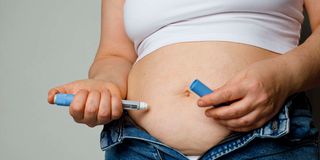
Despite a clear warning from the Pharmacy and Poisons Board (PPB) against influencers marketing Ozempic, Mounjaro, and Wegovy injections on social media, they are still advertising them for weight loss.
Some Kenyan influencers are even promoting the drugs in a “Black November” sale, treating the prescription-only injections like discounted goods. “Black November” is a season where retailers offer significant discounts on products like electronics, clothes, and furniture to clear stock or increase sales, but not for prescription medications.
In their TikTok and Instagram posts, the influencers are saying, “You will get a Sh10,000 off for the Ozempic injection, the offer is back, save Sh10,000 on every pen! Take advantage of the offer. Ozempic imeshuka bei (Ozempic’s price has dropped).”
Experts warn that these celebrities are luring many people with their before-and-after weight loss posts, claiming that if diet and exercises are failing you, “there is a better way.”
The celebrity-backed promotional posts showing discounted rates of the drugs, at Sh30,000 to Sh40,000 per month, from the original price of Sh75,000 to Sh105,000, are also enticing gullible Kenyans.
“Pay for two months of weight loss at the offer price and get a hydrafacial or massage worth Sh5,000 free,” another post from a beauty ‘clinic’ read.
The black market for Ozempic injections is thriving, thanks to the growing demand for the drug.
Photo credit: Shutterstock
Every celebrity who is posting is boasting a loss of six or more kilogrammes in a week, shared across their social media platforms, drawing more naïve Kenyans.
However, three months ago, Dr Fred Siyoi, the chief executive of PPB, said that under the Pharmacy and Poisons Act (Cap.244), prescription-only medicines are strictly prohibited from being marketed to the public. Ozempic, Mounjaro, and Wegovy are strictly prescription-only medicines.
In July last year, the Pharmacy and Poisons Board warned that there were some pens falsely labeled as Ozempic that were sold to Kenyans.
Photo credit: Shutterstock
“The board has noted the trend [influencers advertising the drugs], and investigations are being conducted, and a comprehensive public safety alert and warning to both health care providers and members of the public will be issued soon,” he said.
Additionally, PPB confirmed that it had not received any applications or granted approvals for advertising products like semaglutide (the active ingredient in Ozempic).
“None, but also advertising and promotion of these products are prohibited, including the distribution as marketing samples. Furthermore, the distribution of semaglutide is limited to health institutions; not allowed for public promotion,” he added.
“If the investigations reveal any pharmaceutical practitioner or other health care providers flaunting these rules by using celebrities and influencers in marketing the products, legal and regulatory action is imposed upon them,” Dr Siyoi warned.
Even as the board is yet to share on consequences of this directive, influencers are still openly advertising clinics that offer these injections.
A weight loss drug injected on a man's belly.
Photo credit: Pool
Ozempic is a medication originally developed for type 2 diabetes, and has shown significant benefits in lowering blood sugar and reducing cardiovascular risks, Dr Rilwan Adan, the head of the Lions Diabetes Care Center in Nairobi said in a past interview. She warned that while semaglutide (the active ingredient in Ozempic) has been proven to help in weight loss, it is important to first understand the root cause of obesity.
“You should not self-prescribe Ozempic just because you are overweight,” she said.