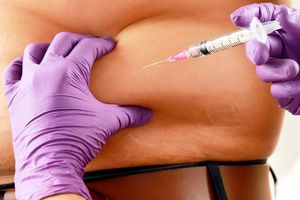
Diabetes drug Ozempic touted for weight loss added to WHO essential medicine list
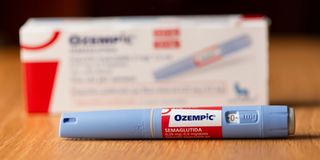
The black market for Ozempic injections is thriving, thanks to the growing demand for the drug.

A common diabetes drug, infamously touted as one that could help with weight loss, has been included in the World Health Organisation's (WHO) Essential Medicine List.
The drug called semaglutide is part of a medicine class scientifically known as Glucagon-like peptide-1 receptor agonist, which helps manage blood sugar levels for people with type 2 diabetes.
It is marketed under different brand names, including Ozempic, Wegovy, and Rybelsus.
It is one of 20 newly updated drugs included in the WHO's essential medicine list for adults to be adopted in about 150 countries globally.
The global health body has also added 15 new drugs to the essential medicine list for children.
The WHO explains that since 1977, when they started publishing the list, it has served as a basis for public sector procurement, supply of medicines, and health insurance reimbursement.
The list is updated every two years, with this year's addition being the 24th edition for the adult list and the 10th for the children's list.
"The new editions of essential medicines lists mark a significant step towards expanding access to new medicines with proven clinical benefits and with high potential for global public health impact," said Dr Yukiko Nakatani, assistant director-general for health systems, access and data at the WHO.
Kenya's Dr Loice Ombajo, an infectious disease expert from the University of Nairobi, was one of the committee members reviewing the drug list.
This year, the committee received a total of 59 applications, assessing the scientific evidence on each medicine's effectiveness, safety, comparative cost, and overall cost-effectiveness to inform its recommendations.
They also considered proposals relating to the definitions and update of the AWaRe (Access, Watch, Reserve) classification of antibiotics. These classifications help reduce the risk of antimicrobial resistance, emphasising the need for appropriate use of antibiotics.
For drugs like semaglutide and tirzepatide, the expert reviewers noted that they are still expensive, denying access to patients who need them most.
"Prioritising those who would benefit most, encouraging generic competition to drive down prices and making these treatments available in primary care – especially in underserved areas – are key to expanding access and improving health outcomes," the WHO said in a statement.
Deusdedit Mubangizi, WHO director of policy and standards for medicines and health products, said that in order to achieve equitable access to essential medicines, countries need a coherent health system response backed by strong political will, multisectoral cooperation, and people-centred programmes that leave no one behind.
"A large share of out-of-pocket spending on non-communicable diseases goes towards medicines, including those classified as essential and that, in principle, should be financially accessible to everyone," he said.
With rising cancer cases, which makes cancer the second leading cause of death globally, more drugs are approved for use, but only a few make it to the essential medicines list.
The committee only included cancer drugs proven to prolong life by at least four to six months.
They added pembrolizumab as a first-line drug that can be used for metastatic (one that has spread beyond the area where it started) cervical cancer, colorectal cancer, and non-small cell lung cancer. They also added atezolizumab and cemiplimab as therapeutic alternatives.
Sunscreen has also been included as an essential medicine to help prevent skin cancer for persons with albinism.
A drug called cystisine, used to help tobacco smokers quit, has also been added to the core list.
The WHO says that the need to help tobacco users quit has been reflected in Article 14 of the WHO Framework Convention on Tobacco Control (WHO FCTC) and its guideline. Countries are required to develop a comprehensive tobacco cessation and treatment system to provide tobacco users with a variety of tobacco cessation interventions, including evidence-based medications.
For the first time, a drug used to treat cystic fibrosis – a genetic disease that affects the lungs, pancreas, and other organs – was included in the list. The added drug is called Elexacaftor/Tezacaftor/Ivacaftor (ETI). It goes by the brand name Trikafta and has been listed under the children's essential medicines section.
"This decision is a turning point. For the first time, a medicine specifically aimed at treating cystic fibrosis has been included on the EML and the world's leading health authority has recognised that Trikafta is not a luxury drug, but an essential medicine – and that every child and adult living with CF should have the right to access it," said Right to Breathe, an organisation that champions for cystic fibrosis patients to access drugs affordably.
The malaria, Ebola, and Mpox vaccines have also been added to the emergency lists for children.
The WHO has also included a combination drug for children living with HIV called abacavir + dolutegravir + lamivudine.
Risdiplam, a drug used to treat spinal muscular atrophy, was not recommended for this year's list, just as in 2023. The committee suggested that if clinical trial results can prove that the drug can improve a patient's ability to sit without support and eliminate the need for respiratory support, then they would recommend it in 2027.