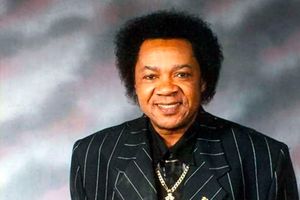
When Joe Mopero sang his timeless song Naona Heri Nirudi Nyumbani, he instantly captured the admiration of Rhumba lovers across Kenya and beyond. The song’s soulful rhythm and heartfelt lyrics resonated deeply with listeners, touching on themes of nostalgia, homecoming, and the longing for belonging.
In Nairobi’s lively music scene, Mopero quickly became a household name, and many fans assumed he hailed from the Democratic Republic of Congo — largely because of his flawless fluency in Lingala, the melodic language that defines classic Congolese Rhumba. His mastery of it was so effortless that even native Lingala speakers were astonished to learn he was Kenyan.
Rhumba star Joe Mopero was widely admired for his flawless Lingala and soulful rhythm.
Photo credit: File | Nation
Mopero’s music reflected his deep reverence for the Congolese greats. He was profoundly influenced by legendary figures like Franco Luambo Makiadi, Tabu Ley Rochereau, and Sam Mangwana. These artists had shaped African popular music for decades, and Mopero sought to continue that lineage, infusing his compositions with their rhythmic richness while maintaining a distinctly Kenyan sensibility. His beats were intricate, danceable, and filled with the emotive guitar solos that defined the golden era of Rhumba. Yet beneath the polished arrangements lay stories of everyday life — the joys, struggles, and moral lessons that spoke directly to his audience.
Joe Mopero was a proud member of Musaimo’s Mbiri Stars, one of the most influential Rhumba bands to emerge from Central Kenya. That is where we met as budding singers in late 1980s. Under the leadership of Simon Kihara Musaimo, the group became a cultural touchstone, blending Kikuyu storytelling with Rhumba and Benga’s seductive grooves. Within the Mbiri Stars ensemble, Mopero distinguished himself as both a vocalist and a composer. He contributed backup harmonies that elevated Musaimo’s biggest hits, adding depth and emotional resonance to their sound.
His compositions within Mbiri Stars such as Mwaka Mweru and Kairitu remain unforgettable classics and cemented Mopero’s place among central Kenya’s musical icons.
Mopero was not content to rest on his past achievements. His creative spirit continued to evolve, and he frequently revisited his early works to reinterpret them for new audiences. It was this restless artistic energy that led him to begin recording a reggae rendition of Heri Nirudi Nyumbani, a project that tragically became his final act. He died while still in the studio, doing what he loved most — singing and recording music.
Heri Nirudi Nyumbani by Joe Mopero
The song Naona Heri Nirudi Nyumbani itself stands as a mirror to Mopero’s philosophy of life. It explores the moral and emotional challenges of urban living — the alienation, the neglect of parents and roots, and the quiet yearning for the simplicity of home. Through the song, Mopero painted a vivid picture of young people who, lured by the promises of the city, forget the warmth and guidance of their families. The title, meaning “It is better to return home,” was both a personal statement and a universal message. It reminded listeners that progress should never come at the expense of one’s values or community ties.
Joe belonged to the generation of musicians who dominated the 1980s — a golden age when Rhumba beats filled dance halls and live bands toured across East Africa. In that vibrant musical era, Mopero’s performances were electric. He was known for his charisma on stage: his gentle smile, graceful dance steps, and the infectious rhythm of his guitar. He represented the spirit of a time when music was more than entertainment — it was a lifestyle, a bond that connected people across tribes, languages, and nations.
In his later years, Mopero’s passion for music remained undiminished. He was on the verge of a major comeback after signing with a Canadian-based label, a move that promised to reintroduce his artistry to a global audience. He and Musaimo had recently reunited in Mombasa, where they were shooting a new video — a symbolic gesture of continuity, as two pioneers revisited their shared legacy.
Rhumba star Joe Mopero was widely admired for his flawless Lingala and soulful rhythm.
Photo credit: File | Nation
Those who knew Mopero describe him as humble, disciplined, and endlessly devoted to his craft. He was not merely a performer but a student of music, constantly refining his sound and mentoring younger musicians who looked up to him.
For many, his death marked the end of an era — but also a reminder of the enduring power of East African Rhumba. He died the way many artists dream of: in the middle of creation, immersed in the music that defined his life.
Joe Mopero’s story is one of passion, perseverance, and cross-cultural artistry. He bridged borders with his voice, blending the soul of Congolese Rhumba with the heart of Kenyan storytelling.
His songs — especially Heri Nirudi Nyumbani — continue to echo in homes and hearts, reminding listeners of the value of humility, love, and the eternal pull of home.
He will be buried on Tuesday at his home in Gatuanyaga, Thika.