A majority of Kenyans prefer building and buying bungalows, even as developers increasingly invest in high-density housing like apartments and maisonettes.
Data from the Kenya National Bureau of Statistics (KNBS) reveals that Kenyan tenants aspiring to own homes show a strong preference for standalone housing, with 63.1 percent saying they would opt for a bungalow if they were to build or buy a home. Maisonettes follow at 23 percent, while apartments, often marketed for their affordability and urban convenience, trail at 9.5 percent.
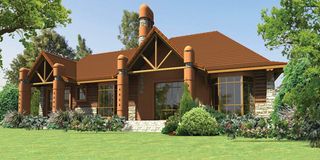
A bungalow at Greenpark Estate.
Photo credit: Pool
Despite the push for high-rise living in urban planning and private developments, these low-rise standalone homes appear to hold more emotional and functional value for most Kenyans.
For aspiring homeowners, apartments and maisonettes—especially those with shared walls—lack privacy, and some are opting to live on the outskirts of the city just to build or buy a bungalow that comes with its own compound.
Developers say the math is simple: the cost of living in the city is high, and people would rather endure the long commute to work every morning if it means owning a comfortable home with more space and at a lower cost. Places like Kitengela, Ngong, and Athi River are becoming home to many who have had enough of cramped living spaces.
“If you are buying a house on the outskirts of town, these bungalows range between Sh5 million to Sh7.5 million. Those who are looking to rent prefer it because it has space for a good compound and green space, which most people crave—and yet rent is between Sh35,000 to Sh55,000,” says Geoffrey Odongo of Superior Homes, a mixed gated community in Athi River.
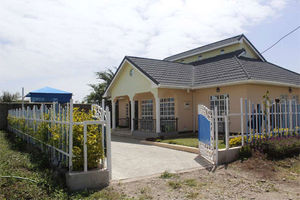
A bungalow.
Photo credit: Pool
Mr Odongo says some even switch to fuel-efficient cars, like small saloons or diesel vehicles, just to make their daily drive more economical.
The layout of bungalows is also appealing to a certain kind of buyer. “Bungalows offer a lot of functionality. You might have a floor upstairs in a maisonette, but sometimes it’s just not practical. It’s better to have a house that gives you everything on one level, especially for older people,” he says.
Interestingly, KNBS shows that Swahili-style compounds, townhouses, and traditional homes barely registered demand, appealing to only 2 percent of Kenyans looking to buy or build homes.
Patrick Mwongera, CEO of Absolute Estate, says land scarcity makes apartments and maisonettes more reasonable for developers, even if their choice of investment is detached from Kenyans' preferences.
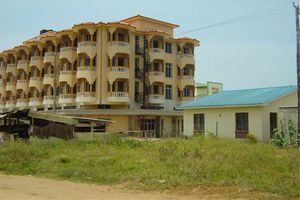
A bungalow at Greenpark Estate.
Photo credit: Pool
“We are in a space where developers are balancing between land scarcity and market trends. In Nairobi, it’s apartments and duplexes, which give them high return, high demand, and use less land,” Mr. Mwongera says.
Part of developers’ preference for apartments in Nairobi is the rental boom, particularly in upmarket areas like Kilimani, Kileleshwa, Lavington, and Westlands.
“You ask someone, ‘How much are you selling a one-bedroom?’ They say Sh7 million. Then they’ll also tell you what rent you’ll fetch once you buy. The rents are predetermined; this is a seller’s market, not a buyer’s market,” he adds.
“What is making the rent rise—one of the things right now—is Airbnb. People are furnishing houses and renting them out short-term. The returns are so good. Why would someone rent their house for Sh60,000 a month when they can earn that in a week with Airbnb?” Mr Mwongera says.
Beyond the rents, there is a new attraction, especially for career renters with young families.
“Developers are now throwing in everything: a children’s library, a play area, biking lanes, a football pitch, volleyball court, basketball court—even a game room,” he says. “People want all that. It’s part of the reason why prices have gone up. Modernism is expensive.”