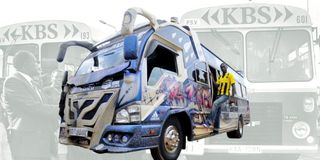
On the morning of January 8, 1964, just weeks after Kenya had hoisted its independence flag, a quiet mutiny unfolded in the unlikely setting of the Kiambu law courts.
About 200 men, summoned for operating “pirate taxis,” staged a protest – refusing to step in the courtroom where colonial law still loomed large.
The “pirate taxis” were the precursors of the modern-day matatus, though the term itself had not yet entered the lexicon of Kenyan public transport.
Unlicensed, cheap, spontaneous and unregulated, the “pirate taxis” thrived by undercutting the colonial-sanctioned monopoly of the Kenya Bus Service (KBS) and the rigid upcountry bus lines. The “pirates” had a ready clientele: ordinary Kenyans who couldn’t wait an hour, or more, for the next scheduled bus.
By then, public transport was dominated by two British companies: KBS, with a monopoly on routes in Nairobi and Mombasa, and the Overseas Trading Company (OTC), which dominated upcountry routes – all timed to operate within certain schedules. The “pirates” taxis disrupted the order and the Transport Licensing Board denied them permits.
One of the most familiar sights on the roads of Kenya for many years were the fleet of buses owned by the Overseas Trading Company that were more popularly known OTC.
Photo credit: File | Nation Media Group
The “pirate taxis” were rusty relics – patched-up Peugeots, aging Fords and battered Austins, running on hope and hustle. Despite their appearance, they captured the public’s imagination and loyalty. Charging 30 cents per ride – what the Kikuyu dubbed mang’otore matatu – these vehicles laid the groundwork for what would become known as matatus, the chaotic symbol of urban transport.
At the Kiambu Courts, Resident Magistrate M.T.A. Malik was surprised at either the turn of events, or the guts: “This is the first time such a situation has cropped up,” he said of the defiance by the “pirates”
The court boycott was more than a moment of public defiance against colonial structures. It was a challenge to the controlled mobility in urban spaces and introduced a disobedience to organised transport.
The rise of “pirate taxis” represented an attempt by African entrepreneurs to claim routes hitherto dominated by British firms and send a message that they were no longer willing to be excluded from the urban economy. Operating in a grey zone between necessity and illegality, these drivers evaded police by day and, when caught, resorted to bribery – laying the foundation for a long-standing culture of complicity and cat-and-mouse between the matatu industry and law enforcement.
Though Africans had been licensed to operate upcountry buses, they were not sufficient to cater for the thousands of travellers. “Pirate taxis” filled the void.
During a visit by African public transport operators, one of the country’s largest bus owners – Dedan Nduati of Jogoo Kimakia – voiced a growing concern to President Jomo Kenyatta: the burgeoning matatus were cutting deeply into their business. Kenyatta reportedly shot back: “Go and sell your buses and buy matatus.”
A senior traffic police officer engages a matatu driver along Tom Mboya Street on March 20, 2024.
Photo credit: Francis Nderitu | Nation Media Group
With that offhand quip, matatus found an unlikely but powerful ally – the President.
The matatu owners had a goal too: to be exempted from the stringent licensing requirements imposed by the Transport Licensing Board – a colonial holdover that still choked enterprise. In 1973, a delegation of matatu owners visited Kenyatta at his home in Gatundu and made its case.
Their plea was successful. A legal notice issued by the Minister for Power and Communications granted matatus exemption from the Transport Licensing Act, provided they carried no more than seven passengers.
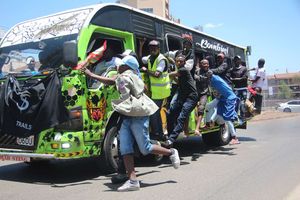
But matatus, ever the symbol of rebellion, turned this into a loophole. They defied the law and the notion of regulation. Many were technically private cars or converted goods vehicles, outfitted with hastily assembled passenger bodies. Their true numbers were elusive, scattered across urban and rural routes, often invisible to the state.
By 1977, Nairobi City Council estimated that 1,400 matatus operated in the city – some only emerging at dusk. Nationally, that figure was closer to 5,000 – a grassroots transport revolution moving at full throttle, shaped by improvisation, defiance and a will to survive.
The roads belonged to matatus
By 1976, the chaos of informal transport was laid bare when the Kenya National Insurance Company revealed troubling statistics. Of the estimated 1,500 matatus operating out of Nairobi, just 200 were insured. Even then, most were covered as private vehicles, leaving thousands of commuters uninsured. It was a gamble taken daily on the city’s roads.
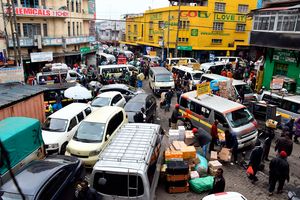
The rapid rise of matatus had begun to choke the life out of licensed bus firms. Unlike their formal counterparts, matatus operated with unmatched agility. Much like today’s boda bodas, they promised a ride that was faster and, often, far more nerve-racking. Their smaller size allowed them to weave through narrow roads and access slums and peri-urban zones where large buses dared not go.
By 1977, the frustrations of the old guard spilled into the public domain. John Clymo, the KBS Chairman, lamented the anarchic state of public transport.
Nairobi City Commission Chairman Fred Gumo flags off a fleet of KBS buses in the CBD in the early 1990s. Financial woes and competition from matatus forced the company to fold.
Photo credit: File | Nation Media Group
“The free entry into the matatu industry has its disadvantages, which outweigh the benefits,” he said.
He criticised the poor maintenance, overloading and the “reckless manner” in which many matatus were driven – warning of the fatal consequences seen in the accidents across urban Kenya.
In Nakuru, the disruption was so severe that British company, East African Road Services Ltd – a colonial-era giant – abandoned town service in the mid-1970s. When the municipal council advertised for a new operator, not a single investor came forward. The matatu model had shattered confidence in regulated urban transport.
Matatus became synonymous with traffic chaos in towns. They flouted parking rules and clogged streets, turning transport hubs into wild frontiers. Until the early 1990s, matatus were banned from entering Nairobi’s CBD – a space fiercely guarded by KBS, the last vestige of order in an otherwise unregulated storm.
In 1986, the government rolled out an ambitious experiment in public transport – Nyayo Bus Services Corporation. Conceived as a parastatal and operated by the National Youth Service (NYS), it was a two-pronged strategy: provide affordable urban mobility while creating employment for NYS trainees. At its core was a bold vision – to edge out the unruly matatu sector and reassert state control over Nairobi’s transport grid.
With a fleet of buses and uniformed youth at the wheel, Nyayo Bus hit the streets with fares that undercut its main rival, KBS. The secret? Cheap labour drawn from NYS recruits and access to subsidised fuel. At a time Kenya faced stringent foreign exchange controls, the corporation also enjoyed privileged access to imported spare parts – an enviable edge in a constrained economy.
The Nyayo Bus Service was established in 1986 to provide affordable transport to Kenyans and compete with the Kenya Bus Services, a company ran by the City Council of Nairobi. Nyayo was declared insolvent in 1995.
Photo credit: File
For a moment, it looked like a public transport utopia in the making. But behind the polished bodywork, the engine of the corporation was sputtering. Red tape, financial indiscipline and mismanagement gradually brought the venture to its knees. By 1992, just six years after its launch, the Nyayo Bus dream was officially dead – wound up and quietly retired, a casualty of misgovernance.
It survives only in memory – and in scattered, rusting shells parked like relics of a state’s fleeting attempt to outpace a city’s relentless pulse.
Meanwhile, KBS and other formal operators were shackled by the Transport Licensing Board (TLB), which controlled fare pricing. Matatus floated freely in a deregulated bubble, charging what they wished, going where they pleased and running with little regard for schedule or safety.
In this unlevel playing field, it was clear the roads belonged to matatus, and Kenya’s transport future would be driven from the margins.
Between 2003 and 2006, KBS – once the undisputed titan of Nairobi’s public transport – found itself struggling to stay afloat.
Mounting financial woes collided head-on with a wave of regulatory reforms. Among the most disruptive was a legal directive banning standing passengers in larger buses – an edict that struck at the core of KBS’s traditional operating model.
As operational costs soared and compliance demands tightened, the iconic company began to buckle under pressure. Something had to give.
By June 2006, a new chapter was written. KBS shed its old skin, re-emerging as Kenya Bus Services Management (KBSM) – a franchising and management entity created to steer the brand through stormy waters.
It was a franchise run by the politically-correct, led Kenya Power and Lighting Company Managing Director Samuel Gichuru. Just a month later, in July 2006, the streets of Nairobi welcomed the first wave of franchise-operated buses under this bold new arrangement.
It was a quiet but significant transformation: from state-era monopoly to agile, franchise-based survival – an evolution shaped not just by market forces, but the enduring need to keep Nairobi moving.
The withdrawal of KBS from Mombasa and Nairobi marked a turning point in urban transport, ushering in an era dominated by matatus.
Though nominally licensed by the TLB, these privately-owned vehicles soon descended into a state of unruliness and disorder. Efforts to streamline the sector – most notable by John Michuki through the imposition of Sacco structures and collective disciplinary measures – have yielded little more than cosmetic change.
Instead, the industry has grown increasingly politicised, transforming matatu operators into sovereigns of urban chaos. With their ascent, the once-regulated and orderly public transport system has vanished – swept away like chaff in the wind.