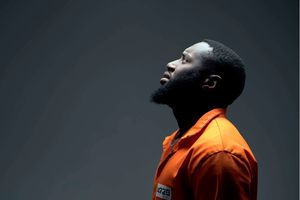
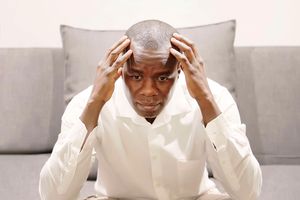
He is emotionally unavailable, mysterious, or just plain a womaniser, but he still worms his way in and out of many women’s hearts just as fast. Even mature women, some in their 30s, 40s and 50s, still fall prey to him. The “bad boy.” So why do so many women fall for bad boys, even though they are dangerous?
Caroline Wanja knows how to command a room. At 29, the Nairobi-based public relations professional has a kind of polished confidence that might suggest she is on the path toward a settled life — perhaps a dependable partner. But love, for her, rarely follows a predictable script. Instead, she finds herself drawn, again and again, to the kind of men who make stability impossible: emotionally unavailable.
“I’ve dated three men in the past two years,” she says, holding a glass of beer at a rooftop bar along Nairobi’s Thika Road. “Two of them were what I’d call chaotic. Professional bad boys.”
There was the one who would show up to pick Wanja up on a bike for a spontaneous ride to Limuru. Another took her to a secret party at 2am, only to go missing the next weekend while they were to celebrate an anniversary dinner. “One day, he was cooking ugali for me at his place, the next, he’d blocked me. Mid-text,” she tells Nation Lifestyle.
It does not mean that Wanja has not dated good men. She says good men are known for dinner dates, supportive texts, and even surprise flowers at the office, but they bore her. She talks of a banker she had a relationship with for nearly a year. He would call her “queen”. He was kind, the type who double-checked if she got home safe. But Wanja found herself getting restless.
“He planned a surprise weekend in Nanyuki and I almost cried from boredom,” she says.
The final straw was when he broke into a karaoke performance of “Perfect”, a song by Ed Sheeran on their anniversary. “I didn’t know whether to clap or call an Uber back home,” she laughs. She says that is when she realised that safety was not her thing. After 14 months, she ended the relationship.
She tried another “good boy”, a colleague who was tall, articulate and emotionally available. “I wanted fireworks, but he didn’t give me fireworks. It felt like he was my therapist,” she says.
Wanja does not play victim. She says she knows bad boys come with risks. “It’s the rush. The electricity. You see them walk into a room, and everything slows down. It’s not even about looks; it’s the presence they command. They bring out a part of me that’s wild,” she says.
The risks? She has found herself missing work because the bad boy organised an impromptu road trip. “I used to think they were the problem; now I wonder if I’ve become a version of them.”
She compares dating bad boys to espresso shots. “It’s quick, intense, and wakes you up. But if you drink too much, you crash, hard.”
She remembers one who abandoned her in Naivasha. “He was moody the whole way, then snapped over something silly. He left me in Naivasha.”
But weeks later, she was flirting with another man who bore a little too much resemblance to her previous fling.
“Sometimes I think I’m just addicted to chaos,” she says, her eyes flicking to her phone. She is expecting a text from this new guy she met a few weeks ago – leather jacket, tattooed forearm, lives somewhere in Juja but never says where exactly. “He hasn’t texted in two days. It's annoying but also exciting.”
Married but open to adventure
Ruth, another interviewee who spoke to Nation Lifestyle , is married. To everyone looking from the outside, Ruth has it all. A stable marriage. A townhouse in Nairobi’s South B. A three-year-old daughter. She teaches at a private school and volunteers at church on Sundays.
And yet, Ruth has an affair with a “bad boy.”
“It wasn’t planned,” she says quietly. “The first time I met him, it was at a wedding. He was noisy, a little rude. Smelled of whisky and leather [he was wearing a leather jacket]. My heart just jumped.”
She was 33 then, and 10 years into marriage. Her husband is kind, responsible, and predictable. “We’ve never fought. He’s never screamed at me. He asks how my day was, and he puts our daughter to bed. He is good. Too good, maybe.”
But Ruth says that with the “bad boy”, he hopes that he will not fall in love.
“I don't want to leave my marriage. I just want to feel reckless again, for a moment.”
I ask her why she is drawn to “bad boys” as a married woman. “He makes me feel alive. Like I’m not just someone’s wife or mother, I’m a woman. I come home and I feel like two people. One who smiles at her husband, kisses her daughter goodnight. And one who can't stop thinking about Mr X.”
Ruth knows the dangers of what she is doing. She worries about getting caught. What would it do to her family? “I hate that I could hurt people I love for something that only lasts a weekend.”
She says she has tried to stop. Prayed about it. Fasted. Blocked numbers. “But something always pulls me in the other direction. It’s like there’s a version of me trapped in there. As women, we’re told to be grateful. To stay safe. But no one talks about what happens when safety feels like prison.”
Faith Mwikali cannot remember the exact moment she fell for her first bad boy, but remembers the feeling.
“He was older. I felt he saw something in me that no one else did. I think I saw what I wanted in him and ignored everything else.”
Now 31, Faith teaches English at a primary school in Thika. She is soft-spoken, intelligent, and, by her own admission, chronically drawn to men who are charming, emotionally erratic, and unavailable.
“I’ve dated six men seriously in the last 10 years. They all had unresolved issues and were very attractive.”
There was the artist from Nairobi who said he did not “believe in labels” and flirted with her best friend at a party. And the bouncer with commitment issues and a habit of disappearing for days. “When I asked, he told me he needed time to think. I said to myself he’d come back better,” she says. “He didn’t.”
But Faith keeps picking versions of the same man – emotionally unstable, thrillingly confident, and almost always haunted. “I romanticise rescue,” she says. “I feel like if I can love him hard enough, be patient enough, he’ll finally soften. He’ll choose me.”
For Faith, the attraction is intense. “When it’s good, it’s like a movie. You're the only one he sees. You feel chosen. But when it's bad, it feels like you're begging to breathe.”
There was one relationship that left more than just emotional bruises. Faith recalls the night he slapped her during an argument about a text he misunderstood. “It wasn’t even about what I said,” she says quietly.
Does she regret or plan to choose better? “Sometimes I confuse chaos with passion. If he's too available, too easy to read, I lose interest. I want someone brooding but emotionally open. Dark but monogamous. Basically, I want a unicorn.”
She has spent months in therapy untangling this wiring, trying to rewrite her inner love map. But the bad boy’s allure still smoulders when she least anticipates it.
“Last year, I vowed I was done,” she says. “Then I met this guy, a police officer with a Toyota Premio car and a temper. Within a week, I was back in that pattern: Overanalysing text messages, reading into silences, aching.”
Life coach and psychologist Benjamin Zulu, speaking from his offices in Thika Road, unpacks what he calls the emotional circuitry behind why good women love bad boys.
“A bad boy,” says Zulu, “Is just a pleasure-seeking guy who lives for the moment, for the now. He doesn’t have any interest in longevity, discipline, or character. But that spontaneity makes him irresistibly hot.” Often equated with the “dandy,” his appeal is in his spontaneity and lack of concern with conventionally masculine duties.
Life coach and psychologist Benjamin Zulu speaks at Man Cave 5, an annual men-only event that fosters connection, learning, and healing, tackling challenges like mental health and financial stability at Herencia Gardens, Kiambu County, on June 14, 2025.
Photo credit: Wilfred Nyangaresi | Nation Media Group
But the attraction of such men is not only sight; it is more than that. Zulu attributes part of the attraction to child conditioning.
“Many women were taught to get love, to perform. They were raised as providers, helping at home from a young age, so they internalise the idea that love must be earned, not given freely,” he says. “When a man comes along with unconditional love, gifts, attention and care, it feels foreign, almost suspicious.”
On the contrary, they get drawn to emotionally unavailable men, whom they feel they can take care of or “fix.” Zulu explains. “She’s used to taking care of people. Someone who needs her is familiar territory. He makes her feel needed, not loved, and that feels safer.”
According to Zulu, this independence also provides a feeling of mastery. “These men don’t impose structure or expectation. There’s no need to report, to adjust to married life. She can be independent and have a man about.”
But what about the women in already committed relationships who still cheat? “The bad boy becomes an escape,” says Zulu matter-of-factly. “He’ll be a better lover, yes. But more than that, he’s a fantasy. He disappears before you have to deal with his flaws. The thrill is in the mystery.”
For others, as Zulu understands it, the safety of long-term relationships is claustrophobic. “They feel safety is a prison,” he says. “They want the freedom and adventure without forfeiting loyalty. But you can’t have both. Marriage is sacrificial; it takes commitment and restriction.”
Why do they then repeat the cycle, knowing it brings pain? “It’s an addiction,” he says. “Like an alcoholic who knows the drink is destroying them, these women know the damage but can’t escape the dope hit, the reward, release and remorse.”
His advice? “Make up your mind. Time is passing. Youth does not last forever. If you waste it pursuing a thrill, you might find yourself waking up in your 40s, disappointed and alone.”