From slaughter to steak, good meat takes time. If you’re a meat lover, you probably cook your meat immediately after slaughter. But did you know the story of good meat begins before it hits your plate, even before the animal is slaughtered?
From the science of tenderness to the dangers of mishandling, and from the art of ageing to the truth about rare meat.
“Healthy meat is meat that is gotten or harvested from a healthy animal. Veterinary professionals can tell this animal is not sick in terms of their body condition, nutritional status, and how the animal looks from the outside. They also determine the health of the animal even after slaughter,” Dr Franklin Amakove, a lecturer at the Meat Training Institute explains.
Before an animal becomes steak, Dr Amakove says it undergoes an antemortem inspection, which is a veterinary check that ensures the carcass is disease-free.
Lydia Mandila from the Kenya Meat Commission adds another dimension: “When you’re talking about meat, you look at the safety of the meat, the quality of the meat, and then there’s another aspect of halal. Halal is the process you use to slaughter meat, which actually contributes to the quality of meat.”
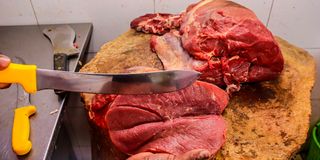
A piece of rib eye meat at Camp David Butchery on July 18, 2025.
Photo credit: Francis Nderitu | Nation Media Group
Immediately after slaughter, Dr Amakove insists that the meat should undergo the ripening process. First, he says it should be kept at normal temperature for about six hours to go through rigour mortis.
Rigour mortis is the process where the meat is given time to harden and stiffen the muscles as it drains out all the blood.
“From there, the meat can be taken through a cold chain for another 10 hours. Meat ripens after 24 hours, and that’s when you have complete rigour mortis,” he says.
Why is this important? “This rigour mortis is what brings about tenderness and improves shelf life. Meat that has undergone rigour mortis has increased flavour and also tenderness because all the acid required in the muscles has been depleted.”
Matured meat, the doctor says, is darker than fresh meat that is often bright red. “If you don't allow the meat to go through that process when you cook it, it's going to be very tough because the muscles have not hardened, and that's why you find sometimes after boiling meat for a while, it will be very tough when eating.”
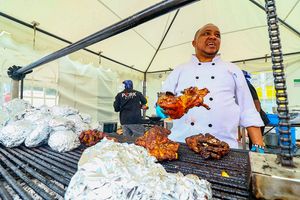
Nyama choma on display on the final day of the Kenya Meat Expo 2025 at Kenyatta International Convention Centre in Nairobi on August 8, 2025.
Photo credit: Dennis Onsongo | Nation Media Group
For naturally processed meat that has no chemicals or smoking, the lifespan is short. “It can last for three days without being put in a fridge. However, when the meat has some blood on it, it’s going to rot very fast because it’s going to undergo bacterial multiplication,” he says.
The rushed slaughtering that brings about incomplete bleeding, which results in storing meat with residual blood, accelerates spoilage by promoting bacterial growth.
“If you remove meat from the freezer and expose it to a different temperature, the microorganisms will start growing. You cannot defrost meat and return it to the freezer. The freezer burn, which is usually the dark patches on frozen meat, is always from skipping the proper chilling and moving meat directly from warm temperatures to deep freeze,” Ms Mandila adds.
Dangers lurking in mishandled meat
Dr Amakove explains that eating or handling meat from sick or dead animals is very risky. Anthrax, the doctor says, tops the list of meat-borne zoonoses in Kenya.
“If one handles an animal that has anthrax, either by handling or consuming meat from such an animal, you can develop wounds on your body or severe digestive infections that can easily kill.”
But anthrax isn’t the only culprit; improperly handled or undercooked meat can spread listeriosis, salmonellosis (especially from poultry), and brucellosis.
Then Dr Amakove adds that there are parasites like the larval stages of tapeworms in pork (T. solium) or trichinellosis, another dangerous parasite from pigs. Hydatid cysts, which are caused by a dog-transmitted parasite, can form in human livers, lungs, and even brains.
What about the health burden of avoiding red meat?
“There is the misconception that comes with red meat, but it's not the red meat that causes the disease. There are many diseases that one can contract through consuming meat that is not inspected. However, when meat is inspected, it's safe for consumption. Assuming you bought your meat from a butchery in the morning, and then you kept going around with the meat in the boot of your vehicle, or you exposed that meat to a higher temperature, the bacteria are going to multiply and produce a toxin. This toxin is what brings about food poisoning when you consume that kind of meat,” the doctor says.
Kenya’s tables have embraced medium-rare and rare steaks, which are trendy, but they are not risk-free. “Consumption of meat that is raw or that’s not properly prepared can expose you to parasitic diseases like trichinellosis.” Dr Amakove says.
This includes parasites and dangerous bacteria, especially if the meat comes from infected animals or has been cross-contaminated.
Cross-contamination in the kitchen is also a major threat; the doctor insists on always sanitise chopping boards and knives between raw meat and other foods.
“When you're preparing your meat, if you're using one chopping board, ensure you clean it and even sanitise it with Jik, which we know is a sodium hypochlorite; it knocks out most of those bacteria that cause infection in meat. Proper handling of meat will ensure there's no cross-contamination because some bacteria multiply in meat and produce a toxin that will cause infection in human beings, but not the meat itself.”
Smoking meat is one of humanity’s oldest preservation tricks, and Dr Amakove agrees that it adds a deep, rich flavour. But there’s also a more refined process - ageing.
“Aged meat is very expensive because this meat acquires some flavour, and also it becomes very tender because you allow the enzymes to take action under a controlled environment.”
But not all cuts are suited for ageing. “There are those specialised parts of the animal whereby it's known that those muscles are not very active, so the meat tends to be very tender. The most tender meat comes from the lower part of the animal, the hindquarters, and part of the inner part of the pelvic cavity.
The secret ingredient? Marbling. “When meat has a bit of fat within the muscle, that meat becomes very tender and has a specific flavour. But too much fat can reduce the flavour.”