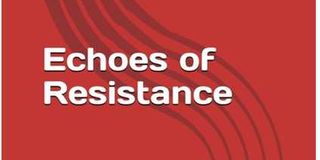
We did not hear the last of Umuofia in the late Chinua Achebe’s literary works. A budding writer from Nigeria has released a novella centred around Umuofia, a setting made popular in Things Fall Apart , among other works, which casts the limelight on corruption.
Echoes of Resistance by Elom Chinonso also brings up Enugu, among other déjà vu-raising names from Achebe's works, as it confronts graft, a topic that Achebe grappled with at length in his works.
Asked why some names of places and characters resemble Achebe’s, Chinonso told the Saturday Nation: “We are from the same eastern part of Nigeria.”
It is not surprising, therefore, that the work is dedicated to Achebe.
“I dedicate this book to the late Chinua Achebe, whose profound writings have been a wellspring of inspiration throughout my journey. His literary legacy continues to illuminate the path for those of us striving to make a difference through words,” Chinonso, who studied English and literature at the Nnamdi Azikiwe University, writes in the introductory sections.
The novella is centred around the intertwined journeys of Nnameka and Obidika, two young men who are out to fight corruption in Nigeria. From humble beginnings, they are propelled by a relentless desire to see their country freed from the grip of injustice and exploitation.
Against a backdrop of societal rot, their movement emerges, seeking to challenge entrenched power structures and restore integrity to the nation.
Theirs is a path fraught with peril, marked by betrayals, personal losses, and moments of doubt. Yet, through their resilience and resourcefulness, they gradually draw support from a diverse coalition that includes teachers, workers, youths, and even some former sceptics.
The protagonists’ fight against corruption comes at a cost. Friends are lost, the threat of violence looms, and the corrupt elites won’t stop being cunning and ruthless.
At some point, even the main protagonists fall out. At the height of their fallout, Obidika is arrested on charges of incitement.
“The news of Obidika’s arrest reverberated through Nigeria and beyond, sending shockwaves through the [anti-corruption] coalition’s supporters and adversaries alike. The public was divided. Some viewed Obidika as a martyr for the cause, while others saw his downfall as evidence of his guilt. The media coverage was intense, with sensational headlines and conflicting reports adding to the chaos,” the novella says.
Obidika dies after falling ill in prison following his sentencing. His “martyrdom” marks a turning point, galvanising the movement and leaving Nnameka with the heavy burden of leadership and legacy.
Despite these challenges, the narrative is suffused with hope. Nnameka’s ability to adapt and inspire ensures that the flame of resistance is never extinguished. The story highlights the collective power of ordinary people. For instance, there are teachers who spread the gospel of justice, young people like Chijioke who dream of a better future, and countless others who refuse to accept the status quo.
As time passes, the movement evolves. Its victories are sometimes small and hard-won, but each step forward deals a blow to the beast of corruption. Nnameka’s later years are depicted with a sense of fulfilment as he witnesses a new generation embracing the cause with passion and conviction.
The novella closes on an optimistic note. A pensive Nnameka finds solace in the knowledge that their sacrifices have inspired lasting change.
The book delivers a metaphorical message that the fight for a just society is ongoing and collective, requiring both resilience and hope.
The story is a celebration of the human spirit’s capacity for perseverance, unity, and the unwavering pursuit of a better future, ensuring that the legacy of those who dared to dream lives on in the hearts of generations to come.
The novella is packed with narrations that can be enriched by more vigorous illustrations of the characters in their Umuofia base, their traits, their world views and what is happening around them.
We did not hear the last of Umuofia in the late Chinua Achebe’s literary works. A budding writer from Nigeria has released a novella centred around Umuofia, a setting made popular in Things Fall Apart , among other works, which casts the limelight on corruption.
Echoes of Resistance by Elom Chinonso also brings up Enugu, among other déjà vu-raising names from Achebe's works, as it confronts graft, a topic that Achebe grappled with at length in his works.
Asked why some names of places and characters resemble Achebe’s, Chinonso told the Saturday Nation: “We are from the same eastern part of Nigeria.”
It is not surprising, therefore, that the work is dedicated to Achebe.
“I dedicate this book to the late Chinua Achebe, whose profound writings have been a wellspring of inspiration throughout my journey. His literary legacy continues to illuminate the path for those of us striving to make a difference through words,” Chinonso, who studied English and literature at the Nnamdi Azikiwe University, writes in the introductory sections.
The novella is centred around the intertwined journeys of Nnameka and Obidika, two young men who are out to fight corruption in Nigeria. From humble beginnings, they are propelled by a relentless desire to see their country freed from the grip of injustice and exploitation.
Against a backdrop of societal rot, their movement emerges, seeking to challenge entrenched power structures and restore integrity to the nation.
Theirs is a path fraught with peril, marked by betrayals, personal losses, and moments of doubt. Yet, through their resilience and resourcefulness, they gradually draw support from a diverse coalition that includes teachers, workers, youths, and even some former sceptics.
The protagonists’ fight against corruption comes at a cost. Friends are lost, the threat of violence looms, and the corrupt elites won’t stop being cunning and ruthless.
At some point, even the main protagonists fall out. At the height of their fallout, Obidika is arrested on charges of incitement.
“The news of Obidika’s arrest reverberated through Nigeria and beyond, sending shockwaves through the [anti-corruption] coalition’s supporters and adversaries alike. The public was divided. Some viewed Obidika as a martyr for the cause, while others saw his downfall as evidence of his guilt. The media coverage was intense, with sensational headlines and conflicting reports adding to the chaos,” the novella says.
Obidika dies after falling ill in prison following his sentencing. His “martyrdom” marks a turning point, galvanising the movement and leaving Nnameka with the heavy burden of leadership and legacy.
Despite these challenges, the narrative is suffused with hope. Nnameka’s ability to adapt and inspire ensures that the flame of resistance is never extinguished. The story highlights the collective power of ordinary people. For instance, there are teachers who spread the gospel of justice, young people like Chijioke who dream of a better future, and countless others who refuse to accept the status quo.
As time passes, the movement evolves. Its victories are sometimes small and hard-won, but each step forward deals a blow to the beast of corruption. Nnameka’s later years are depicted with a sense of fulfilment as he witnesses a new generation embracing the cause with passion and conviction.
The novella closes on an optimistic note. A pensive Nnameka finds solace in the knowledge that their sacrifices have inspired lasting change.
The book delivers a metaphorical message that the fight for a just society is ongoing and collective, requiring both resilience and hope.
The story is a celebration of the human spirit’s capacity for perseverance, unity, and the unwavering pursuit of a better future, ensuring that the legacy of those who dared to dream lives on in the hearts of generations to come.
The novella is packed with narrations that can be enriched by more vigorous illustrations of the characters in their Umuofia base, their traits, their world views and what is happening around them.