It is midday in Nairobi's Central Business District. I stroll downtown to see how easy it is to buy Ozempic, a drug sold in the Kenyan market as semaglutide and approved for diabetes but that is increasingly being bought for its weight loss gains.
At the first pharmacy near Nairobi’s Odean Cinema, I ask the pharmacist if he stocks Ozempic. He is quick to answer that he knows a supplier without even asking for my doctor’s prescription. Neither does he ask if I am diabetic or buying the drug for a diabetic.
“Huyu atanipatia Ozempic na Sh68,000 lakini ukikuja na Sh65,000 hutakosa (This supplier will give us the Ozempic semaglutide injection for Sh68,000 but if you have Sh65,000, he will not refuse),” he casually says.
The third supplier tells him the final price is Sh105,000. I ask him why a stark disparity in prices.
“Lakini kuna generic inaitwa Sema Q, hiyo najua ni affordable . (There is a generic one called Sema Q, it is affordable).” And he makes another call.
For the Sema Q, the pharmacist quotes Sh25,400.
I walk out and promise to go back. A stone’s throw away, I find another chemist willing to sell me the semaglutide injections.
“The Sema Q goes for Sh5,800 for a weekly shot,” he says.
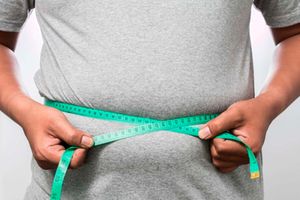
The black market for Ozempic injections is thriving, thanks to the growing demand for the drug, not for diabetes treatment but for weight loss. The price disparity is earth and heaven, making it hard for consumers to know which drugs are original, generic or counterfeits.
Ideally, the drug is a prescription-only injectable medicine, but unscrupulous traders are selling it over the counter.
The black market for Ozempic injections is thriving, thanks to the growing demand for the drug.
Photo credit: Shutterstock
Doctors are growing increasingly concerned that fake versions of Ozempic may be causing harm to Kenyans buying them over the counter or seeking prescriptions from beauticians who are not authorised to prescribe medicines.
One question looms, experts say: Is weight loss worth the side-effects?
Dr Sairabanu Sokwalla, a consultant physician and endocrinologist at Aga Khan University Hospital says semaglutide drugs are not supposed to be bought without prescription.
“This is because of the side effects associated by virtue of the way they work. Also, there is a way of giving it. There's a specific way that you need to go up on the dose and maintain the dose. And there are different doses for different reasons,” she says.
Semaglutide is a group of drugs called GLP-1 (glucagon-like peptide-1) which helps reduce blood sugars.
Dr Sokwalla says, persons who use this drug have a problem with a hormone in the gut called incretin hormones. So these drugs try to compensate for that or to act as that drug, to be able to do the work that that hormone usually does in the body.
“So, the incretin has multiple effects in the body. It has got work on the stomach, that is on the gastrointestinal tract, and also on the pancreas and in the brain,” she says.
In the gastrointestinal tract, incretin makes you feel fuller for longer. In the pancreas, it stimulates insulin production in response to sugar and works on other hormones that increase the blood sugar in the pancreas to reduce production.
Then in the brain, it works to reduce appetite and regulate your fullness.
Nausea, bloating, gall bladder inflammation
Dr Sokwalla says for the injectable semaglutide, you can administer at a dose of up to one milligram. This is used for diabetes but also has been shown to have protective effects on the heart. “So, someone who has had a heart attack or a stroke would benefit from using this drug,” she says.
Then we have the higher dose, which is known as Wegovy and that is used in doses of 2.4 milligrams, which is quite a high dose.
“This is primarily the dose for obesity or weight reduction,” says Dr Sokwalla.
Wegovy is also manufactured by Novo Nordisk, which makes Ozempic. Last month, the company saw an annual sales jump to $40.6 billion (Sh5.2 trillion), thanks to rising demand for the two drugs.
One question looms, experts say: Is weight loss worth the side-effects?
Photo credit: Pool
“The number of people living with obesity is very, very large, so this is a market we are just starting to serve,” Lars Fruergaard Jorgensen, the drugmaker’s chief executive, told New York Times .
However, unregulated use, especially in African countries causes harsher side effects. The drugs can cause bloating, nausea, constipation, diarrhoea and dehydration. They can also damage the kidneys.
Kenyans using the injections without a doctor’s advice also face other side effects such as skin reaction, swelling of the body or itching, and allergic reactions to the drug.
“Some patients can develop pancreatic issues, which is inflammation of the pancreas. It could also cause acute pancreatitis. Though many studies nowadays are showing the rate is very low, it is expected to be higher in patients, especially those who take alcohol or have high cholesterol levels or have higher risks of developing pancreatitis,” Dr Sokwalla adds.
These injections can also cause inflammation of the gallbladder, which is called cholecystitis, especially those at high risk, like those who have morbid obesity or those who have gallstones already.
This, Dr Sokwalla says, happens for long-term users. Other long-term effects include causing medullary thyroid cancer.
“Another side effect that has now been found in multiple studies is the worsening of an eye problem called retinopathy, which is the backside of the eye. So, this could be potentially quite risky when you introduce a drug to a patient who has got issues with the retina,” she says.
There is also the fear of overdosing as users assume that the higher the intake, the better the drug works.
What happens when one overdoses? “The side effects will be much worse. So, the patient would be having severe nausea or vomiting, especially when you’re on the higher doses and you've anyway got issues with your tummy. If you double dose, then it can cause dehydration because of the vomiting and diarrhoea and the patient could require admission,” she adds.
For the semaglutide injections, Dr Sokwalla says patients usually self-inject once a week within 48 hours, preferably at the same time every week.
“It is very easy to inject as the needle is thin. You inject in the fat, under the skin, on the upper arm, tummy or thighs...”
However, if you miss a dose, Dr Sokwalla says you can continue with the next dose at the scheduled time.
The Poisons and Pharmacy Board (PPB) told Nation Lifestyle that anyone found guilty of distributing counterfeit medicine faces a fine upto Sh1 million, imprisonment of up to two years. On counterfeits, it said, “The PPB issued a public alert on July 17,2024 following an Interpol report about falsified Ozempic pens (semaglutide) where Apidra Solostar Pens (Glulisine) had been labelled Ozempic. The suspected SF Ozempic was not found or traced in the Kenyan market.”
The Apidra Solostar pens are used to lower blood sugar levels in people with diabetes and can cause weight gain.