For years, Diani and Kilifi have been quiet, slow towns in the Coastal region, frequented mostly by older tourists running away from noisy crowds.
However, gradually they are now attracting party lovers, and many of them are Gen Zs. Take the example of Sharon Atieno, a 25-year-old Kenyan who lives and works in Denmark.
In July, she was among thousands of revellers who travelled many kilometres to attend the Summer Tides 2025 , a beach festival that happened on the coast.
Two months before the beach festival returned to Diani, Ms Atieno had already booked her flight, reserved a hotel room, and packed her party clothes.
“Missing the two-day beach festival wasn’t an option. I love a good time, and after how much fun we had last year, my friends and I just had to do it again,” she tells the Lifestyle.
What is drawing hundreds of young revellers to Kilifi and Diani is the barefoot revellers gathering by the Indian Ocean shore, breathing in salty air as music pulses gently from the DJ decks as the sun rises over the horizon, painting the sky in hues of orange and pink. For Ms Atieno and many others, the ritual feels indispensable.
An acrobat hangs from a pole as DJ Saint Eve plays music in the background at Kilifi New Year Festival held at Beneath The Baobabs, Kilifi County.
Photo credit: Thomas Rajula | Nation Media Group
“I flew in two weeks before the festival, partly to see my kin, but if I’m to be honest, the Summer Tide Festivals were one of the main reasons as to why I travelled all the way,” she says.
Ms Atieno’s story is far from unique. For Ella Obota, 26, from Nairobi, coastal festivals have become a lifestyle. A regular attendee, Ms Obota made the 450-kilometre journey south for Summer Tides 2024 and was soon off again to Kilifi for Beneath the Baobabs, a New Year’s festival held in a forest plateau above Takaungu Creek.
For Ms Obota, escaping Nairobi’s club scene is a breath of fresh air.
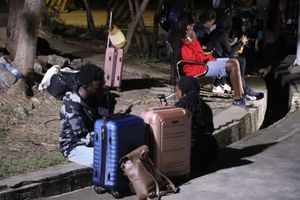
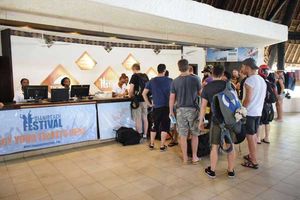
“I love partying and consider myself the life of the party. But travelling for a party adds excitement. Nairobi clubs can become monotonous. A change of scenery, the coastal vibes, and a reason to travel break that monotony. The Summer Tides 2025, for instance, will go down as one for the books, equal parts epic and chaotic. From the SGR train parties to the rain-off sunrises, not to mention the booking mishaps and protest gridlocks, these are the kinds of adventure thrills I live for. I have come to realise that sometimes the journey is as wild as the party itself.”
Valerie Kasaya, 25, agrees that Nairobi’s nightlife feels predictable compared to coastal events.
“Coastal events are just different. What we have in Nairobi is okay, but after a while, it’s the same vibe. At the coast, you get to party under the stars, by the ocean, surrounded by nature. It’s a whole new energy,” she says.
“Diani and Kilifi are more serene. There’s a calmness to partying in these coastal towns. It makes you forget that you’re at a party. That nostalgic feeling stays with you.”
For party lovers, the shift from the crowded chaos of city clubs to barefoot dancing beneath the stars may seem natural. But for event promoters, the story behind the exodus from Nairobi and Mombasa to Kwale and Kilifi counties is more complex and economically driven.
“Back in the days, Nairobi used to be the epicentre of party life. Many would travel to Nairobi to party. Then, as years went by, the tides changed with Mombasa taking over the party life. We began to witness hundreds of urban city dwellers flocking to Mombasa for party events. Mombasa was no longer crowded just in December,” says Dickson Waweru, a longtime coastal events promoter based in Mombasa.
However, the tides shifted again, this time blowing south to Kwale and north to Kilifi.
Fire flames were also part of the show during Kilifi New Year Festival held at Beneath The Baobabs.
Photo credit: Thomas Rajula | Nation Media Group
“Diani and Kilifi offer something Mombasa no longer can. A breath of fresh air, and a more intimate connection to nature and culture. Kilifi and Diani are still very indigenous. They’re still raw, still rooted. You’ll find forested plateaus, hidden coves, and communities that are more open to cultural fusion and experimental art, while Mombasa has grown into more of a commercial city like Nairobi,” Mr Waweru adds.
Yet despite the allure of serenity, Mr Waweru insists the real push came from economics, not aesthetics.
“We didn’t leave Mombasa just because the scenery changed. We left because doing business became tougher,” he says.
Mr Waweru points fingers at competition from the county, often outbidding private promoters.
“For instance, we used to book artists like Diamond Platnumz for Sh120,000 to Sh500,000. Suddenly, the county was paying him Sh1 million. That set a new bar, and it wasn’t sustainable for us. An artist we paid Sh200,000 was now asking double,” he says.
“A banner used to cost Sh400 a day. Then it jumped to Sh1,500 per banner, per day. If you’re putting up, let’s say, 10 or 20 banners and you need at least seven days to promote your event, you do the math. And we haven’t even talked about billboards,” he says.
Unable to break even, many promoters like Mr Waweru began looking elsewhere.
“We found out that Kwale and Kilifi were investor-friendly. Taxes are manageable, community support is strong, and most importantly, we can make a margin. This is why there is even now an influx of Nairobi promoters who opt to do events there because they are assured of significant margins as opposed to Mombasa.”
While the North Coast led Kenya’s tourism resurgence in 2024, according to the latest Economic Survey, recording a 57 percent rise in bed occupancy, festival-driven destinations like Diani and Kilifi can quietly reposition themselves as cultural tourism hubs with the potential to reshape seasonal travel patterns and attract high-spend urban millennials.
Occupancy within “Kilifi, Malindi and Lamu” dropped from 1,045,200 bed-nights in 2023 to 919,300 bed-nights in 2024, how more beach parties can woo more travellers?
Kasey Omwanda, the founder of Summer Tides, agrees.
“Diani offers something unique not just for partygoers, but for promoters too. Yes, the location is beautiful. Yes, people want to escape and recharge. But at the end of the day, for a businessman like myself, the numbers must make sense. This year, we had over 6,000 people at Summer Tides. The majority came from Nairobi and other major cities. That tells you something.”
Meanwhile, with promoters chasing margins for revellers like Gabriel Kamwora, 26, it is less about numbers and more about the experience.
“There’s nothing like a beach party. Dancing in light clothes under the stars, with the ocean breeze in your face… It’s not just a party, it’s an escape. I’ll always find a coin for that kind of experience, anything to break the monotony of Nairobi’s overcrowded clubs.”