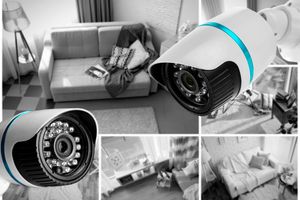
For a Kenyan woman, what should have been a routine medical examination turned into a deeply unsettling experience after she discovered a CCTV camera pointing directly at the examination table where she had undergone a gynaecological medical procedure.
She had visited a Nairobi clinic on May 5, 2023, for a transvaginal ultrasound, a procedure that required her to undress and lie on an examination table as a sonographer conducted the examination.
This procedure is used to detect several conditions affecting a woman's reproductive organs, including
Only after the procedure, which involves lying on her back with her knees bent, did she notice a camera mounted in the room and aimed at the table.
Concerned about why such a device would be installed in a room where patients undergo intimate examinations, she questioned the person who had conducted the procedure.
Still uneasy, the woman raised the matter with her doctor, who explained that the camera was meant for monitoring purposes and did not record footage.
But the explanation did little to reassure her. She wanted to establish whether her examination had been captured on camera and demanded to view footage covering the time she was in the room.
The woman stated that she had not been aware of the existence of a recording CCTV camera in the examination room until after the procedure had been completed.
Feeling that her privacy had been violated, she reported the matter to Nairobi’s Parklands Police Station. She later returned to the clinic accompanied by police officers, but the doctor again declined to allow her to review the footage.
The police subsequently obtained a search warrant and seizure orders from a Nairobi court, authorising officers to inspect the clinic's CCTV system, retrieve information and take away the digital video recorder (DVR) kit and its components.
The orders also covered footage from the examination room for the period when the woman was undergoing the procedure.
However, an examination of the material obtained through the Directorate of Criminal Investigations (DCI) Forensic Laboratory showed that footage for the specific hour she was at the clinic had been overwritten.
For the woman, the uncertainty over whether her intimate examination had been recorded remained a source of distress.
In December 2023, she lodged a complaint with the Office of the Data Protection Commissioner (ODPC), accusing the clinic of violating her privacy and subjecting her to lifelong trauma over the possibility that the examination of her private parts could have been recorded.
In a determination issued in March 2024, the commissioner found the clinic liable and ordered it to pay the woman Sh1.25 million in compensation.
The commissioner also directed the facility to remove the CCTV camera from the examination room and erase recordings stored in the DVR machine.
The clinic was further ordered to install a visible notice at the entrance informing patients and visitors that CCTV cameras had been installed on the premises.
Other directives required the facility to conduct a comprehensive data protection impact assessment covering activities involving sensitive personal data and establish internal procedures to enable patients to exercise their rights.
It was also required to introduce internal incident-reporting mechanisms and implement data protection by design and by default in the collection, storage and processing of personal and sensitive information.
The clinic was given 30 days from receipt of the enforcement notice to train its staff on the requirements of the Data Protection Act and comply with the other directives.
But dissatisfied with the decision, the clinic moved to the High Court, arguing that the commissioner had overstepped her mandate and made findings unsupported by the available evidence.
It particularly challenged the finding that the woman's rights to access and erasure of her personal data had been violated, arguing that no footage relating to her examination had been retained.
“The Commissioner erred in law and facts in finding that the Appellant failed to obtain consent from the Respondent before processing and storing her personal data by CCTV yet forensic reports indicate that no data was collected and stored,” the clinic argued.
In allowing the appeal, Justice Francis Andayi did not determine whether the clinic had violated the woman’s privacy. Instead, he found that the commissioner had failed to follow the requisite procedural steps before making the determination and ordering compensation.
The judge said the complaint should have proceeded to a hearing where both parties would be given an opportunity to address the issues before a decision was reached.
“The failure to follow the above-said requisite procedural steps renders the decision of the Data Commissioner invalid. Noting that the matter did not proceed through a hearing yet the appellant was condemned to pay compensation, I find that this was a procedural error that needs to be rectified,” he said.
Justice Andayi consequently remitted the dispute to the commissioner for a fresh hearing, directing the office to hear the parties on the issues raised before making a determination.
The court affirmed that the commissioner has the mandate to enforce compliance with the Data Protection Act and impose the consequences provided under the law.