In Rongai's quiet neighbourhoods, where manicured hedges and high walls speak of middle-class aspirations, an unseen tension brews—not from criminals lurking in shadows, but from the unblinking gaze of security cameras.
When Mr JK and his wife, Ms FW, installed CCTV cameras around their palatial home in 2021, they sought to deter burglars terrorizing their Kajiado estate.
But one camera, angled beneath their roof soffit, inadvertently captured something else: their neighbor's kitchen and compound, turning a security measure into a Sh200,000 privacy lawsuit.
This case represents just one dispute in Kenya's growing legal war over surveillance and privacy—a conflict reshaping neighborhoods, businesses, and courtrooms across the country.
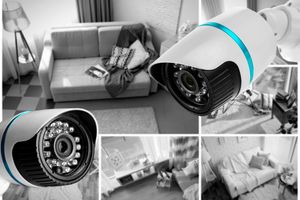
A CCTV camera. Many companies worldwide have invested thousands of dollars in software that is aimed at supervising their workforce, more so for those working from home or in a remote setting
Photo credit: Shutterstock
As CCTV cameras proliferate from affluent suburbs to informal settlements, Kenyans are discovering that enhanced security often comes with an unexpected cost: the erosion of personal privacy rights guaranteed under Article 31 of the Constitution.
Kenya's CCTV revolution began earnestly enough. Rising crime rates, particularly burglaries and violent robberies, drove homeowners and businesses to invest in technological surveillance systems.
What started as simple security measures has blossomed into a full-fledged industry, with estimates suggesting Nairobi alone has over 2,000 privately owned cameras—not counting government installations.
"The demand has grown exponentially," explains a security systems installer operating in Nairobi's upmarket areas.
"Ten years ago, maybe one in ten homes had cameras. Now it's rare to find a middle-class residence without them. The technology has become affordable—you can get a basic four-camera system for under Sh30,000 depending on the brand and features."
But this surveillance boom has created unintended consequences, opening up the battle between security and privacy.
As cameras multiply, so do disputes between neighbours, landlords and tenants, businesses and customers.
Both the Office of the Data Protection Commissioner (ODPC) and courts have been receiving multiple CCTV-related complaints in recent years.
The Rongai case exemplifies Kenya's privacy-security dilemma. The couple argued their cameras served legitimate security purposes following multiple break-ins on their estate.
Their neighbour countered that the compound and kitchen-facing camera captured intimate family moments—children eating breakfast, private conversations—creating constant anxiety about being watched.
Rulings from the courts and ODPC have established several critical principles: First, that property owners become "data controllers" when installing CCTV systems and must register with the Commission.
Second, cameras must be carefully positioned to avoid capturing neighboring properties without consent.
Most significantly, the Sh200,000 compensation award for emotional distress signalled that privacy violations carry real financial consequences.
Similar cases are shaping Kenya's emerging surveillance jurisprudence. In Nairobi, a High Court judge ordered a homeowner to remove two cameras angled at a neighbour's property in Kilimani.
This was despite the owner's claims that the cameras were necessary after thieves used the neighbor's yard to access her home.
The complainant countered that the cameras were angled to spy on his property, violating his privacy.
The court ruled that while the respondent had a legitimate reason to install the CCTV camera for purposes of security, this ought to have been done in an orderly manner by consent or even through the management of the houses, especially considering that the two parties were neighbours.
With a camera, a parent can avert accidents or catch them in good time.
Photo credit: Shutterstock
Citing a precedent that says 'privacy’, ‘dignity’, ‘identity’ and ‘reputation’ are facets of personality, the court held that a person who installs CCTV cameras, even in residential areas, becomes a data controller and is required to register with the ODPC.
"The respondent was under the obligation to receive an express and unequivocal consent from the petitioner in view of his right to privacy. No such express consent is demonstrated," stated the court.
The landmark judgment stated that the respondent's security concerns, while valid, do not override the petitioner's constitutional right to privacy. Surveillance must be proportionate and consensual.
"The courts are drawing clear lines," says a data protection advocate. "You have a right to protect your property, but not to monitor your neighbour's daily life. The burden is on camera owners to prove they've minimized privacy intrusions."
Two neighbours at Ngumba Estate in Kasarani, Nairobi, were also entangled in a digital privacy case in court.
Central to the dispute was the complainant's claim that his neighbour and her landlord had installed a CCTV camera facing his house, breaching his privacy.
The complainant argued that the offending camera was aimed directly at his home, capturing his private movements at the premises, including the house.
He claimed the installation disrupted his family's privacy as every movement in their home was potentially being watched.
He sued to reclaim his privacy, seeking orders directing the respondent and her landlord to uninstall the cameras and delete the data stored.
However, the court dismissed the case, ruling that the complainant should have first filed his complaint with the ODPC before approaching the court. The judge ruled that he breached the doctrine of exhaustion.
Commercial area surveillance
The Energy Dealers' Association learned this when they challenged the requirement by the Energy and Petroleum Regulatory authority (EPRA) for Liquefied Petroleum Gas (LPG) stations to install surveillance cameras with live regulator access. Their lawsuit argued the mandate violated privacy rights and exposed trade secrets.
Energy and Petroleum Regulatory Authority has stopped issuing permits to operators of gas refilling plants without CCTV cameras.
Photo credit: Shutterstock
The High Court's recent dismissal of the case established another precedent: In certain high-risk industries, public safety justifies surveillance.
"The Embakasi incident tragically underscored how unsafe practices can suddenly devastate lives and strain the healthcare system (with hundreds injured). By instituting surveillance, EPRA aims to proactively prevent such disasters or respond faster if they occur," the judgment stated.
"This is in alignment with the State’s duty under Article 43 to take appropriate measures to protect health".
This case involved a challenge to the EPRA directive requiring LPG dealers to install CCTV cameras at filling areas and stations with live remote access to the regulator to monitor for safety and compliance.
The contested requirement, contained in the Petroleum (Liquefied Petroleum Gas) Regulations, 2019, mandates all licensed LPG storage and cylinder-filling facilities to have “intrinsically safe, non-obscured” CCTV cameras monitoring the filling area, accessible to the Authority via a web portal.
The dealers argued this violated their privacy, property rights, and was an overreach of EPRA's powers since neither the Energy Act, 2019, nor the Petroleum Act, 2019 expressly authorizes the requirement of CCTV installation with live access for regulators.
The petitioners also invoked the Data Protection Act, 2019, asserting that compulsory live-feed access to their CCTV infringes data privacy principles, with no clarity on who at EPRA can view the footage, how long data will be stored, or how it will be secured.
However, the ruling included crucial limitations — EPRA must establish clear protocols for data access, storage duration, and protection against misuse.
Retailers face similar dilemmas. Several supermarkets have faced lawsuits from employees alleging that constant camera monitoring creates oppressive work environments.
In residential areas, some housing estates have implemented bylaws requiring residents to register camera locations with management committees.
Others mandate privacy filters that blur neighbouring properties. But these remain voluntary measures without nationwide standards.
Oops! Camera was rolling.
Photo credit: Shutterstock
In Karen, Nairobi, two neighbours were also before the Data Protection Commissioner over CCTV installation.
The complainant claimed his neighbour had installed CCTV cameras at the gate in a manner that thy were capturing his movement in and out of his residence.
The entrance to his neighbour's home was near the complainant's house and the cameras faced opposite directions of the road within the estate. According to the complainant, the cameras were monitoring movements on the said road, including anyone walking or driving to his house.
However, the ODPC officers visited the scene, accessed the data and found that the cameras were directly facing each other and were only capturing movements within the private setting.
"The Office has found that the use of CCTV by the respondent to capture video and sound recording within his premises encompassed processing of personal data in the course of a purely personal or household activity and is exempt from the provisions of the Act," said the Commissioner dismissing the complaint.
Beyond legalities, psychologists warn about surveillance's societal effects, noting: "The constant awareness of being watched triggers chronic stress responses".
Interviewees in high-surveillance neighbourhoods report avoiding certain rooms, closing curtains permanently, or restricting children's play areas.
As Kenya navigates this complex landscape, several solutions are emerging. The ODPC recommends "privacy impact assessments" before installing cameras—evaluating what areas will be covered and who might be affected.
"While the Office acknowledges that security is a legitimate purpose, it must be pursued proportionately and within the confines of the law," says ODPC.
However, Kenya faces unique challenges. Unlike Western nations with long-established privacy norms, Kenya is developing these protections alongside surveillance technology's rapid adoption.
This creates both risks — of normalizing intrusive monitoring — and opportunities to build privacy-conscious systems from the start.
As cases multiply, one truth becomes clear: Kenya's CCTV revolution needs guiding principles.
The courts have taken the first steps by affirming privacy rights, but comprehensive legislation is needed.
Amendments to the Data Protection Act could establish maximum camera ranges and restricted angles, data retention limits, prohibitions on certain capabilities like audio recording and the introduction of stronger penalties for misuse.
For now, Kenyans find themselves in a surveillance limbo—caught between genuine security needs and fundamental freedoms.
As the Rongai couple discovered, in this new era, protecting your home might require more than cameras — it demands careful consideration of your neighbor's rights too.
The coming years will determine whether Kenya develops a balanced approach or becomes a surveillance state in all but name. One thing is certain: as camera resolutions increase, so must legal clarity.