Hello

Your subscription is almost coming to an end. Don’t miss out on the great content on Nation.Africa

Ready to continue your informative journey with us?

Hello

Your premium access has ended, but the best of Nation.Africa is still within reach. Renew now to unlock exclusive stories and in-depth features.

Reclaim your full access. Click below to renew.

Uganda’s choice: The eight candidates seeking to lead

The election is set against the backdrop of Uganda's imminent oil production starting in October.

Photo credit: Daily Monitor

Today, more than 21.6 million Ugandans will head to the polls to elect a president for the next five years, alongside choosing a new parliament.

The vote comes at a pivotal moment, with the country preparing for the commercial production of oil and gas expected to begin in October.

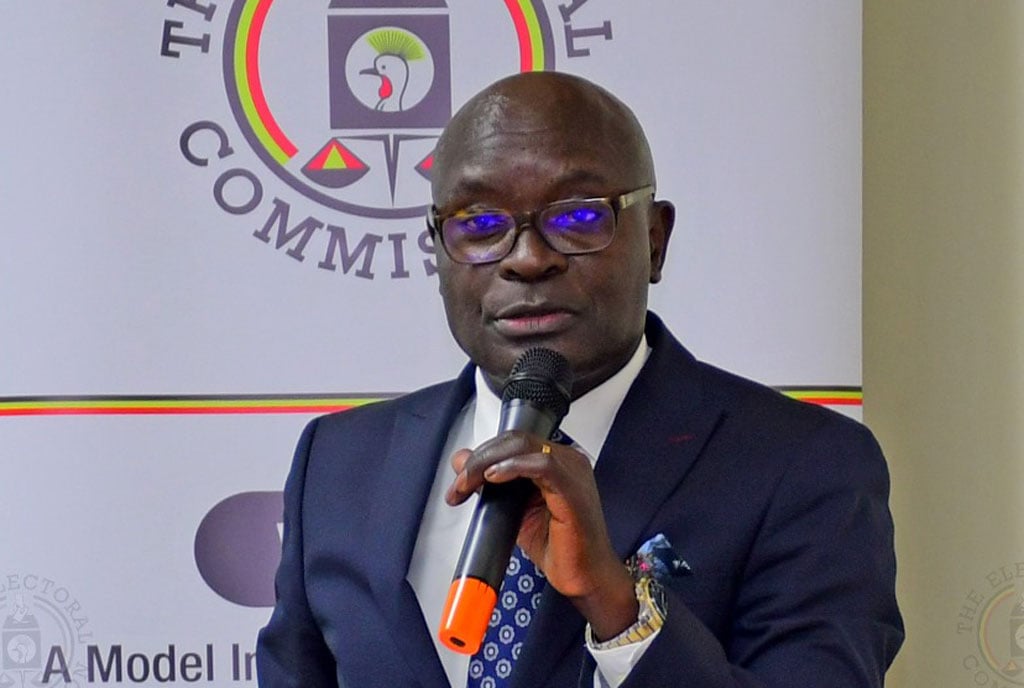
Against this backdrop, Ugandans are weighing the promises of eight candidates, each seeking to guide the nation towards middle‑income status, 7 percent annual growth, and greater foreign investment in agro‑processing, tourism, mineral development, and science, technology, and innovation.

The next leader will also be tasked with laying the foundations to expand GDP from Ush60 trillion ($16 billion) to Ush500 trillion ($133 billion) over the next 15 years.

Yoweri Museveni

2025-09-23T091006Z_463940766_RC2KXGAADBMO_RTRMADP_3_UGANDA-POLITICS

Uganda's President and the leader of ruling National Resistance Movement (NRM) party Yoweri Museveni attends a ceremony for his nomination as presidential candidate at the Electoral Commission offices in Kampala, Uganda September 23, 2025. 

Photo credit: Reuters

Yoweri Kaguta Museveni, 81, was born in Ntungamo District, western Uganda. He attended Ntare School before proceeding to the University of Dar es Salaam in Tanzania, where he studied political science and economics. Returning to Uganda, he briefly worked in the president’s office until 1971, when Idi Amin seized power. Museveni fled to Tanzania, where he made his first attempt to fight Amin in 1972, suffering defeat. He returned in 1979 when, supported by Tanzania, Ugandan forces overthrew Amin. Museveni became Minister of Defence in the post-Amin government.

He contested his first presidential race in December 1980, which he lost, but accused the winner, Milton Obote, of rigging. Museveni would launch a five-year guerrilla war in central Uganda, which cost over 500,000 lives and property worth billions of shillings. He emerged victorious in 1986, taking the oath as president on January 29 that year.

Museveni is credited with establishing a democratic order and constitutional governance through the 1995 Constitution. His early years were marked by peace restoration, economic liberalisation, structural reforms, and rehabilitation of infrastructure, earning international praise in the late 1980s and 1990s.

He has contested and won every presidential election since 1996. However, critics accuse him of undermining the Constitution by removing presidential term limits in 2005 and the age cap in 2017, enabling him to contest at 77 years old. Allegations of election irregularities, suppression of opposition, corruption, youth unemployment, and rising living costs persist. Museveni, one of Africa’s longest-serving heads of state, represents stability and continuity, though younger Ugandans increasingly demand change.

Robert Kyagulanyi Ssentamu (Bobi Wine)

2026-01-14T120214Z_1993820438_RC2V0JA3NCZT_RTRMADP_3_UGANDA-ELECTION

Ugandan Presidential candidate Robert Kyagulanyi, also known as Bobi Wine, of the National Unity Platform (NUP) party, prepares to receive international elections observers at his home in Magere ahead of the general elections, in Kampala, Uganda, January 14, 2026. 

Photo credit: Reuters

Born in Mpigi District in central Uganda in 1982, Robert Kyagulanyi Ssentamu grew up in Kamwokya, Kampala. He studied at Makerere University, where he pursued music, rising to prominence in the early 2000s as Bobi Wine. His songs resonated with urban youth, building a mass following.

Kyagulanyi entered politics in 2017, winning a parliamentary seat in Kyadondo East. His slogan “People Power” galvanised marginalised groups, forming the basis of the National Unity Platform (NUP). He contested the 2021 presidential election, emerging as Museveni’s strongest challenger, securing 35 percent against Museveni’s 58 percent.

He represents youth-driven change, advocating accountability, anti-corruption, respect for human rights, expanded freedoms, and opportunities for the unemployed. Critics, however, question his experience and accuse him of foreign backing.

Nathan Nandala Mafabi

FDC presidential candidate Nathan Nandala Mafabi

Nathan Nandala Mafabi, born in Sironko District in 1966, will turn 60 two days after the election. A graduate of Makerere University with a Bachelor of Commerce, he later qualified as a Certified Public Accountant.

Mafabi entered Parliament in 2001, representing Budadiri West, a seat he has held for 25 years. He became Leader of the Opposition from 2011 to 2014, known for his focus on accountability and transparency. Internal disputes weakened his party, the Forum for Democratic Change, leading to a split and the formation of the People’s Front for Freedom.

Mubarak Munyagwa

CMP presidential candidate Mubarak Munyagwa campaigns in Jinja North Division on January 9, 2025. PHOTOS/ISAAC KINTU

Born in Kampala in 1979, Munyagwa studied business at Makerere University. He entered politics in 2016, elected MP for Kawempe South. Known for his outspoken style, he championed urban poor issues. After losing his seat in 2021, he remained active in opposition politics.

Joseph Elton Mabirizi

Conservative Party presidential candidate Joseph Mabirizi delivers his remarks in the 2025 NTV Presidential Debate at Serena Hotel in Kampala on November 30, 2025. PHOTO/ABUBAKER LUBOWA

Joseph Elton Mabirizi, a pastor, has previously contested for the presidency with limited success. He emphasises constitutional adherence and accountability, but has struggled to mobilise Uganda’s growing born-again Christian community. His campaign has attracted little national attention.

Robert Kasibante

Presidential hopeful Mr Robert Kasibante of the National Peasants Party addresses a gathering during his campaign trail in Jinja City on October 29,2025.PHOTO/DENIS EDEMA

Robert Kasibante gained attention by declaring his presidential bid. He advocates political inclusion beyond dominant parties but faces challenges of limited organisation, finances, and recognition. He represents Ugandans seeking alternatives outside established parties.

Kabinga Bulira

People’s Revolutionary Party (PRP) presidential candidate, Mr Frank Bulira Kabinga. PHOTO/FILE/HANDOUT 

Bulira first appeared in national media when he declared his 2026 candidacy. Despite being little known, he successfully gathered the required 9,800 signatures from across Uganda, demonstrating broad support.

Gen Mugisha Muntu

ANT presidential candidate Mugisha Gregory Muntu delivers his remarks in the 2025 NTV Presidential Debate at Serena Hotel in Kampala on November 30, 2025. PHOTO/ABUBAKER LUBOWA

Born in Ntungamo District in 1958, Mugisha Muntu studied at Makerere University before joining Museveni’s bush war in 1982. He rose through military ranks, eventually becoming army commander, retiring as Major General.

Muntu later joined the opposition, leading the Forum for Democratic Change before founding the Alliance for National Transformation. He has contested for the presidency, emphasising reform, governance, and institution-building. Though respected for his discipline and integrity, his appeal remains strongest among elites rather than the masses.

He served two terms in the East African Legislative Assembly and represented the army in Parliament for over two decades. He also contributed to drafting the 1995 Constitution.


Follow our WhatsApp channel for breaking news updates and more stories like this.


