The Anti-Counterfeit Authority (ACA) has revealed that it is working closely with Interpol and several local agencies as part of ongoing efforts to combat the circulation of counterfeit goods in Kenya.
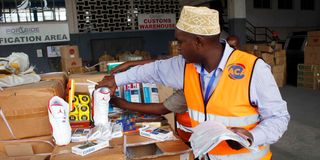
Anti-Counterfeit Agency Director of Enforcement Osman Yusuf.
Photo credit: File | Nation
Speaking to Nation Lifestyle , ACA Director of Enforcement Osman Yusuf said the authority was aware of an ongoing Interpol-related operation targeting counterfeit products, highlighting the growing international collaboration in the fight against illicit trade.
Three days ago, a Nairobi-based entrepreneur, known in social media circles as Shiquo Hii Style, shared a series of posts stating that her entire stock had been confiscated, leaving her with significant losses.
“Every piece of shoe was taken because they were counterfeit,” said the entrepreneur who sells shoes from New Balance to Nike-labelled shoes, home appliances, and other apparel.
A screengrab of a video in which Shiquo Hii Style showing empty shelves in her shoe shop.
Photo credit: Pool
While declining to provide specifics about the Interpol operation, Mr Yusuf said that anti-counterfeit enforcement increasingly relies on intelligence-sharing among agencies across borders.
Counterfeit footwear often involves international supply chains, including the manufacture, shipping, and distribution, which is where Interpol’s mandate applies.
The remarks come as the authority intensifies efforts to stem the entry and distribution of counterfeit goods, which officials say undermine legitimate businesses, deprive the government of revenue and expose consumers to potentially unsafe products.
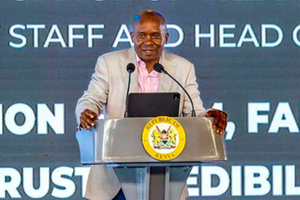
ACA executive director Dr Robi M. King’a said the agency does not work in isolation but partners with both local and international stakeholders to address the problem.
“We work with the media and other government agencies at the regional and international level to propel the idea of what the gospel of anti-counterfeiting is,” he said.
Anti-Counterfeit Authority Executive Director Robi M. King’a during the interview at his office on June 10, 2026.
Photo credit: Francis Nderitu | Nation
Dr King’a said several Kenyan agencies play critical roles in the enforcement ecosystem, including the National Police Service, the Kenya Bureau of Standards (Kebs) and the Kenya Revenue Authority (KRA).
“The police are involved. The Kenya Bureau of Standards is involved because when you talk about counterfeiting, there is a nexus between counterfeiting on one hand and substandard products,” he said.
He noted that Kebs is represented on ACA’s board, reflecting the close relationship between counterfeit enforcement and product quality regulation.
The KRA is another key partner, particularly in addressing issues related to customs declarations, unpaid taxes and misdeclaration of imported goods, Dr King’a added.
“The issues of customs, the issues of unpaid taxes or misdeclaration for those imported goods in the country, then we come in so that we can share information and intelligence on how to deal with those matters,” he said.
To strengthen border controls, the ACA introduced an Intellectual Property Rights (IPR) recordation programme in 2023, requiring rights holders to register their intellectual property with the authority.
According to Dr King’a, the initiative has enabled ACA to build a database that allows officials to verify whether imported products belong to legitimate rights holders before they enter the Kenyan market.
“We have a database through which we are able to countercheck any person who is importing goods into the country, whether that product has already been recorded with us or whether what they intend to import belongs to them or another person,” he said.
He said the programme was designed to intercept counterfeit goods before they enter the country rather than relying solely on market surveillance and seizures after the products have already reached consumers.
“This particular programme was meant to ensure that we counter counterfeiting at the source, so that we don’t spend a lot of money chasing goods when they come into the country, because we want to prevent the importation of counterfeit goods coming into Kenya,” Dr King’a said.
The authority says collaboration between local agencies and international partners, such as Interpol, is becoming increasingly important as counterfeit networks grow more sophisticated and operate across multiple jurisdictions.