A school associated with billionaire businessman Peter Munga has been ordered to vacate a 75-acre parcel of land owned by food processing firm Del Monte Kenya Limited in Thika by the end of this year, ending a protracted legal battle over its right to occupy the property.
The Court of Appeal gave Pioneer International School until December 31, 2026, to surrender vacant possession, allowing it to complete the academic year and facilitate an orderly transition of students, including those sitting examinations.
The judges said the reprieve was intended to avoid disrupting the education of children who had no role in the dispute, but emphasised that the school had no legal right to remain on the land.
The court rejected Pioneer’s argument that its dealings with Del Monte, substantial investment in the school and continued occupation of the property had created a tenancy relationship, even in the absence of a formally executed lease.
“What existed was, at most, an indefinite possibility of future negotiations contingent upon conditions that never materialized. Pioneer may well have acted in optimism that those negotiations would mature. But optimism, however commercially understandable, is not tenancy,” the judges ruled.
The dispute dates back to September 3, 2013, when Del Monte leased the 75-acre parcel to Goshen Gardens for eight years to operate a school.
The agreement provided for an initial monthly rent of Sh550,000, subject to annual increases of five per cent. It also prohibited the assignment of the lease or any interest in it without the landlord’s consent.
Goshen Gardens fell into rent arrears in February 2015, prompting Del Monte to issue a termination notice on May 5 of the same year.
Goshen Gardens challenged the termination in court, accusing Del Monte of breaching the lease by reducing the leased acreage from 100 to 75 acres, trespassing on the property and compromising the school's security by uprooting its perimeter fence.
The dispute was referred to arbitration, with Goshen Gardens allowed to remain on the property pending its determination. However, the arbitration did not proceed after the parties entered into settlement discussions.
In July 2015, Goshen Gardens approached Munga, offering to sell him the school business, assets, equipment and designated facilities for an additional Sh38 million.
Mr Munga said he found the institution in a deplorable state, with its infrastructure, equipment and other assets deteriorating. He subsequently undertook to rehabilitate the school and restore its operations.
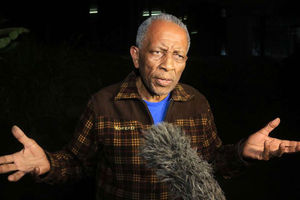
Businessman Peter Munga.
Photo credit: File | Nation Media Group
Pioneer had argued that Del Monte knew it was taking over the school, recruiting students and staff, rehabilitating facilities and investing substantial resources in the expectation that it would eventually be granted a lease.
It maintained that the agricultural processing company had encouraged the transition and stood by as it committed millions of shillings to revive the institution. It would therefore be unconscionable, the school argued, for Del Monte to deny it the right to occupy the property after benefiting from the arrangements.
The judges, however, said there was no sufficiently clear assurance, representation or acquiescence by Del Monte capable of creating an equitable right to the property.
The court said Del Monte’s knowledge of Pioneer’s plans, participation in meetings, and awareness of its expenditure on staff, infrastructure and school operations could not, on their own, establish a legal relationship between the two parties.
The court added that even if the original lease between Del Monte and Goshen Gardens Limited was a controlled tenancy under the Landlord and Tenant (Shops, Hotels and Catering Establishments) Act, Pioneer had not demonstrated that it had acquired the status of a tenant.
“Equity protects expectations induced by the property owner. Equity does not convert a party’s unilateral hope or exuberant optimism into a proprietary right,” the court said.
The judges acknowledged that Pioneer had made substantial investments, recruited students and employees, rehabilitated facilities and committed resources to establishing the school. However, those investments could not replace the consent or legal entitlement required to establish a tenancy.
The court directed Pioneer to continue paying monthly occupation charges at the rate applicable immediately before the judgment, as provided for in the original Goshen Gardens lease. The payments must be made on the ordinary monthly due dates but will not be construed as acceptance of the school as a tenant.
It also barred Pioneer from subletting, assigning, altering, expanding or otherwise dealing with the premises beyond ordinary school operations during the transition period.
Del Monte maintained that it had never agreed to lease the property to Pioneer and that any possible arrangement would only be considered after Goshen Gardens surrendered possession.
The company accused Goshen Gardens of handing over the premises to Pioneer without its consent. It also claimed Munga had erected signboards bearing the name Pioneer Girls School at the entrance and along the Thika-Nyeri highway without authorisation.
Del Monte moved to court in 2016 seeking eviction of the school, removal of its fixtures and fittings and an order directing the Officer Commanding Ngati Police Station to enforce the eviction.