The long-running court fight over the estate of former Kiambaa MP and banker Stanley Munga Githunguri has revived an all too familiar Kenyan paradox – vast wealth that becomes a burden once its owner dies.
A ruling delivered at the High Court in Nairobi last week laid bare the fractures within one of the country's most prominent families. The dispute pits siblings against each other as they battle over maintenance, school fees, and allowances while the validity of their father's will remains contested.
Justice Hillary Chemitei declined to reopen a consent agreement recorded in December 2024, despite pleas by one beneficiary, Lilian Wanjiru Githunguri, for expanded support from what she described as a huge and income-rich estate.
She sought an increase in her monthly upkeep and maintenance allowance from Sh50,000 to Sh600,000, citing unemployment and the need to cater for her children's school fees.
"The proper consent is the one recorded in court on December 3, 2024," the judge ruled, adding that courts only interfere with consent orders where fraud, misrepresentation, or similar defects are proved.
Stanley Githunguri, a powerful businessman and politician, died in November 2022, leaving behind a large estate that includes real estate and corporate interests.
Among the properties associated with him were Nairobi’s iconic Lilian Towers along University Way and Ridgeways Mall along Kiambu Road.
A shrewd businessman, Mr Githunguri also owned prime pieces of land in Nairobi and Kiambu counties.
When the Kenya National Highways Authority (KeNHA) was planning the Sh17 billion Southern Bypass, Mr Githunguri’s five-acre land in Karen was among those to be acquired compulsorily.
KeNHA made a Sh155 million offer as it believed that the property was registered as agricultural land. But Mr Githunguri had earlier converted its registered purpose to commercial, a move that pushed its valuation up fourfold.
The former MP sued, holding that the land was worth Sh652 million. An out-of-court deal was eventually struck following a judge’s orders, but the amount paid to Mr Githunguri was not made public, but was certainly closer to the former MP’s valuation.
He was also the father of several adult children, some of whom are executors of his will, which another section of children has contested.
At the heart of the latest application was Ms Wanjiru, a 52-year-old daughter of the late tycoon. She asked the court to vary the consent to compel the estate to pay higher school fees for her children in Arusha, Tanzania; cover university fees for a grandson; and provide her with a monthly upkeep of Sh600,000.
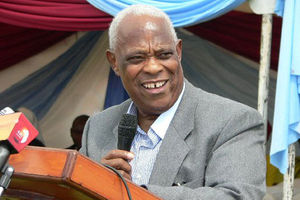
Stanley Munga Githunguri and his family.
Photo credit: Pool
She also sought a Sh45 million house and an Sh8 million car, arguing that she had no meaningful employment and depended on the estate to sustain her family, as her father had done while alive.
In the contested consent, the administrators agreed to continue paying school fees for Ms Wanjiru’s children and maintain allowances for the deceased’s children, with fees capped at levels previously paid by Githunguri in Kenya. The consent also allowed any party to apply to court for clarification while keeping beneficiaries’ allowances at the same amounts Githunguri paid during his lifetime.
"I conceded to the consent as my children were almost being sent away from school," Ms Wanjiru told the court in her request for increased allowances, listing her monthly expenses exceeding Sh1 million.
Her siblings, Lilian Joy Nyagaki Githunguri and Francis Wanjihia Githunguri, opposed the application. Both were named as respondents alongside Clare Njeri Githunguri. They accused Ms Wanjiru of transferring the children to another school "unilaterally and without notifying them." They argued that the consent was binding and that the estate could not shoulder new obligations while objection proceedings challenging their father’s will were still pending.
Justice Chemitei agreed in part with both sides. He held that the consent allowed clarification but not expansion. The judge ruled that the estate must continue paying school fees, but only up to the level previously paid before the children were transferred to the Arusha school.
"My conclusion is that the applicant’s application to 'apply' is valid, and the only rider is for the parties to sit down and mathematically agree on how much the previous school fees cost at the level at which the children are at the school in Arusha. In the event of anything beyond that, the applicant shall settle," said the judge.
The court rejected demands for monthly allowances, university fees for a grandson who was not yet enrolled, and other benefits, warning that such claims required full litigation once the estate accounts and will were settled.
"I find it too simplistic that she has to await her father’s estate to put food on her table, so to speak. She ought to demonstrate, I believe, that she was venturing into other productive activity, albeit in a small way, other than waiting for her father’s estate," the judge observed, urging all parties to fast-track the objection proceedings.
Ms Wanjiru said that at her age, she could not secure meaningful employment. She expressed willingness to work in any of her father’s estate businesses if permitted by the respondents.
The Githunguri case joins a long list of succession battles that have consumed the estates of Kenya’s wealthy elite, often dragging on for years and pitting family members against each other in courtrooms.
The estate of former Internal Security Minister John Michuki became mired in disputes after his death in 2012. His children clashed over property control, dividend income, and trust arrangements. Court records show repeated applications over the management and distribution of the estate.
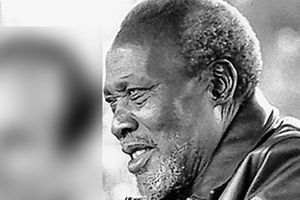
Former Cabinet Minister Joseph Kamotho
Photo credit: File | Nation Media Group
Another landmark fight followed the death of former KANU Secretary-General Joseph Kamotho, popularly known as JJ Kamotho. His estate triggered bitter contests among beneficiaries over land and corporate shares. Judges repeatedly lamented delays caused by family infighting.
At one point in 2022, his son Charles Githii was arraigned in court over accusations of forging a medical report in the name of his sister Maryanne Nyokabi. It was alleged that in October 2015, he obtained a forged report signed by a doctor named Mucheru Wang'ombe. He denied the accusations.
Similar turmoil surrounded the estate of Njenga Karume, a billionaire businessman and politician. His children spent years in court disputing control of vast assets, including hotels and real estate, before reaching partial settlements.
The estate of former powerful MP and Cabinet Minister William Ole Ntimama also sparked contestation between family members.
Legal scholars say these cases expose a deeper problem in Kenyan succession law and family dynamics. Large estates often combine emotional grievances, unclear estate planning, and competing expectations of lifelong support.
Courts consistently stress that wealth does not suspend legal standards. Dependents must prove entitlement, and consent agreements carry the force of contracts.
Justice Chemitei echoed that principle in the Githunguri ruling. He warned against courts "rewriting the consent for the parties" and insisted that allowances and benefits must be clearly agreed upon or proven through evidence. The judge also rejected the notion that age or economic hardship alone entitled a beneficiary to substantial monthly support from an estate under dispute.
The story reflects a recurring pattern. Prominent Kenyans often die, leaving enormous fortunes but unresolved family arrangements. What follows is a slow legal grind that drains resources and deepens rifts.
For the Githunguri family, the bigger question concerns the validity and execution of the will. Until that question is resolved, the estate joins the growing list of Kenyan fortunes trapped in succession limbo, where wealth becomes a source of conflict rather than comfort.