Kenyatta University had an ambition: to build an ultra-modern hospital that would go beyond healthcare to be a centre of teaching and research. But from 2012 when the project started during the Mwai Kibaki era, it triggered power struggles that eventually led to the university being shoved aside on President Uhuru Kenyatta’s orders. In the second instalment of our three-part exclusive serialisation of Firm and Forthright , the autobiography of outgoing KU Vice Chancellor Prof Paul Wainaina published by Big Books Ltd, he details the intrigues behind the scenes that led to the ownership coup and his desperate fightback.
It was in the middle of the winter season in Europe. The temperatures were extremely low, to freezing point, when we landed in Istanbul, Turkey, on January 20, 2018. Despite the extreme weather, many people were busy going about their duties as usual. I was in that country on a benchmarking mission (as acting Vice Chancellor) on how a university could run its own teaching and research hospital.
I was with a delegation of senior officials from KU that comprised of two Council members - Dr Margaret Njoroge and Eric Sila. Others were Prof Okello Agina (Dean, School of Health Sciences), Mr Joseph Gitahi (the KU Chief Finance Officer), and the Hospital Biomedical Engineer, Dr Kenneth Iloka.
The visit to Istanbul came at a time when KU had just completed the construction of the ultra-modern, state-of-the-art, teaching and research hospital which was billed as one of the best in East Africa. By then, I was the acting Vice-Chancellor. However, two weeks before the trip, I had been interviewed for the substantive VC position and I was anxiously waiting for the verdict. Meanwhile, I continued to do my work in an acting capacity.
In Istanbul, we visited Yeditepe University, which runs one of the best modern hospitals. We were conducted around by the institution’s Rector (equivalent of Vice-Chancellor), Prof Canan Aykut Bingol, a professor of neurology. Their hospital was fully run by the university. Besides being used for teaching and research purposes by medical students, it also offered medical services to the public. All these took place under one roof.
The facility also specialised in numerous medical fields, such as neurosurgery, bone marrow, renal and liver transplants, thoracic, cardiovascular and cancer surgeries, gynaecology, orthopedics, urology, plastic and reconstructive surgery and nuclear medicine, among others.
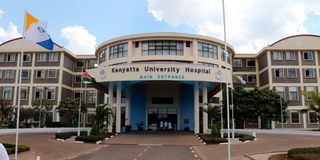
Kenyatta University Hospital in Kiambu County.
Photo credit: Dennis Onsongo | Nation Media Group
By the time of our visit, Yeditepe University Hospital had carried out the first permanent artificial heart pump operation in Turkey, among other major medical breakthroughs. In 2014, it was accredited as a Training and Research Centre Hospital.
I was impressed by what I saw, especially regarding the high level of technology that had been adopted in that hospital. Furthermore, the administrative structure was very impressive. The daily running of the hospital was handled by a CEO, who in turn reported to the institution’s Rector (Vice-Chancellor). The hospital was basically run as a semi-independent unit within the university. The key phrase here was ‘under one roof within the university.’ It was the kind of arrangement that I desired for KU Hospital.
I observed Yeditepe’s systems and noted that they were seamless and effective in terms of service delivery and general coordination from top to bottom. I asked them very many questions, which they answered conclusively.
I later confided with our team that, “this is the way to go. KU Hospital should adopt Yeditepe’s approach in both administrative and technical matters of the hospital, where everything is under one roof.” The team was satisfied that a university could run a teaching hospital.
While on that trip, precisely on the last day of our three-day tour, as I relaxed in my room, I received a call from the then KU Council Chairman, the late Prof Shem Migot-Adholla. He was an accomplished scholar and administrator; a good listener, a team player and a friendly man to work with. He was fully aware of our trip, because after all, he was the one who approved our travel.
After exchanging pleasantries, I brought him up to speed on what we had observed in Turkey with regards to hospital management. He was glad that we had picked something worth emulating.
“I am glad that your trip to Turkey has yielded positive results,” he said. “We look forward to seeing those ideas implemented here.” Then he said, “the reason I have called is to inform you that the Minister for Education has officially appointed and gazetted you as the substantive Vice-Chancellor of Kenyatta University.”
To say that I was excited is an understatement. I dashed out of the room and looked for my colleagues whom we were together in Istanbul. I broke the news to them, and we celebrated in our own ways. This was a moment of huge relief for me because I had been serving in an acting capacity for close to two years. And as time went by without a substantive VC, many interested candidates lobbied for that position. Furthermore, as an acting VC,
After the three-day benchmarking tour of Turkey, I landed back in Nairobi to a very warm weather. The January sun was scorching. I was glad to return to an environment I was well acclimatised to.
As I continued discharging my duties as VC, discussions around the ownership and management of KU Hospital, the facility that I was heavily involved in during construction, kept growing louder and more animated. It roped in various interested parties.
At one time, for instance, the then Minister for Education, Amina Mohamed, visited the university to get a brief about the hospital and plans to delink it. I gave her a background of the hospital and why it was established. I explained to her that the university had the required capacity to manage the facility well. She was satisfied with my explanation but her body language seemed to suggest that there were other forces behind her that were pushing for the contrary.
President Uhuru Kenyatta was in his second term. He had come up with a national strategic plan that identified Universal Health Care (UHC) as one of his key agendas. His advisors and close friends, I later learned, had identified KU Hospital as a key enabler of this UHC agendum. They convinced the President that our new state-of-the-art hospital would do the magical trick; and boost the UHC agendum. Eventually, the eyes of the State were squarely fixed on the facility. They sought to make it a national level hospital for treating patients rather than a teaching and research facility as initially envisioned. The bid to snatch the hospital from KU went into top gear.
As all these were happening, we were busy putting in place measures and structures to run the medical facility as an integral part of our teaching and research agenda in line with the original goal. We had chosen to adopt the Yeditepe University model. We came out with a financial policy, then reached out to Parliament with a well-articulated system. Our ideas were approved and the National Treasury released funds for the operationalisation of the hospital as part and parcel of the university.
Still, the fight to take over the hospital from the university was gaining momentum. The Office of the President, Ministry of Education and Ministry of Health formed a committee to oversee the takeover. The team was chaired by Dr Peter Muraya, who was President Uhuru’s Economic Advisor. It was argued that using the hospital to provide healthcare was more noble than what KU had initially intended. I watched quietly, and in disbelief, as some arguments in that room watered down the importance of teaching and research. Proponents wanted the hospital to be under the Ministry of Health. I only reminded them that KU Hospital was under the Ministry of Education, owing to its teaching and research mandate.
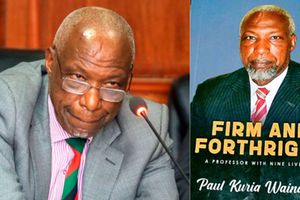
The cover page of "Firm and Forthright," an autobiography of former Vice-Chancellor of Kenyatta University Prof Paul Kuria Wainaina.
Photo credit: Nation Media Group
Then a lot of pulling and pushing followed over the matter. Several letters were written back and forth; some friendly, some nasty, others full of threats and some were orders from above. We also received court orders.
I was called to numerous meetings in government offices, mainly Harambee House, Jogoo House and Afya House. The meetings were often full of tension but reached no concrete resolutions. The then Minister for Health, Cecily Kariuki, kept pushing to have KU Hospital relinquished to run under her ministry. She used all methods, including what seemed like intimidation, to have KU concede and release the hospital to the Ministry of Health.
But as VC I stood my ground, thanks to the backing that I was receiving from the University Council.
One day, as the Council and management, through our Chancellor, Dr Benson Wairegi, we sought an appointment to meet President Uhuru and present to him our plan on how we could effectively run the hospital. The noise and bias around his ministers and other senior government officials had become too much.
We had gone through numerous back-and-forth exercises regarding the hospital management. And we found that some government officials were not willing to accommodate our views. We felt it was better to address the President directly and reason with him on the matter. He agreed and gave us an appointment through the Chancellor.
We spent sleepless nights and prepared an elaborate document to demonstrate to the President how the hospital would run effectively under KU management. However, on the very day we were to meet the President, we received communication from his office that the appointment had been cancelled. We were told that he was busy with other pressing matters. I remember it was in December 2018. We were not given an alternative date.
The communication was simply sending us away. Not giving up, we patiently followed up the matter with State House and we were given another appointment for January 29, 2019.
As we were still waiting for it, the President dropped a bombshell. He was aware that we were due to meet him to give our side of the story regarding management of KU Hospital. However, in a special Kenya Gazette notice dated Friday 25, January 2019, he released a Presidential Order No. 4 of 2019 that declared Kenyatta University Teaching, Referral and Research Hospital (KUTRRH) a state corporation. Our presentation to him had now been overtaken by events. In a stroke of a pen, the hospital was gone. The elaborate plan that we intended to present to him on how to manage the hospital was rendered null and void.
It was a shocking and demoralising anti-climax. This was akin to pouring cold water on a bubbling fire, killing our original plans and curtailing our academic and research activities, especially for medical students. Personally, I was helpless and speechless. I read the order several times in disbelief. I watched in frustration as our university’s treasured signature project was snatched away from us.
The President, consequently, appointed the immediate former Vice-Chancellor of Kenyatta University, Prof. Olive Mugenda as the board chair of the new agency, KUTRRH.
The Head of Public Service, Joseph Kinyua, consequently instructed the KU Council to handover the hospital and its assets to the new management. The orders were complied with.
Down but not out, I continued fighting for the return of the hospital to its rightful owners. Though it seemed a losing battle, I fought on. I kept telling the government that the transfer was an illegality and affront to academic excellence. I knew I was stepping on delicate toes within the government, but I chose to soldier on firmly in my quest for truth.
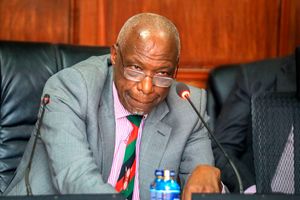
The matter found its way to Parliament. KU leadership was summoned to give its side of the story. On November 12, 2019, accompanied by other top university officials, I appeared before the Select Parliamentary Committee on Implementation chaired by Hon Moitalel ole Kenta, the then MP for Narok North.
We informed the committee that this was the first university hospital to be constructed and owned by a university for research and teaching purposes. We further revealed that it was also intended to address issues affecting medical schools in Kenya that had no hospitals of their own. We insisted that the facility was primarily for training and research, with treatment of patients expected to come automatically.
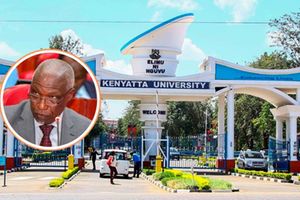
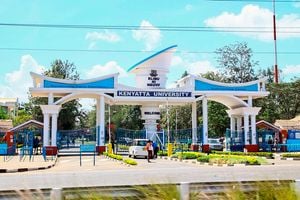
The main entrance to Kenyatta University.
Photo credit: Wilfred Nyangaresi | Nation Media Group
The hospital was, therefore, meant to be a learning facility from the onset and that other universities in Kenya had already benchmarked with us and were soon coming up with similar projects hence the need to provide enabling legislation for universities to run hospitals; and not to kill the good dream.
We also further observed that the priority of the Ministry of Health was generally clinical while the Kenyatta University Hospital focus was the development of new ideas on causes and management of diseases and that it would be difficult to do that if the university did not control the hospital. We wanted KU to manage the hospital to help provide clinical services that are research-based and provide high-level training to operate sophisticated medical and research equipment.
To counter the misinformation doing rounds that the government had put substantial money in the project, we told Parliament that the project was mainly funded through a loan from Exim Bank of China that was guaranteed by the government and we were not aware of any other donor. The loan had been released in four phases, and it was at the fourth phase and during operationalisation of the project that the idea of turning the hospital into a state corporation surfaced.
On matters that emerged regarding co-management of the hospital (jointly by the ministries of Health and Education), we expressed our reservations that the Ministry of Health and KU had different strategic plans and management structures, and this would lead to overlapping positions and conflicting priorities. We cited procurement, human resource, and funding of a common budget as some of the challenges the hospital was likely to face.
We explained that KU had done extensive bench-marking visits and established that the best-run hospitals are managed by universities and their research findings directly inform clinical services. We gave the example of a university in Istanbul, Turkey, that ran two hospitals. I was glad that the MPs listened to us keenly. They asked various questions related to a university managing a Level Six hospital, which we answered satisfactorily.
The (Parliamentary) Report was dated September 29, 2019. Unfortunately, those recommendations fell on deaf ears. The six months elapsed in March 2020, but by then the hospital had not been handed back to KU.
In 2023, the unending matter of KU Hospital ownership found its way to the Senate. Senators were petitioned to intervene and have the hospital reverted to KU, its rightful end user. The Senate was informed that the hospital had been taken from the university illegally, denying access to lecturers and medical students, who were forced to travel for about 40 kilometres to use the Kiambu Level 5 Hospital for teaching and learning.
The petition clearly indicated that the Government of Kenya had approved the proposal and the funding request to establish a state-of-the-art teaching, training, research, and referral hospital at the main campus to serve as a national referral centre, as well as to aid medical students in the clinical training and research.
While conducting its investigations, the Standing Committee on Health, chaired by Uasin-Gishu Senator Jackson Mandago, summoned various individuals (officers or groups) to give their side of the story.
When the Mandago Committee wrote its report, it recommended that there was a need to maintain the initial concept of KU Hospital by mandating the university to manage and be responsible for the academic block located within the precincts of KUTRRH; that there was need for KU to consolidate its medical education, training and research facilities with a view to improving efficiencies and minimising the spread and distance between lecture halls, departments, laboratories and other facilities.
With the construction of the hospital having been done based on a Memorandum of Understanding (MoU) between Kenyatta University and China Jiangxi Corporation for International Economic and Technical Cooperation (CJIC), this technically made KU the end user of the hospital. Thus, the committee recommended the revocation of Legal Notice No. 39 of 2021 to safeguard and promote the initial concept of KU Hospital being an education and research facility, and that KU VC be reinstated on the board of management.
It further recommended that KU students be granted full and priority access to the hospital for learning purposes, with immediate effect and that KUTRRH surrenders the academic block to the KU School of Health Sciences for its management and use in medical education and research.
These recommendations were to be implemented within six months of tabling the report but nothing was done. The matter of KU hospital ownership also found its way to the Parliamentary Investments Committee (PIC) chaired by Hon Jack Wamboka, Bumula MP. This committee also recommended that the hospital be reverted to its rightful owners. All these reports were never implemented.
However, in December 2025 the university entered into an agreement with KUTRRH to allow our students access the facility. That was a good sign, but the battle for ownership continues.
Tomorrow: When my saviours turned into tormentors as Ruto copied Uhuru script on Kenyatta University land