The Ethics and Anti-Corruption Commission (EACC) has distanced itself from calls to regulate the church and social events donations, but celebrated what it said was a robust system to prevent, trace and recover proceeds of corruption.
This system, it said, includes conducting surveillance and lifestyle audits on public officials to identify unexplained wealth — a strategy that has yielded notable success.
But on church donations—which came up during the celebration of the 9th Edition of the African Anti-Corruption Day—the anti-graft agency said it had no law that allows it to track such, but insisted that its system to prevent, track and stop corruption was working.
“There is no specific law that prohibits people from making donations in churches and other functions. The Commission cannot have anything to do to prevent that from happening. However, what the Commission has done is that we focus a lot on tracing assets that have been corruptly acquired,” EACC Commissioner John Ogallo told the forum held at the Kenyatta International Convention Centre (KICC).
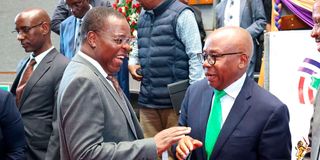
Ethics and Anti-Corruption Commission CEO Abdi Mohamud speaks during the African Anti-Corruption Day event, themed "Promoting Dignity in the Fight Against Corruption," at KICC in Nairobi on July 11, 2025.
Photo credit: Bonface Bogita | Nation
During the KICC event, EACC Chief Executive Officer Abdi Mohamud described corruption as a “crime against humanity”, citing its devastating impact on governance, service delivery, and public trust.
“Corruption continues to stifle the economy, deny citizens access to basic rights such as healthcare, safe environments, and essential government services. But most critically, it undermines human dignity,” said Mr Mohamud.
He revealed that the Commission had recovered assets worth approximately Sh28 billion over the past six years through proactive investigations and averted potential losses estimated at Sh42 billion.
Ongoing recovery efforts target a further Sh50 billion suspected to have been illicitly acquired, he said.
Mr Mohamud emphasised that recovered assets are being repurposed to restore public welfare and uphold human dignity, highlighting the recovery of a 60-acre parcel of land that had been illegally acquired and is now being used to provide affordable and dignified housing for residents of informal settlements.
EACC Chairperson David Oginde underscored the importance of anti-corruption efforts in safeguarding national resources to promote equitable development.
“We aim to protect resources that will, in turn, ensure that every child has the opportunity to reach their full potential, that every family has access to basic necessities, and that every citizen is treated with fairness and respect,” he said.
Commissioner Ogallo said the commission had focused a lot on tracing assets that have been corruptly acquired.
“We do surveillance, we do lifestyle audits, mainly on public officials, to identify any unexplained wealth and also put in place mechanisms to recover corruptly acquired assets. And here is one area where the Commission actually has been very successful,” said Commissioner Ogallo.
The Commissioner slammed the culture of defending corrupt officials, saying many Kenyans still rally behind the very people robbing them blind. While the legal framework to tackle corruption is in place, he said the real problem lies in poor enforcement and public apathy.
“Going by some of the reactions we have seen, where members of the public come to the defense of individuals accused of corruption, it's clear that we are not yet where we should be,” he said.
He emphasised that the fight against corruption cannot be left to the Ethics and Anti-Corruption Commission alone.
“Even though the EACC is the lead agency in the fight, the Commission cannot win this war alone. We need all hands on deck. Let us not celebrate people who are corrupt, because they lower your dignity,” he said.
In all, the Commission used the event to defend its track record, insisting it does not spare powerful individuals in its anti-corruption efforts. This comes amid criticism that the EACC only targets “small fish” while shielding the well-connected.
“The idea that only low-level officials are targeted is inaccurate. If you follow our reports, you will see that we have taken high-profile individuals to court. The challenge is that such people often have the resources to fight back, including hiring top lawyers to challenge prosecutions,” the Commission noted.
The agency also emphasised the critical role the public plays in the fight against corruption, encouraging whistleblowing, both anonymous and direct and assuring protection for informants to the extent possible.
Commissioner Ogallo said the Commission encourages anonymous reporting and takes every measure to protect sources, whether reports are submitted in person, by email, or through other channels.
“The Witness Protection Law has already been discussed, and the bill is now before Parliament. Until it becomes law, there’s little the Commission can do to enforce it. We encourage people to report cases anonymously, and even when reports come in person or by email, we do our best to protect our sources. But sometimes, despite all efforts, these individuals still get found out,” he said.