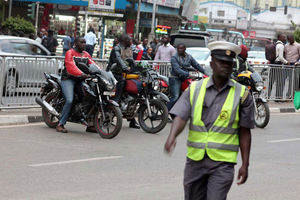
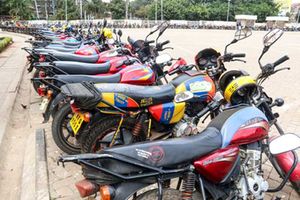
A city lawyer has moved to the Court of Appeal in a bid to compel the government to regulate commercial motorcycle operators, commonly known as boda bodas, arguing that weak enforcement has contributed to road deaths, mob violence, sexual assaults and the destruction of property.
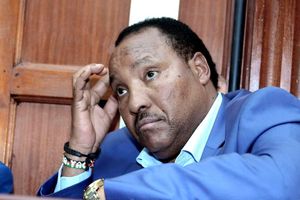
Rogers Monda filed the appeal after the High Court dismissed his petition in July, ruling that he had failed to plead his case with the precision required in constitutional litigation.
Mr Monda argues that the judge erred in law and fact by making a general finding that his petition lacked precision without identifying the specific paragraphs or allegations that failed to meet the required standard.
“The learned Judge erred in law in determining, at the threshold stage and without hearing the Petition on its merits, questions of the probative value and sufficiency of the Appellant's evidence under sections 107 and 109 of the Evidence Act, contrary to her own holding that threshold issues fall to be determined prior to and separately from the merits,” he said.
He wants the appellate court to order the reinstatement of the case for hearing and determination by the High Court. Alternatively, he wants the Court of Appeal to determine the petition on its merits.
Mr Monda argued that a presidential directive issued in March 2022 requiring the re-registration of boda boda riders had not been implemented, allowing operators to work anonymously and making it difficult to identify suspects involved in crime.
In dismissing the petition, the High Court acknowledged the seriousness of the concerns but said constitutional remedies could not be granted on the basis of broad allegations unsupported by specific facts and clearly pleaded violations.
“Without this clarity, constitutional adjudication becomes speculative; respondents are left to guess at the case they must meet, and the court risks issuing orders untethered to the pleaded facts,” the court said.
The judge described the reported rise in road accidents, mob violence and institutional failures as deeply troubling, saying the problem required serious reflection.
“But constitutional adjudication is not driven by the magnitude of public concern alone. Without that precision, the court is left with a constellation of grievances but no constitutional map. The petition identifies a crisis, but it does not anchor that crisis in the structured pleading demanded by Anarita Karimi Njeru,” the judge said.
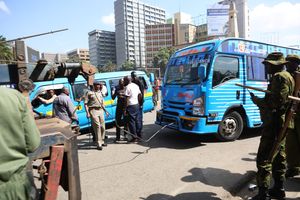
In his petition, Mr Monda cited incidents of mob attacks, vehicles being torched and assaults involving boda boda riders, particularly following road accidents.
“There is an apparent link between the State’s inaction to stop and or reduce the incidents and the continued violations occasioned by the boda boda operators,” he said.
He accused the National Transport and Safety Authority (NTSA) and county governments of failing to enforce laws requiring riders to have licences, undergo training, wear helmets and reflective jackets, and observe passenger limits.
Nairobi County defended its record, saying motorcycle regulation required cooperation between the national and county governments.
Boda Boda Enforcement Unit to improve compliance, register riders in Saccos and enforce identification requirements.
To support his case, Mr Monda cited Kenya National Bureau of Statistics data showing that road crashes rose from 9,900 in 2023 to 11,173 in 2024, killing 4,748 people and seriously injuring 11,937.
He also cited NTSA data showing that 301 motorcyclists and 130 pillion passengers died in crashes between January and March 2025.
He wants NTSA and county governments to be ordered to establish a comprehensive rider registration system within 90 days, create a digital database linking riders to motorcycles, require visible identification on helmets and jackets, and develop police response protocols for motorcycle-related accidents and mob attacks.
Mr Monda argues that the government’s failure to regulate the industry violates constitutional rights to life, dignity, security, property, equality before the law, fair administrative action and access to justice.