Premium
Countries asked to stop funding forces implicated in human rights violations
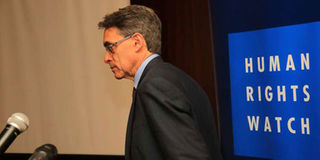
Human Rights Watch executive director Kenneth Roth leaves the podium after releasing a report on disappearance and deaths in counterterrorism operations in Nairobi and northeastern Kenya at Sarova Stanley hotel in Nairobi on July 20, 2016. PHOTO | JEFF ANGOTE | NATION MEDIA GROUP
What you need to know:
- Human Rights Watch said if donors wished to continue support to Kenya’s security forces, they should not provide help that may directly contribute to abuses.
- The lobby said it has documented 34 cases of enforced disappearances of people arrested by the police, Kenya Wildlife Service personnel and the military, during abusive counterterrorism operations in Nairobi and northeastern Kenya.
The US and other countries supporting counterterrorism activities have been asked to stop funding forces implicated in human rights violations.
Human Rights Watch, an international non-governmental organization that conducts research and advocacy on human rights, said if donors wished to continue support to Kenya’s security forces, they should not provide help that may directly contribute to abuses.
The lobby said it has documented 34 cases of enforced disappearances of people arrested by the police, Kenya Wildlife Service personnel and the military, during abusive counterterrorism operations in Nairobi and northeastern Kenya.
Another 11 people, who were arrested by security forces, have been found dead and their bodies dumped in forests and rivers located far away from their homes and locations of arrests, it said.
In an 87-page report, "Deaths and Disappearances: Abuses in Counterterrorism Operations in Nairobi and Northeastern", the organisation stated that the police and military raid homes and take away people and months later, in some cases over a year later, the suspects have not been charged with any crimes and families cannot locate them.
“People in northeastern Kenya deserve protection from Al-Shabaab attacks, not further abuses from authorities,” said the group’s executive director Ken Roth.
He said the rounding up of people and refusing to disclose their whereabouts is a serious crime and only compounds fears and mistrust in the security forces.
EIGHT MONTHS
The report is the result of a research conducted for eight months in Nairobi, Garissa, Wajir and Mandera and details the dates and the circumstances under which each person was taken away by the security forces.
The human rights agency said those arrested during security sweeps were all young, ethnic Somali Kenyans, imams and Islamic school teachers.
“They were detained at least initially in military bases and makeshift military camps in forests in northeast and other parts of the country.
“In some cases, police officers arrested the people and then handed them over to the military,” the report stated.
The group urged the international community to publicly denounce human rights abuses in Kenya in order to underscore the importance of respect for human rights as a requirement of working with the Kenyan security forces.
Last year, the organisation raised concerns over support to the Anti-Terrorism Police Unit.
Although the US has not publicly stated, sources indicate that America is not currently providing assistance to the unit.
Kenyan researcher Otsieno Namwaya asked the government to direct relevant officers and prosecutors to take all necessary steps to investigate claims of abuse and hold those responsible to account.
The report comes at a time when four police officers are facing charges over the killing of a lawyer, his client and a taxi driver last month.


