A retired civil servant facing civil jail over a Sh1 million child support debt owed to his former lover has secured temporary relief after the High Court allowed him to defer full payment under strict conditions.
The man, identified in court documents as Mr JLM, had been ordered by a lower court to clear arrears of Sh1,022,313 within 60 days, covering unpaid school fees, related expenses, and maintenance for his child. The arrears arose from a joint parenting agreement with his partner.
Unable to raise the amount, he petitioned the High Court to halt execution of the decree, warning that he risked being imprisoned in civil jail for failing to pay.
Mr JLM, who retired from public service in March 2025, told the court he had no steady income or liquid assets to settle the debt as his pension was still being processed. He argued that immediate payment was impossible.
The dispute dates back to 2016 when his former partner, Ms PN, sued for child maintenance. In 2017, the two entered a consent agreement requiring him to pay school fees and a monthly upkeep of Sh5,000.
However, Ms PN accused him of repeated defaults, prompting her to invoke enforcement measures, including a Sh29,000 monthly salary attachment by his former employer. By April 2025, arrears had surpassed Sh1 million, leading the trial court to demand full payment.
In his appeal, Mr JLM contested the calculation of arrears, claiming he was denied a fair opportunity to challenge the figures. He also warned that imprisonment would hinder his ability to pursue the appeal and access his pension.
The High Court acknowledged his concerns, noting that "the deprivation of liberty is, by its nature, irreversible." It recognised the substantial risk of civil jail for a retiree without immediate income.
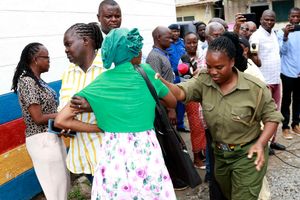
The dispute dates back to 2016 when his former partner, Ms PN, sued for child maintenance.
Photo credit: File | Nation Media Group
However, the court dismissed his claim that the funds could not be recovered if his appeal succeeded, citing inconsistencies in his arguments about Ms PN’s financial status.
The court emphasised that child maintenance obligations stem from long-standing agreements, stating the debt was “not a novel imposition… but the crystallisation of a long-standing agreement.”
Ms PN opposed the deferral, insisting the funds were crucial for the child’s education and welfare. She contended that the debt arose from a valid joint parenting agreement.
The court agreed that children’s needs must not be suspended during legal disputes, cautioning that a complete stay would leave the child without support.
However, it also warned against overly harsh enforcement, noting that demanding immediate payment could cause undue hardship.
“Committing a retiree to civil jail for inability to pay a lump sum of over Sh1 million, before his appeal on the validity of that sum is heard, creates a scenario of extreme hardship. If the appellate court later finds that the arrears were miscalculated or that the appellant was not liable for the full amount, his incarceration would have been an injustice that no refund could cure,” said Justice Helene Namisi.
The court struck a balance, permitting Mr JLM to avoid jail if he pays Sh300,000 within 30 days and secures the remaining Sh722,313 through a deposit or pension-backed guarantee.
He must also continue monthly maintenance and cover current school expenses. Failure to comply will lift the protection, allowing Ms PN to enforce the decree, including civil imprisonment.
In its ruling, the court underscored the need to balance “the applicant’s liberty, the respondent’s rights, and the child’s welfare,” rejecting a blanket stay that would leave the child with “nothing but a paper judgment.”