Deliverance Church in Kenya, and Supreme Council of Kenya Muslims (Supkem) have led religious organisations to strongly oppose the Draft Religious Organisations Policy, 2024 and Draft Religious Organisations Bill, which is being proposed by the office of the Prime Cabinet Secretary seeking to regulate the religious groups.
The proposed law, which is yet to be submitted to the Parliament, emanated from the Taskforce report on the Review of the Legal and Regulatory Framework Governing Religious Organisations in Kenya, which was led by Rev (Rtd) Mutava Musyimi.
The Executive Council of Deliverance Church International has stated that the proposed law would violate religious freedom if it is approved as is.
In a letter through Bishop Dr Geoffrey K Njuguna, an executive committee member who signed on behalf of the church council, the church said that the proposed law introduces government oversight into religious organisations, hence seeking to treat them like government-funded departments or parastatals.
“It infringes on the constitutional right to freedom of religion and the principle that Kenya shall have no State Religion. Again, the involvement of 4 government officials as commissioners out of 9-member Religious Affairs Commission undermines the concept of self-regulation. Churches already operate under individual constitutions with clear policy guidelines,” the letter reads.
The letter is in line with the notice that was issued by the State Department for Parliamentary Affairs, calling for public participation and comments regarding the proposed policy by the Office of the Prime Cabinet Secretary and Ministry of Foreign Affairs.
Paul Mackenzie at Shanzu Law Courts in Mombasa on November 20, 2023.
Photo credit: File | Nation Media Group
The draft proposals calls for the establishment of a Religious Affairs Commission under a new statutory framework which will oversight religious institutions in the country, something that the church has rejected, saying that more than 80 percent of Kenyans are Christians, which it said has not been factored by the proposed law.
Further, the proposed law is seeking the establishment of an umbrella religious organisations for purposes of facilitating self-regulation, and called for the adoption of a hybrid model of regulation of religious organisations comprising self-regulation and government oversight within the context of the Constitution and the law.
According to the Deliverance Church, the proposed law and policy are being processed too quickly, despite the fact that they require sufficient public engagement due to their serious implications for Kenyans.
“To what extent will the new bill stop Kenyans from getting into dangerous cults and occults like Shakahola? Since the perpetrator of the Shakahola deaths has been apprehended and is currently serving his jail terms under existing laws, is there real need for a new law? Wasn't Shakahola a consequential failure to implement existing laws as opposed to vacuum in applicable law?” the church asked in its letter.
The Shakahola cult deaths, in which 400 people died by starving themselves, and others coerced to do so under the leadership of Paul Mackenzie, who is facing murder trial.
The Rev (Rtd) Musyimi task force was mandated with investigating the incident and making recommendations, including a legislative proposal to regulate religious organisations in the country to prevent such occurrences from happening.
Morticians carry the remains of a person exhumed at Kwa Bi Nzaro village within the vast Chakama Ranch in Kilifi County on August 28, 2025 as part of investigations into a suspected cult.
Photo credit: Brian Charo | Nation Media Group
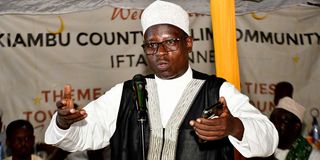
Supkem, through its National Chairperson Hassan Ole Naado, said the drafted policy is creating a false impression that Kenya does not have in place a mechanism for the resolution of disputes relating to religious organisations.
Mr Ole Naado argued that Kenya has the Societies Act Cap 108 laws, under which religious organisations are registered, regulated and oversighted.
“It’s the Supreme Council’s position that, since we have the Societies Act, the Religious Organizations Bill is a legislative overkill, hence we should abandon it all together… we don’t need an entirely new legislation to cure gaps in the law that could have allowed Shakahola to happen. What we know is that Shakahola happened because duty bearers slept on the job,” Mr Ole Naaado said.