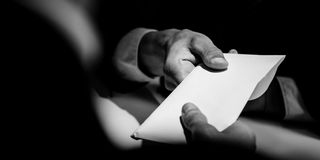
A fresh survey by the anti-graft watchdog has revealed that job seekers, particularly those in counties, have become the new prime targets of bribery demands.
The report by the Ethics and Anti-Corruption Commission (EACC), released on Tuesday, shows that job seekers face the highest bribe demands. Bribes to secure county executive jobs averaged Sh243,651 — the highest amount paid — followed by national government tenders (Sh100,000) and Teachers Service Commission (TSC) placements (Sh72,665).
The survey also highlights that the Kenya Police is the most corruption-prone institution, with nearly half of the respondents (48.2 percent) identifying the force as the most unethical and corrupt. This figure is more than nine times higher than the second-ranking institution, the Immigration office (5.1 percent), indicating deep-rooted public mistrust in law enforcement.
The report paints a grim picture of corruption at public institutions despite an overall reported drop in graft levels.
Heftiest bribes - KWS, NSSF and Treasury
For instance, the survey found that the highest average bribes are paid by people seeking services at the Kenya Wildlife Service (Sh200,000), National Social Security Fund (Sh47,129) and the National Treasury Pensions Department (Sh40,000).
Of these, KWS received the largest share of national bribes at 35.73 percent, followed by NSSF (8.42 percent) and the National Treasury’s Pensions Department (7.15 percent).
Bribes were also prevalent at the Traffic Police (3.6percent) and the Treasury (3.5 percent), signaling persistent corruption in road safety enforcement and public finance.
National Ethics and Corruption Survey (NECS), 2024 Top nature and forms of unethical practices and corruption.
11.8%
Given an opportunity, what is the likelihood to engage in unethical practices and corruption?
For which services are you likely to engage in an unethical conduct and corrupt practice?
31.3%
27.6%
21.2%
19.8%
What is your level of satisfaction with integrity, transparency and accountability in public service delivery?
What actions were taken against bribery incidences that were reported?
Share of National Bribe for Public Institutions:
35.73%
8.42%
7.15%
5.36%
4.16%
3.58%
3.00%
2.56%
2.32%
1.79%
Share of National Bribe by County:
11.12%
6.94%
5.54%
5.35%
5.01%
4.30%
4.12%
3.43%
3.33%
3.13%
Illustrated by Geoffrey Onyambu - Source: National Ethics and Corruption Survey (NECS), 2024
Corruption in getting ID documents
Corruption within institutions responsible for essential identification documents remains a significant concern. Kenyans reportedly perceive the Directorate of Immigration (5.1 percent of respondents) and the National Registration Bureau (4.4 percent) as corruption prone.
When it came to the reasons why Kenyans bribe, 31.3 percent of respondents said they would consider engaging in corruption to secure a job, access health services, to avoid arrest by police and if it was the only option.
Some institutions were singled out as having the highest bribery impact; the Nanyuki Water and Sewerage Company, where the average size of bribe is Sh2,000, was found to be the public institution where bribing has most impact. This means that people are twice as likely to receive a service from the firm if they pay a bribe than if they do not.
The report highlighted several negative impacts of corruption, including economic stagnation, high cost of living, poor service delivery, unemployment, social injustices, and eroding public trust in government.