As learners prepare for the June 24-28 midterm break, the Ministry of Education has maintained that recent unrest in some schools has not disrupted the academic calendar, even as stakeholders warn that recovering lost learning time could come at a cost to learners and parents.
The ministry acknowledged that learning time was lost in a number of schools affected by unrest.
“It is true that learning time was lost in the few schools that were affected by unrest. The time varied from school to school. Most of those schools closed for a maximum of a week, and learners were readmitted in a staggered manner, giving priority to examination classes. In most schools, candidate classes were not involved,” Education Cabinet secretary Julius Ogamba told the Sunday Nation .
Cabinet Secretary for Education Julius Ogamba addresses participants during the 3rd KNEC Symposium in Nairobi on May 4, 2026.
Mr Ogamba added that schools have institutional-based mechanisms to recover lost time, “and will manage to make up”.
However, education stakeholders warn that while the calendar may remain intact, schools affected by early closures will have to compress learning schedules, potentially increasing pressure on learners and parents.
“The loss of one or two weeks of learning time is disruptive because schools will be forced to rush syllabus coverage. There is no way teachers will simply continue with the curriculum as usual after losing this amount of time. They will have to do something to catch up,” said Elimu Bora Working Group Policy and Strategy Advisor Boaz Waruku.
The ministry added that schools have existing institutional mechanisms to recover the lost time and insisted that the academic year remains on course.
“The academic year has not been affected in any way. During AGMs and parents’ meetings, the parents will be engaged and assured of not being disadvantaged in any way since the schools will put in place programmes and psychosocial mechanisms to ensure learners are ready for learning,” Basic Education Principal Secretary John Ololtuaa told the Sunday Nation .
Principal Secretary for Basic Education, John Lekakeny Ololtuaa.
Photo credit: Dennis Onsongo | Nation Media Group
According to Mr Waruku, compressing learning schedules could increase pressure on learners, particularly candidates preparing for national examinations and Grade 10 learners who are still adjusting to the senior school curriculum under the Competency-Based Education system.
“It will be adding intense work on the learner,” he said, warning that rushed coverage of content may affect the quality of learning. Parents might be asked to pay for those remedial classes. Recovery should not come at an extra cost to families,” he said.
The issue of learning recovery is expected to feature prominently at next week’s annual conference of the Kenya Secondary School Heads Association (Kessha), where principals from senior schools across the country will gather in Mombasa to discuss challenges facing the education sector.
The conference comes in the middle of a term marked by unrest in some schools, concerns over funding, and efforts by affected institutions to recover lost learning time ahead of national examinations.
At Starehe Boys Centre, administrators have modified the school calendar to grant an early half-term.
“The men of Starehe proceed on half term tomorrow, Friday 19th June 2026, returning on Wednesday 24th June 2026. We are breaking early so as to return on time for preparations for the Founders Memorial scheduled for June 28, 2026,” Starehe Boys Centre Director Fred Okono said in a message.
Mr Okono noted that despite unrest disrupting learning in many schools, Starehe had remained steadfast, enjoying the unique freedoms and character formation that the institution prioritises.
“We wish them [a] sound rest and a joyful time with friends and family, and look forward to receiving them back for the second half of this term. Safe travels, gentlemen!” he added.
Across the country, principals are seizing the half-term break to remind parents to settle outstanding fees, especially for boarding schools where financial constraints are biting hard.
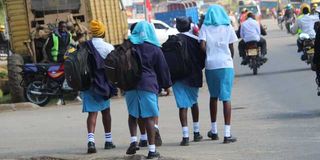
Parents whose children were sent home following strikes will find it even harder. In addition to being surcharged for damages caused, they also incurred costs for taking their children back to school and will now spend more on transport during the half-term break.
One principal of a national school in Nairobi revealed that this term’s calendar has been mishandled.
“Top schools went on strike for the first time. This tells the underlying factors. Term dates for the Ministry of Education are 13 weeks [and therefore] midterm should come in the middle of the term. However, this time it was put in the ninth week instead of the sixth. These are mistakes made by the ministry,” the principal said.
Another administrator pointed to funding as a major crisis. Senior schools are yet to receive capitation for Grade 10 learners for both Term 1 and Term 2.
“The Ministry of Education used last year’s enrolment to disburse funds for the FDSE programme. Yet last year, we did not have Grade 10. Imagine how we are grappling as administrators. Some parents are also not paying school fees,” lamented the individual.
Kenya Union of Post-Primary Education Teachers National Chairman Omboko Milemba at a past event.
Photo credit: File
Mr Omboko Milemba, secretary-general of the Kenya Union of Post-Primary Education Teachers (Kuppet) blamed overcrowding in schools on the Grade 10 admission process, saying learners were admitted without regard to school capacity. He called for a national debate on the sustainability of boarding schools and urged the government to strengthen day schools.
“The Ministry of Education should be candid with Kenyans. There is something wrong with the current intake policy that has caused congestion in boarding schools. You cannot continue admitting students beyond the capacity of schools,” he said.
However, stakeholders have questioned how schools would recover lost learning time without placing additional pressure on teachers and learners. They note that the Education ministry has in the past discouraged remedial classes, yet schools affected by unrest are expected to make up for missed lessons within the existing academic calendar.
This, they argue, could prove difficult for institutions already grappling with teacher shortages, particularly in specialised subjects under the Competency-Based Education system.
National Parents Association chairman Silas Obuhatsa said the half-term break gives parents a chance to discuss challenges facing their children.
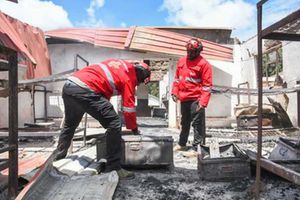
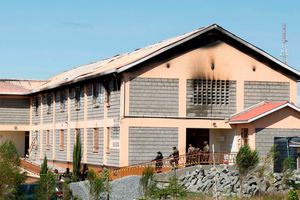
“We have witnessed disasters in more than 100 secondary schools this term, with many learners sent home as early as this month,” he said.