238 learners undertook the stage-based Kenya Pre-vocational Level Assessment (KPLEA), which runs alongside the Kenya Junior School Education Assessment (KJSEA).
The stage-based curriculum is specifically designed for learners with special needs with profound disabilities that cannot allow them follow the regular curriculum which is more academic. It offers them a practical and skills-focused pathway to demonstrate their learning.
Unlike the KJSEA, which includes projects, essays, and structured questions, KPLEA emphasises alternative methods suited to the learners’ abilities, ensuring that they can showcase their strengths.
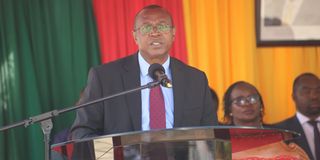
Kenya National Examinations Council (Knec) Chief Executive Officer, Dr David Njeng’ere, said the stage-based curriculum provides flexible learning and assessment pathways to ensure that no learner is left behind as the country fully transitions to competency-based education (CBE).
“Under the stage-based curriculum, a total of 238 learners registered for the Kenya Pre-vocational Level Assessment (KPLEA) in 2025. The assessment was administered alongside KJSEA, between October 27 and 30, 2025, and the candidates’ results are being released today as well,” said Dr Njegere.
“The Ministry of Education has made provisions under the stage-based curriculum for learners with severe and profound disabilities who cannot follow the regular curriculum,” he said.
“This ensures that no learner is left behind as the country transitions fully into senior school education.”
According to Dr Njeng’ere, KPLEA provides an important alternative for students who might struggle with traditional classroom instruction and standard assessments. It focuses on practical skills and life competencies, enabling learners to gain meaningful recognition for their abilities and progress through the education system without being unfairly disadvantaged.
“The stage-based curriculum is structured to ensure that no learner is left out, including those with severe disabilities,” Dr Njeng’ere said.
In preparation for the pioneer Grade 10 cohort in 2026, Knec has also established Senior School County Assessment Hubs, including special schools across all counties. These hubs are intended to facilitate inclusive assessment, digital literacy development, and access to resources for all learners, regardless of their learning abilities.
He further noted that to facilitate the transition into Senior School, Knec has also established Senior School County Assessment Hubs across all 47 counties, including hubs in special schools. These hubs provide accessible assessment resources, retool teachers on inclusive assessment methods, and prepare the necessary frameworks to support learners with special needs.
“The Council is rolling out initiatives such as E-Assessment under the “Greening Assessment” programme, which not only enhances digital literacy but also makes assessments more accessible and environmentally friendly,” he said.