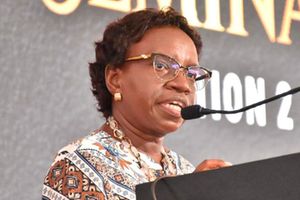
Governors have called on the Ministry of Education to withdraw its directive discontinuing the standalone Diploma in Early Childhood Teacher Education (DECTE), warning that the move risks undermining devolved education functions and leaving thousands of students stranded.
Under reforms aligned with the Competency-Based Education (CBE) model, the Ministry consolidated early childhood and primary teacher training into a single three-year course, the Diploma in Teacher Education Pre-Primary and Primary (DTE PP & P).
The change effectively raised the entry requirements for the profession, locking out aspiring teachers who scored below a C (plain) in KCSE.
“We have discussed with the Ministry of Education over its circular indicating the merger of ECDE training with Primary Teacher Education. As the Council of Governors, we have written to the ministry emphasising that ECDE is a specialised curriculum for caregivers,” said Council of Governors Education Committee Chairperson Dr Erick Mutai.
Dr Mutai added that governors had engaged Education Cabinet Secretary Julius Ogamba and Principal Secretary Prof Julius Bitok to withdraw the circular.
“As we speak today, Bachelor of Education ECDE students in universities are missing out under the current funding model. They will not benefit from government support. This disrupts ongoing programmes in universities and colleges. Globally, ECDE is a specialised curriculum, and the ministry must urgently withdraw the circular,” he said.
Counties have since made significant investments in constructing and equipping ECDE centres, hiring teachers, and expanding access to early learning for children.
Photo credit: Shutterstock | Nation Media Group
The Kericho Governor stressed that ECDE cannot be merged with primary education, noting that counties are already collaborating with the ministry to provide regular in-service training for ECDE teachers under CBE.
In the circular sent to county and sub-county directors of education, Prof Bitok directed that the DECTE and its upgraded version (UDECTE) be discontinued.
“The Diploma in Early Childhood Teacher Education course has been merged with the Diploma in Primary Teacher Education and re-designated as the Diploma in Teacher Education Pre-Primary and Primary. Consequently, the Upgrade Diploma in Early Childhood Teacher Education has been discontinued,” the PS stated.
PS Bitok further instructed the Kenya National Examinations Council (KNEC) not to register candidates under the old programmes and directed teacher training colleges to stop admissions.
“No registration or approval of colleges shall be processed to offer DECTE or UDECTE programmes. These directives take effect immediately, and all concerned offices are required to ensure strict compliance,” he added.
However, on February 9, 2026, the High Court suspended the implementation of the circular after education stakeholders filed a petition. Justice Lawrence Mugambi issued conservatory orders halting the merger until the matter is fully heard, citing risks of disrupting devolved functions.
The case was filed by unions and stakeholders, including the Kenya Union of Post Primary Education Teachers (KUPPET), who argued that merging ECDE with primary teacher training undermines specialised early learning and violates the constitutional mandate of counties.
Senators also raised concerns that the merger could derail gains made in early childhood education. The Senate Education Committee, led by Vice Chair Prof. Margaret Kamar, noted that ECDE is critical in laying the foundation for learning but faces challenges such as inadequate infrastructure, lack of capitation, and non-standardised human resource policies.
Stakeholders warned that raising the entry bar would lock out many aspiring ECDE teachers, worsening staffing shortages in counties.
Governors insist that ECDE must remain a standalone programme to safeguard quality foundational learning.
“There is no way we can merge ECDE teacher training with that of primary education. ECDE is about caregiving. It is a specialised curriculum designed to prepare teachers to handle children at that level. Globally, ECDE pedagogy is highly specific,” said Dr Mutai.
Dr Mutai recalled that in 2022, governors presented their views to the Presidential Working Party on Education Reforms regarding the CBE model.
“The 8-4-4 system was focused on memorisation and exams. CBE is bold; it will transform the Kenyan child and foster innovation. We submitted our views, and many were incorporated. However, scrapping ECDE training or merging it with primary education was never part of the taskforce recommendations,” he said.
The Kericho Governor emphasised that ECDE remains a specialised curriculum for caregivers and must not be diluted by merging it with primary teacher education. He urged the Ministry of Education to respect prior submissions and safeguard the integrity of early childhood training.
He also called for sustainable learning in ECDE facilities, including the timely provision of learning materials.