The Council of Governors (CoG) is seeking Sh5 billion to train Early Childhood Development Education (ECDE) teachers and strengthen the devolved education sector.
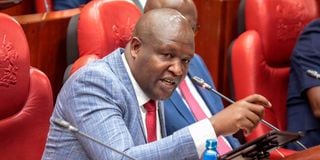
CoG Education Committee Chairperson, Dr Erick Mutai, said governors have already held discussions with President William Ruto on the need to bolster the pre-primary level of education, which plays a critical role in laying the foundation for learning.
Dr Mutai urged counties to place their ECDE teachers on permanent and pensionable terms to act swiftly and implement the scheme of service agreed upon by the Salaries and Remuneration Commission (SRC) and the Teachers Service Commission (TSC).
“When devolution started, the ECDE programme was not costed. We have had very good discussions with President Ruto and other actors on the need to ringfence a specialized Sh5 billion to meet the cost of training and onboarding teachers. Counties have very small budgets, and if they are asked to fully implement the scheme of service, they will collapse financially. That is why we need a conditional grant specifically for ECDEs,” said Dr Mutai.
Counties have since made significant investments in constructing and equipping ECDE centres, hiring teachers, and expanding access to early learning for children.
Photo credit: Shutterstock | Nation Media Group
The Kericho Governor noted that several counties have already absorbed their ECDE teachers, but others are lagging behind.
“We are calling upon devolved units that have not done the same to work on the scheme of service we formulated together with TSC and SRC to onboard all ECDE teachers on permanent and pensionable terms,” he added.
Dr Mutai emphasised that securing teachers’ welfare would strengthen the foundation of early learning nationwide. Harmonising employment terms, he said, would ensure equity and motivate teachers to deliver quality education, thereby enhancing the future of Kenya’s children.
Speaking during the inaugural National Foundational Learning Conference held in Mombasa, the governors also highlighted progress made by counties in providing feeding programmes at the ECDE level, a devolved function.
“We are converging in Mombasa with education stakeholders to address matters of foundational learning, discuss the Kenyan child, and their future,” said Dr Mutai.
Foundational learning, according to Dr Mutai, is a critical discussion amidst ongoing education reforms. He said counties view it as their daily duty to ensure learners acquire literacy, numeracy, and social-emotional skills.
“These skills form the bedrock of all future learning and are central to the country’s education reforms,” he explained.
Governors say the focus on early years is about more than policy; it is about giving every child a fair start in life. Dr Mutai argued that foundational learning is the most effective strategy for tackling the learning crisis.
“Evidence shows that a child who cannot read or perform basic mathematics by age 10 faces severely limited future opportunities. For counties, this is both a moral imperative and an economic necessity. Investing in early childhood education is the surest way to secure Kenya’s long-term human capital,” said Dr Mutai.
Governors have pledged to continue prioritising ECDE programmes, from teacher training and recruitment to feeding initiatives and provision of learning materials. They said harmonising employment terms for ECDE teachers and ringfencing resources for pre-primary education will ensure equity and sustainability.
“We are determined to ensure that every child in every county gets a fair start,” said Dr Mutai, underscoring the urgency of strengthening foundational learning across the country.
“We want sustainable learning in our ECDE facilities, which includes availing learning materials. We are working with the Kenya Institute of Curriculum Development (KICD) to ensure materials are delivered to county governments on time.”
Last month, the Senate Committee on Education, led by Vice Chair Prof Margaret Kamar, raised concerns over the limited focus on devolved education functions, particularly ECDE.
The committee noted that ECDE is critical in laying the foundation for learning but faces challenges such as the absence of a clear capitation framework, inadequate infrastructure, and non-standardised human resource policies affecting teachers.
Before devolution, former municipalities and town councils paid ECDE teachers between Sh7,240 and Sh12,522. Today, the same teachers earn between Sh14,000 and Sh42,000 monthly across different cadres, certificate, diploma, and graduate, thanks to devolution and the SRC/TSC-approved scheme of service.
Dr Mutai lauded counties for making significant strides in expanding access to pre-primary education.
“We have seen sustained investment leading to measurable success, including a 3.88 per cent increase in pre-primary enrolment, rising to 2,953,207 learners in 2025, supported by a 2.95 per cent increase in the number of schools, now totalling over 32,000 from 2024 to 2025,” he said.
On infrastructure, counties constructed more than 5,950 classrooms in 2025 alone. They have also employed over 50,104 pre-primary school teachers, building a workforce from scratch.
“Counties now provide free uniforms, some made by trainees at our own Vocational Training Centres and pioneer integrated approaches that weave together nutrition, WASH initiatives, and climate resilience into pre-primary programming,” said Dr Mutai.
According to CoG, the minimum annual cost to properly perform the pre-primary function is Sh22.08 billion. In the Financial Year 2024/25, counties cumulatively allocated approximately Sh6.81 billion, leaving an annual investment gap of Sh15.27 billion.
Recruitment of ECDE teachers is done by county governments from a pool registered by the TSC. Counties are expected to ensure recruitment policies are fully implemented. More than 20 counties have already implemented the scheme of service, while others are yet to initiate the process.
Dr Mutai said a dedicated Sh5 billion conditional grant will safeguard ECDE, strengthen teacher training, and ensure counties can sustainably deliver quality foundational learning.
Mombasa Governor Abdulswamad Nassir said his administration this year introduced a School Feeding Programme for public day schools across the six sub-counties.
“By providing meals in school, we have reduced the cost of fees by Sh12,500, leaving parents with about Sh10,000 to clear. With the support of NG-CDF bursaries, this brings down fees to as little as Sh1,500 a term in Mombasa,” said Mr Nassir.
He added that early assessments show the programme is working, with some schools recording attendance improvements of between 35 and 100 per cent, while in others it has helped maintain already strong attendance and keep students focused in class.
Dr Mutai also narrated how his administration has converted all 1,600 ECDE teachers in Kericho to permanent and pensionable terms.
“In my county, a teacher with a certificate in ECDE earns Sh25,000, diploma holders Sh33,000, while those with degrees take home Sh43,000 onwards. We have also strengthened supervision to ensure children are in school learning and teachers are in class teaching,” he said.