The Kenya Private Sector Alliance (Kepsa) has listed a number of reforms in the education sector that it wants Parliament to undertake to bring back sanity and boost the sector.
Key among the reforms include reforming higher education financing, strengthening governance and accountability and enhancing quality research in the universities.
It comes at a time when public universities are coming from a crippling lecturer’s strike that went on for 49 days, affecting the calendar.
The reforms are contained in a document that is part of the discussion in the ongoing retreat between the top leadership of the National Assembly and Kepsa in Mombasa.
The meeting brings together the speaker of the National Assembly, Moses Wetang’ula, the private sector and all the chairpersons of the departmental committees to deliberate on policies and address critical industry challenges and promote sustainable economic growth.
The meeting will, among other agenda deliberate on the state of the economy, the cost of doing business in the country, the high electricity cost, addressing policy gaps in the education sector and come up with various amendments to existing laws that affect the business environment, hence have impeded economic development
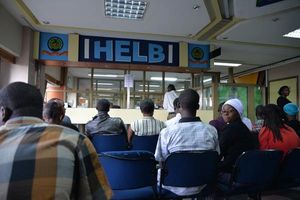
In the reforming of the Higher Education financing, the private sector is now calling upon MPs to revise the Higher Education Loans Board (HELB) Act in order to develop a sustainable student financing framework incorporating grants, work-study programs, and income-contingent loans to enhance access and reduce loan defaults.
The private sector also wants the lawmakers to establish a Higher Education Fund, a dedicated fund supported by government, industry, and alumni contributions to provide long-term financial stability for universities.
Kenya Private Sector Alliance (Kepsa) CEO Carole Kariuki Karuga during a press briefing on the impact of Covid-19 on Kenya's economy in March, last year.
Photo credit: Lucy Wanjiru | Nation Media Group
Further, the sector is also calling on the lawmakers to incentivise Innovative financing models by encouraging universities to establish endowment funds and pursue public–private partnerships (PPPs) for infrastructure development and operational sustainability.
On strengthening governance and accountability, the private sector is calling on the lawmakers to amend the Universities Act (2012) in order to streamline the mandates of the Commission of University Education (CUE), Technical and Vocational Education and Training Authority (TVETA) and the Ministry of Education to eliminate overlaps and enhance regulatory clarity.
The private sector has also urged the lawmakers to ensure that there are transparent leadership appointments by enforcing merit-based, transparent processes for appointing university councils and vice chancellors to minimize political interference.
The sector has also called on the lawmakers to enhance its oversight function by monitoring university financial management, procurement, and infrastructure projects to ensure accountability and efficient resource use.
On enhancing quality and research, the private sector wants parliament to allocate at least one percent of the country’s Gross Domestic Product (GDP) to research in the medium term, moving toward the Vision 2030 target in order to foster a robust research culture.
The private sector also wants the lawmakers to enact policies to support research commercialization and protect intellectual property, enabling universities to translate innovations into economic value.
The private noted that the country’s public universities are grappling with chronic underfunding, resulting in debts exceeding Sh60 billion for salaries, pensions, and statutory remittances.
Kenya’s higher education system faces systemic challenges, including financial distress, declining quality, and governance inefficiencies. Addressing these issues is critical to unlocking the full potential of education for inclusive growth and aligning with national goals such as Vision 2030,” reads the document.
In July this year, the Higher Education Loans Board told the National Assembly education committee that it is grossly underfunded, hence most students risk missing out from the fund as beneficiaries.
Despite needing Sh48 billion in the last financial year, HELB management told the lawmakers that it received only Sh26 billion, forcing over 100,000 students to go without full support last year. Some received full funding while others only got upkeep money.
Management of the board proposed to the Julius Melly chaired committee that three percent of the fund should be drawn from the Value Added Tax (VAT), as is the case in Ghana.
Through this, the management told the lawmakers that it will ensure the fund is sustainable.