Lecturers’ strike: Crash programmes, longer semesters to recover four weeks lost
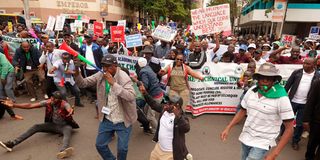
Universities Academic Staff Union lecturers and staff participating in a demonstration in Nairobi on October 15, 2026 over the government's failure to implement the 2025–2029 Collective Bargaining Agreement.

What you need to know:
- The adjustments could mean students spending longer in their current semesters as institutions reorganise teaching schedules.
- At universities opting for extensions, examination dates and the start of subsequent academic activities could also be pushed back.
Public universities may extend their current semesters by one to two weeks or introduce intensive teaching programmes to recover four weeks lost during the nationwide lecturers’ strike.
Vice-Chancellors’ Committee of Public Universities Chairperson Prof Daniel Mugendi said universities would have to balance the need to recover lost teaching time with ensuring students are not disadvantaged and academic programmes are not further disrupted.
“There are those that can be accommodated within the remaining part of the semester. They can give it to you like a crash programme and recover. But the others who can’t, then they may have to extend the semester by a week or two,” Prof Mugendi said.


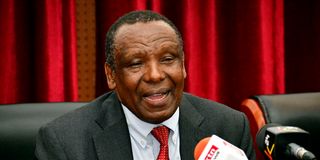
Public Universities Vice Chancellors Committee chairperson Prof Daniel Mugendi.
The adjustments will depend on how far individual universities had progressed with their academic programmes before lecturers went on strike on October 2.
“There are very many graduations that are planned. We would want all those graduations to go on as scheduled,” he said.
The adjustments could mean students spending longer in their current semesters as institutions reorganise teaching schedules to ensure lecturers complete outstanding coursework before examinations.
At universities opting for extensions, examination dates and the start of subsequent academic activities could also be pushed back.
The disruption could have consequences beyond the current semester, with previous lecturers’ strikes forcing universities to postpone examinations to the following year and revise their academic calendars.
During the 2025 lecturers’ strike, universities were forced to revise their academic calendars, with some postponing examinations to the following year and adjusting the start of subsequent semesters to recover lost teaching time.
Higher Education Principal Secretary Beatrice Inyangala on Friday asked university managements to review their academic calendars and make arrangements to recover the four weeks lost during the industrial action.
“We must review academic calendars and make appropriate arrangements to recover the four weeks of lost teaching time. We must also ensure that students’ academic progression, examinations and graduations proceed as scheduled,” Dr Inyangala said.
The nationwide strike ended on October 30 after the government and university staff unions reached a Sh20 billion agreement towards implementing the 2025–2029 Collective Bargaining Agreement (CBA).

Universities Academic Staff Union lecturers and staff participating in a demonstration in Nairobi on October 15, 2026 over the government's failure to implement the 2025–2029 Collective Bargaining Agreement.
“Our students and their families have borne the greatest burden of this disruption. We owe them a stable learning environment,” Dr Inyangala said.
The developments also come amid growing frustration among students, who had threatened to take to the streets to demand an end to the lecturers’ strike and the resumption of learning in public universities.
Students had called on the government and university managements to resolve the dispute, warning that the prolonged disruption was affecting their academic programmes and delaying their progression.
“It is now a month since this lecturers’ strike started. The Ministry of Education is silent. They have failed us. We are the biggest losers in this fight,” said Ahmed Rashid, president of the University of Nairobi Students Association.
Under the agreement that ended the strike, university lecturers will receive a 3.5 per cent salary adjustment, alongside a minimum monthly commuter allowance of Sh18,000.
The deal also provides for annual salary increments of five per cent, in addition to the initial adjustment, as the government moves to address outstanding remuneration demands by university employees.
Universities Academic Staff Union (UASU) Secretary-General Constantine Wasonga said the Sh20 billion would be disbursed in three tranches: Sh6.7 billion in the 2026/2027 financial year, Sh6.7 billion in 2027/2028 and Sh6.6 billion in 2028/2029.
The unions, led by UASU and the Kenya Universities Staff Union (KUSU), had demanded improved salaries and allowances, including basic salary increases ranging from 36 per cent to 68 per cent, depending on staff grades.
The employers, through the Inter-Public Universities Consultative Forum, had initially offered a cumulative salary adjustment of 8.25 per cent over four years, a proposal rejected by the unions.
Follow our WhatsApp channel for breaking news updates and more stories like this.